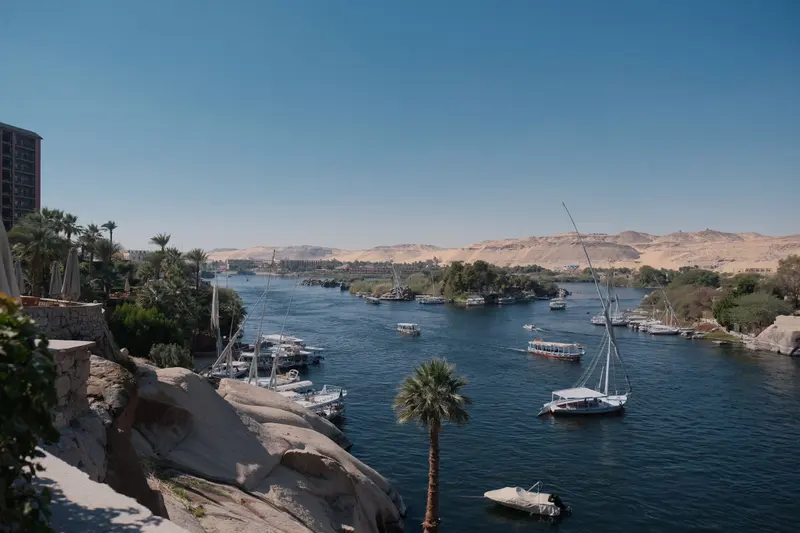
Cafés in Egypt Cairo
Cairo's ahwa coffeehouses with sweet tea, shisha and backgammon, sada to ziada coffee, Khan el-Khalili, Zamalek, Maadi and Heliopolis.
Photo: Tito Zzzz, Pexels License
Egypt grows no coffee and buys most of it from Asia. In 2024 it imported 65,160 tonnes of green coffee worth US$279.6 million, according to UN Comtrade data published by the World Bank; Indonesia supplied 31,587 tonnes, almost half, ahead of Vietnam, Brazil, India and Ethiopia.1 In 2018 Hassan Fawzi, head of the coffee division at Cairo's Chamber of Commerce, told Egypt Independent that the climate does not suit the crop and that about 70% of imports came from Indonesia.2
Coffee came first and tea took over. Coffee reached Cairo by the early 16th century, and coffeehouses multiplied around al-Azhar, linked to the Sufis.3 Between the 1920s and the 1950s tea replaced coffee as the most popular drink, yet the coffeehouse kept the name qahwa (coffee), which in Egyptian Arabic becomes ahwa.45
Egypt's café cities
Sufis, bans and a thousand coffee-shops
Coffee had early enemies. In 1511 conservative imams at a theological court in Mecca banned it for its stimulating effect, and in 1532 Cairo imposed a similar ban, sacking coffeehouses and warehouses of beans.3
Writing in the 1830s, the British writer Edward William Lane reported that Cairo had above a thousand kahwehs, or coffee-shops, used mostly by tradesmen and "persons of the lower orders".4 He noted that Egyptians liked their coffee strong and usually unsweetened, sometimes flavored with cardamom. By the end of the 19th century the coffeehouse had spread to the elite.4
Inside an ahwa: shai, sada and shisha
The ahwa (plural ahawy) is an informal coffeehouse, often squeezed into a narrow alley, where regulars are on first-name terms with the ahwagy who serves them.5 Sweet black tea is the main order. Shay koshary is loose tea with boiling water poured straight onto it in the glass, and shay miza is tea with milk.5
Turkish-style coffee is ordered by sweetness, from sada (no sugar, also called sketto) to ziada, the sweetest.5 Shisha is part of the visit: a hagar is one serving, packed with me'assel, tobacco cured in molasses. The customers are mostly men, and backgammon is the soundtrack.5
Cheapness is the point. In 2012 a cup of tea or coffee at a downtown ahwa could cost as little as E£1.6 A 2020 study by Dalia Said Mostafa and Amina Elbendary treats the coffeehouse as a source of work for informal laborers and a site of political mobilization, including during the 2011 revolution.7
Khan el-Khalili and the downtown cafés
In Khan el-Khalili, by the al-Hussein Mosque, Cairo's governorate dates El-Fishawy to 1771, with a first license in 1863 under Khedive Ismail; other accounts give 1797.89 Naguib Mahfouz wrote parts of his Nobel-winning trilogy in its back room. In 1996 Aramco World found tea the most popular order there, and coffee served in a long-handled copper pot, the kanaka, with sugar on the side.10
Under Khedive Ismail (1863 to 1879), European-style cafés opened downtown, linked to Cairo's Greek community and frequented by effendis, young professionals exposed to Western ideas.6 Café Riche on Talaat Harb Street is one of them: after the 1992 earthquake, a cellar there turned out to hold a printing press tied to secret publications of the 1919 revolution.8
From the mall café to the roaster
The next shift came with economic liberalization in the late 1990s. Global coffee brands arrived and mall culture spread, and going for coffee began to mean air conditioning, imported beans and drinks with Italian names.11 At home the kanaka stayed. In 2018 plain ground coffee sold for E£90 a kilo and Arabic coffee for E£115, according to the Chamber of Commerce's coffee division.2
Specialty coffee has followed, with roasters in Cairo, Alexandria and along the Mediterranean and Red Sea coasts, and cafés that run brewing workshops and introduce drinkers to their roasters.11
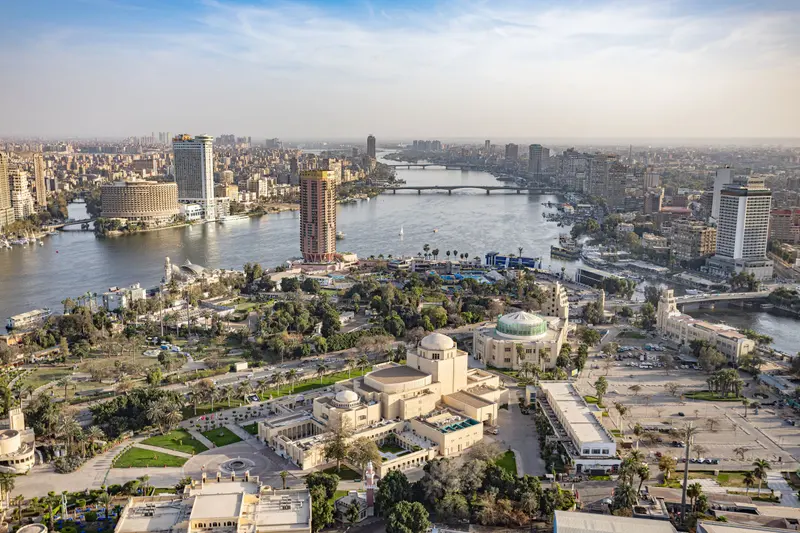
Cairo, from the Nile island to the garden suburbs
Zamalek takes the northern, residential third of Gezira Island in the Nile, a district of early 20th-century villas and at least 52 embassies and consulates.12
Maadi, about 12 km upriver on the east bank, grew from 1904 as a planned suburb of wide streets and villas; its Road 9 is known for coffee shops and bookstores, and Metro Line 1 stops three times in the district.13
Heliopolis, to the northeast, was founded in 1905 by the Belgian industrialist Édouard Empain in a blend of Persian, Moorish and neoclassical styles. Korba, around Baghdad Street, is its square for strolling, shopping and eating out, and Metro Line 3 has reached it since 2018.14
Sources
- Egypt, Arab Rep. coffee, not roasted, not decaffeinated (HS 090111) imports by country, 2024, World Bank WITS (UN Comtrade data), accessed October 2026
- Egyptians drank more coffee in 2018, report says, Egypt Independent (Hend El-Behary, June 19, 2018), accessed October 2026
- History of coffee, Wikipedia, accessed October 2026
- 'Locking in' a Good Meal: a history of tea and coffee in Egypt, RAWI Publishing on Google Arts & Culture (quoting E. W. Lane, Manners and Customs of the Modern Egyptians, 1836), accessed October 2026
- El Ahwa: Exploring the Everyday Egyptian Man's Favourite Leisurely Haunt, Egyptian Streets (Amina Zaineldine, May 22, 2022), accessed October 2026
- Cairo's Downtown coffeehouses, Daily News Egypt (Fady Salah, December 11, 2012), accessed October 2026
- The Egyptian Coffeehouse: Culture, Politics and Urban Space (Dalia Said Mostafa and Amina Elbendary, Bloomsbury, 2020), Hamad Bin Khalifa University research portal, accessed October 2026
- Cairo's Famous Coffeehouses, Cairo Governorate, accessed October 2026
- مقهى الفيشاوي, ويكيبيديا (Arabic Wikipedia), accessed October 2026
- Fishawy's Café: Two Centuries of Tea, Aramco World (Mae Ghalwash and Josh Martin, September/October 1996), accessed October 2026
- From Qahwa to Cafe: The Evolution of Coffee Culture in Egypt, Standart (July 31, 2026), accessed October 2026
- Zamalek, Wikipedia, accessed October 2026
- Maadi, Wikipedia, accessed October 2026
- Heliopolis, Cairo, Wikipedia, accessed October 2026
Cafés in Egypt: questions
What is an ahwa in Egypt?
An ahwa is Egypt's informal coffeehouse, often set in a narrow alley, where regulars know the ahwagy who serves them. Despite the name, which means coffee, sweet black tea is the main order, since tea overtook coffee between the 1920s and the 1950s. Shisha and backgammon are part of the visit, and the customers are mostly men.
How do you order Turkish coffee in Egypt?
In Egypt, coffee is ordered by sweetness, from sada, with no sugar and also called sketto, up to ziada, the sweetest. At El-Fishawy in Cairo's Khan el-Khalili, Aramco World described coffee served in a long-handled copper pot called a kanaka, with sugar on the side. Edward William Lane noted in the 1830s that Egyptians often added cardamom.
Where does Egypt get its coffee beans?
Egypt grows no coffee, because the climate does not suit the crop. In 2024 it imported 65,160 tonnes of green coffee worth US$279.6 million, according to UN Comtrade data. Indonesia supplied 31,587 tonnes, almost half, followed by Vietnam, Brazil, India and Ethiopia.
Your café deserves better than a pin someone else dropped
Free listings are free for good. A featured page gives you photos, a menu and your own URL, in your café's own design, for less than a coffee a day.