Cafés in the Netherlands Groningen, Amsterdam and Utrecht
Grand cafés in Amsterdam, wharf terraces in Utrecht, student koffiebars in Groningen, plus koffie verkeerd and the cookie.
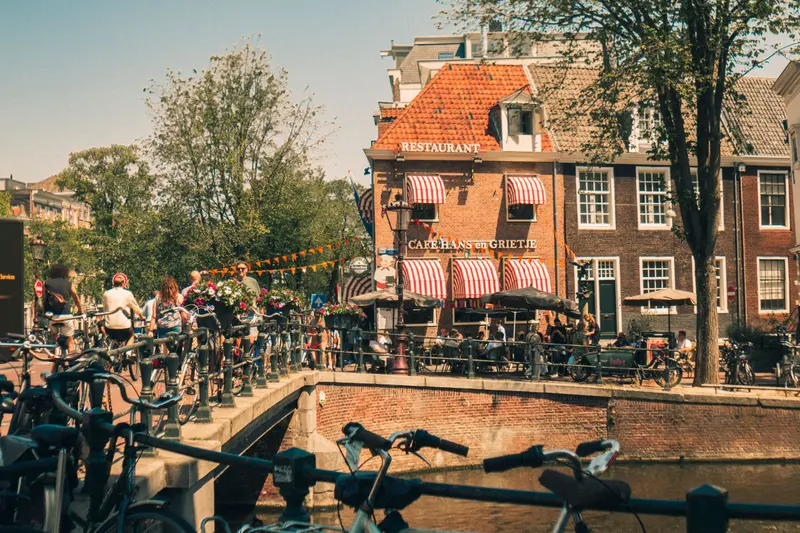
Photo: Vinicius A. Nascimento, Pexels License
After tap water, coffee is what the Dutch drink most. In a 2024 survey for the trade association Koffie & Thee Nederland, 79% of people aged 16 and over drank it at least once a week, and on the days they did, they averaged 3.6 cups, down from 4.1 in 2018.1 CBI, the Dutch government's import-promotion center, ranks per-capita consumption among the highest in the world.2
None of it is grown at home. Green coffee imports reached 222,400 tonnes in 2024, with the Port of Rotterdam as the main point of entry, and JDE Peet's is the country's largest roaster.2 In the cup, tastes stay plain: black coffee is the variant most people drink, with cappuccino second.1
Netherlands's café cities
Java, the Amsterdam hothouse and Suriname
Dutch coffee history begins in Asia. The Dutch governor in Malabar, in India, sent arabica seedlings to Batavia, now Jakarta, in 1696; floods killed them, and a second shipment followed in 1699 with Hendrik Zwaardecroon. In 1711 the Dutch East India Company (VOC) sent the first Java coffee to Europe.3
Amsterdam was ready for it. In the 17th century the city had become Europe's key port for the tea and coffee trade, carried by the VOC's often brutal colonial networks in Asia.4 A Java plant was also raised in a hothouse at the Hortus Botanicus. In the version most often told, a plant passed from Dutch to French hands in 1714 as a gift to Louis XIV, and its offspring reached France's Caribbean colonies and eventually Brazil. The Hortus still grows coffee, from plants bought at a local nursery.5
Across the Atlantic, coffee was first planted in the Dutch colony of Suriname around 1712 and became its principal export by the middle of the century. The colony had about 140 coffee plantations in 1745 and 295 by 1770, each worked by an average of 90 enslaved people. In the 1760s Suriname supplied almost half the coffee on the European market, until Saint-Domingue overtook it in the 1770s.6
On Java, the Cultuurstelsel (Cultivation System) forced farmers to grow coffee for the colonial government from 1830 to around 1870. Eduard Douwes Dekker, writing as Multatuli, exposed it in his 1860 novel Max Havelaar, which helped change Dutch public opinion about the system.3
Douwe Egberts, from Joure to Utrecht
The best-known Dutch coffee name comes from Friesland. On 11 March 1753 Egbert Douwes and his wife Akke Thysses opened a shop in colonial goods in Joure. In 1919 the firm opened a second site in Utrecht, a roastery on the Catharijnekade chosen for the city's central position, and in 1929 moved it to the Merwedekade, today's Keulsekade. Since the end of 2019 the company has traded as part of JDE Peet's.7
Most Dutch coffee is brewed in a kitchen. In 2024, 33% of coffee drinkers regularly or almost always drank filter coffee, 32% capsule coffee and 29% coffee from a bean-to-cup machine. The coffee pad slipped from 30% to 26% in two years, while home espresso machines rose from 8% to 13%.1
Bakkie troost, koffie verkeerd and the cookie
Dutch has its own coffee vocabulary. Bakkie troost, literally a cup of comfort, has become a name for a cup of coffee; the lexicographer Boekenoogen recorded the idea in 1897, as een koppie troost. Koffie verkeerd ('wrong coffee'), with more milk than coffee, is first attested in Dutch in 1862, a loan translation that the linguists Hans Beelen and Nicoline van der Sijs link to Austria's Kaffee verkehrt.8
Coffee also has its hour. In the 2024 survey, 68% of coffee drinkers had a cup in the morning between breakfast and lunch, more than at any other point in the day.1
Order one in a café and a small sweet often comes on the saucer as a gesture of hospitality, from a wrapped speculoos to a piece of boterkoek (butter cake). Some newer specialty cafés skip it.9
Brown cafés, koffiebars and the coffeeshop
The bruin café (brown café) is the old neighborhood bar: wood panelling, ideally a low beamed ceiling, and walls and ceilings browned by tobacco smoke, though smoking in bars has been banned since 2008. The term is younger than the bars. It first appeared in print on 12 September 1966, in a Het Parool interview with Ben ten Holter, who was then compiling a guide to Amsterdam's bars.10
Their numbers are falling. Amsterdam counted 1,278 cafés in 1995, 663 in 2010 and 503 in 2023.10 Daytime coffee is where the growth is: CBI describes the Netherlands as having a large and growing specialty coffee culture.2
One word catches visitors out. A coffeeshop is an establishment that sells cannabis and may not sell or serve alcohol; under the government's toleration policy, only registered residents of the Netherlands aged 18 and over may buy there, though enforcement varies by municipality.11 For an espresso, look for a koffiebar or a café.
Amsterdam, Utrecht and Groningen
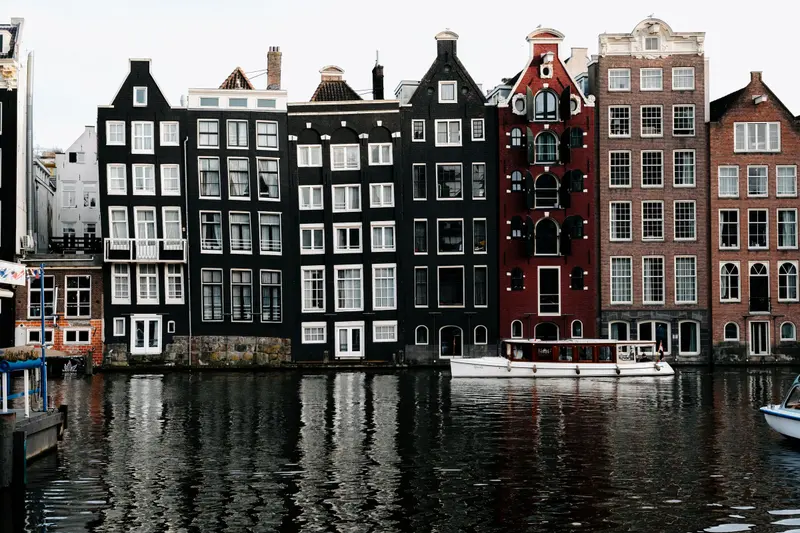
Amsterdam has the widest range of rooms. The oldest grand café in the country is Café Americain on Leidseplein, which dates from 1902.4 The canal ring has the most cafés of any district, brown cafés hold out in the Jordaan, and roaster-run koffiebars cluster in Oud-West, between Kinkerstraat and the Overtoom.
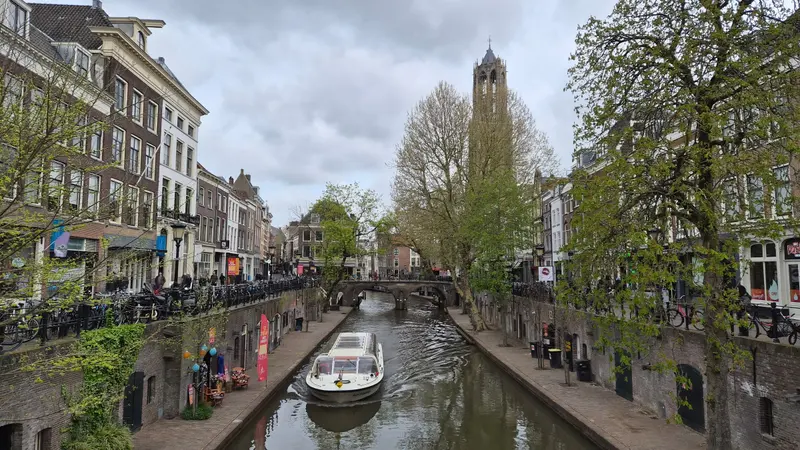
Utrecht drinks on two levels. From the late 12th century, tunnels dug into the banks of the Oudegracht created cellars under the street, and by the 15th century the canal was a two-kilometer harbor with a double quay. The wharves became a public walkway only after the city took them over in 1948; cafés and restaurants have moved into the cellars since, most with a terrace along the water.12 At street level, koffiebars gather around the Dom tower.
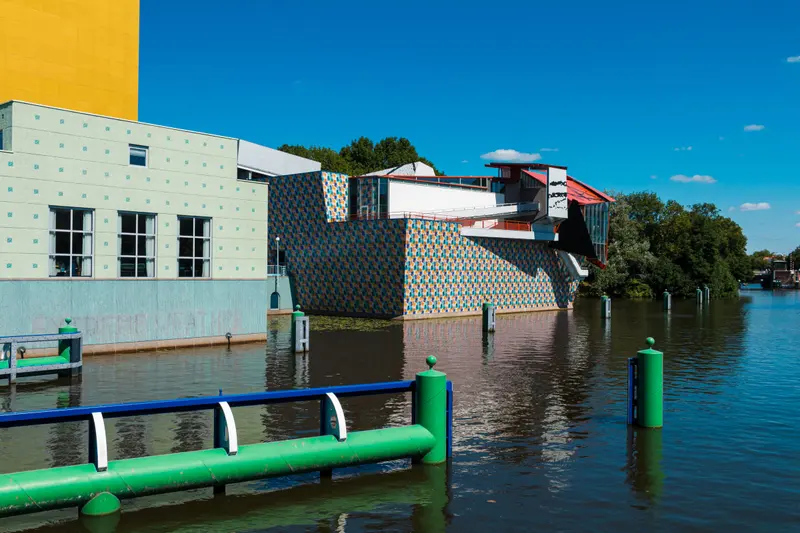
Groningen runs on students. About 60,000 of them live in the city, a quarter of all residents, and the average Groninger is 36, against 41 nationally.13 Black & Bloom, a 25-seat espresso bar on an old street near the university, has served since summer 2012, and Misset Horeca's annual Koffie Top 100 ranked it first in 2016.14 Terraces line the Grote Markt and the Vismarkt. The brown cafés are survivors: in January 1975 a preservation society reported only thirty old-style cafés left in the whole province.10
Sources
- Nationaal koffie- en theeonderzoek 2024, Ruigrok for Koffie & Thee Nederland, accessed October 2026
- The Dutch market potential for coffee, CBI (Centre for the Promotion of Imports from developing countries), accessed October 2026
- Coffee production in Indonesia, Wikipedia, accessed October 2026
- Grand cafés in Amsterdam, I amsterdam (updated June 12, 2025), accessed October 2026
- Coffee's History Blooms At Amsterdam's Hortus Botanical Garden, Sprudge (February 2, 2017), accessed October 2026
- Decolonizing the History of Coffee (Jonathan Morris and Peter D'Sena), Standart, via University of Hertfordshire Research Archive, accessed October 2026
- Douwe Egberts, Wikipedia (Dutch), accessed October 2026
- Woordsprong: Koffiepraat (Hans Beelen and Nicoline van der Sijs), Onze Taal 83 (2014), Onze Taal, via DBNL, accessed October 2026
- The Dutch Cookie & Coffee Combo Is Making A Major Comeback, Sprudge, accessed October 2026
- De bruine kroeg. Hervonden historisch erfgoed (Peter-Paul de Baar), Holland, historisch tijdschrift 2023 no. 4, Historische Vereniging Holland, accessed October 2026
- Toleration policy regarding soft drugs and coffee shops, Government of the Netherlands, accessed October 2026
- Oudegracht (Utrecht), Wikipedia (Dutch), accessed October 2026
- Studeren in Groningen, Rijksuniversiteit Groningen, accessed October 2026
- Dutch Coffee Outside The Randstad At Black & Bloom In Groningen, Sprudge (October 23, 2018), accessed October 2026
Guides
Café opening hours around the world
When cafés open and close: 06:00 coffee in Vietnam, Italian bars shut by 20:00, Melbourne cafés done by 15:00, Sundays in Berlin, Ramadan in Dubai.
How to orderCafé etiquette around the world
Tipping in cafés from Tokyo to Lima, counter and table prices in Italy and Lisbon, paying at the till, Vietnam's free trà đá and indoor smoking rules.
Cafés in the Netherlands: questions
What is the difference between a coffeeshop and a café in the Netherlands?
In the Netherlands, a coffeeshop is an establishment that sells cannabis and may not serve alcohol. Under the government's toleration policy, only registered Dutch residents aged 18 and over may buy there, and enforcement varies by municipality. For coffee, look for a koffiebar or a café instead.
How much coffee do people drink in the Netherlands?
Coffee is the most-drunk beverage in the Netherlands after tap water. In a 2024 survey, 79% of people aged 16 and over drank it at least weekly, averaging 3.6 cups on the days they drank it, down from 4.1 in 2018. Per-capita consumption is among the highest in the world.
Why do cafés in the Netherlands serve a cookie with coffee?
Cafés in the Netherlands often put a small sweet on the saucer as a gesture of hospitality when you order a coffee. It might be a wrapped speculoos or a piece of boterkoek, a Dutch butter cake. Some newer specialty cafés skip the custom.
Your café deserves better than a pin someone else dropped
Free listings are free for good. A featured page gives you photos, a menu and your own URL, in your café's own design, for less than a coffee a day.