Cafés in Italy from Trieste to Naples
Espresso and the moka, Trieste's coffee port and capo in b, Naples' caffè sospeso, and the bars of Rome, Milan and Florence.
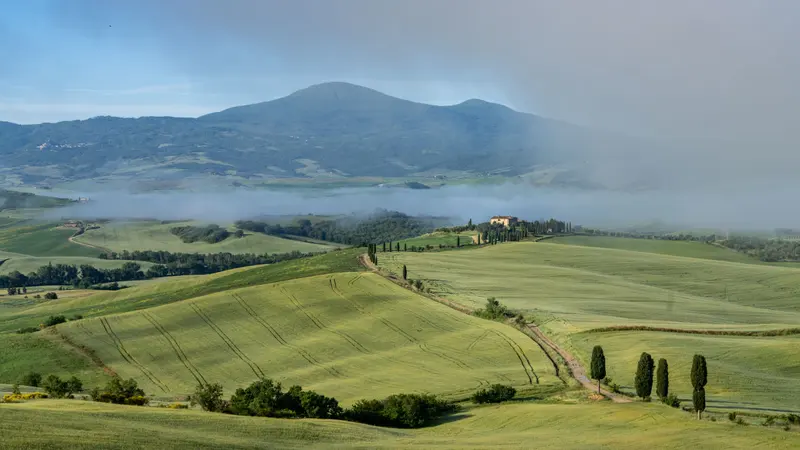
Photo: Phil Evenden, Pexels License
Italy turns imported beans into one of its best-known exports. In 2025 it imported 641,234 tonnes of green coffee, about two-thirds arabica and one-third robusta, with Brazil and Vietnam supplying 57% of the volume, according to the Comitato Italiano Caffè of Unione Italiana Food.1 Around 1,000 roasteries produced 424,168 tonnes of roasted and soluble coffee, with a turnover of €5.9 billion, and almost 280,000 tonnes of roasted coffee went abroad.1
Italians consumed 287,143 tonnes, 4.9 kg per person or about 812 espressos each a year.1 Ground coffee leads sales with 64%, followed by pods at 24%, instant at 8% and whole beans at 4%.1
The neighborhood bar is under pressure. Italy had nearly 125,000 bars in 2025, and 6,579 more closed than opened that year, according to the restaurant federation FIPE as reported by Il Post.2 An espresso at the bar averaged €1.29 as of 2026, yet Luciano Sbraga, FIPE's deputy director general, said it is still seen as a cheap product of little value.2
Italy's café cities
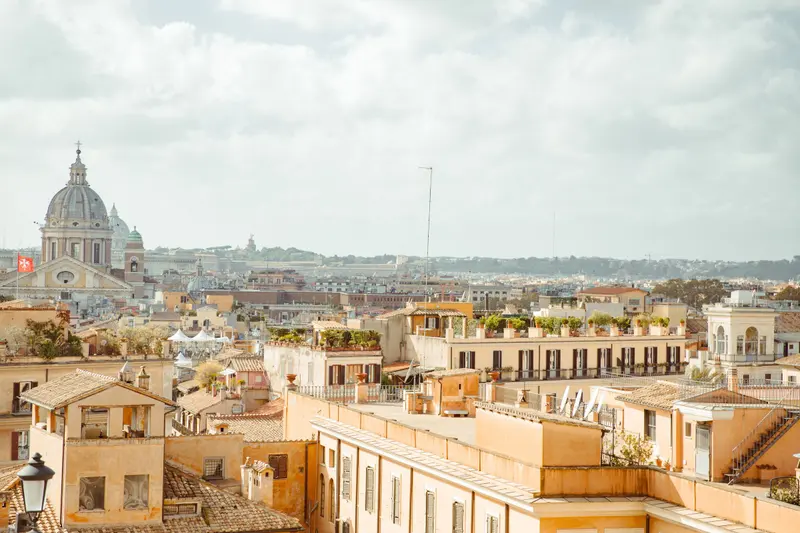
Rome
Espresso standing at the bar, historic caffè near the Pantheon and cornetti in Trastevere. 1073 cafés.
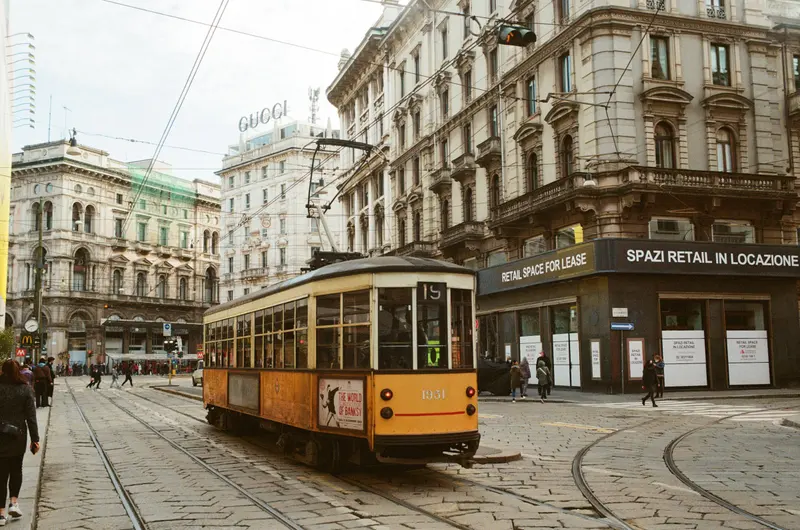
Milan
Bars with brioche at breakfast, aperitivo cafés in Brera and the Navigli, pasticcerie on the Corso. 1485 cafés.
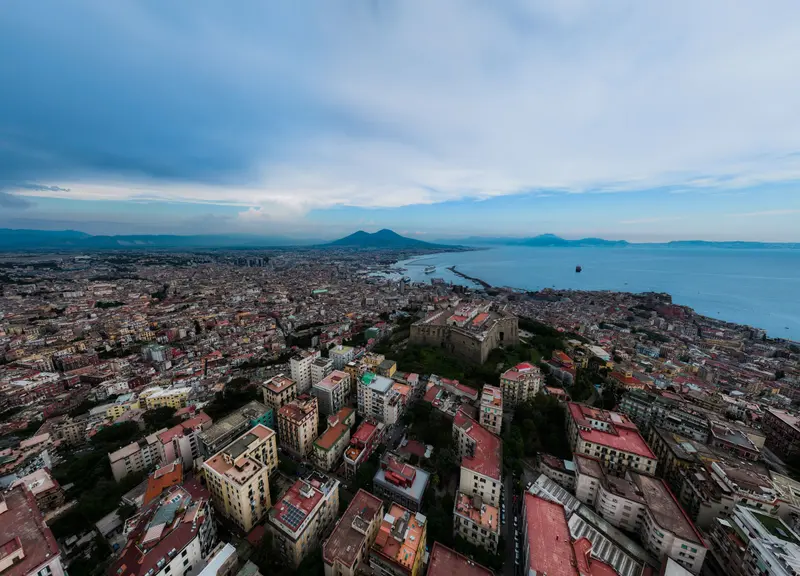
Naples
Espresso at the bar, sfogliatelle at the pasticceria and the caffè sospeso left for the next customer. 596 cafés.
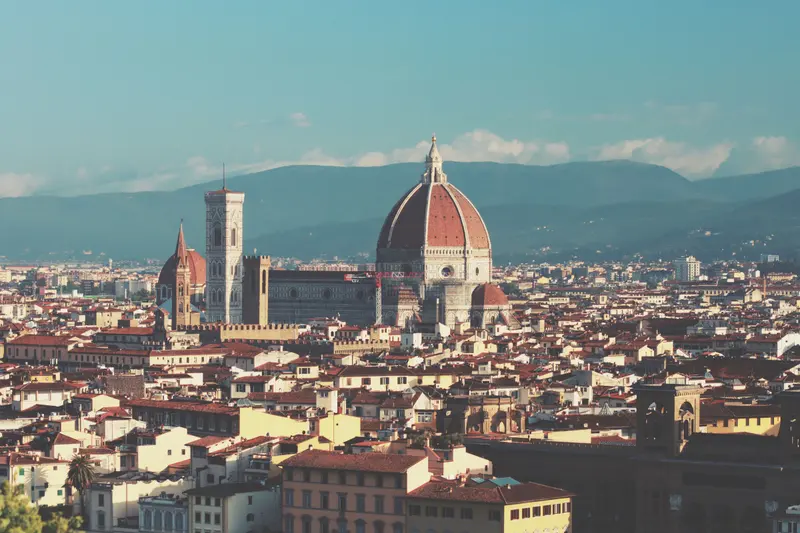
Florence
Historic caffè on the piazzas, pasticcerie in the Oltrarno and espresso bars near the markets. 360 cafés.
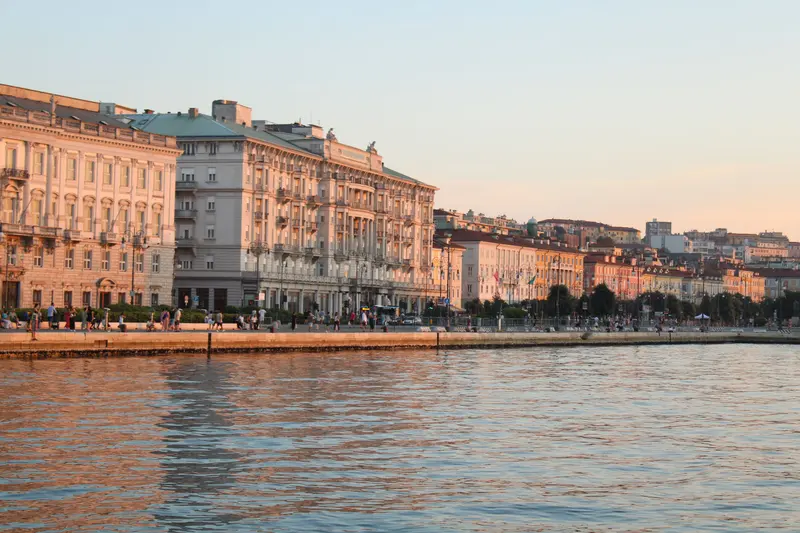
Trieste
A coffee port with historic caffè on its squares and an order of its own, from nero to capo in b. 183 cafés.
From Turin's steam machine to the moka
Espresso machines grew up in Turin and Milan. Angelo Moriondo patented one in 1884, and Achille Gaggia's piston and lever systems of 1938 and 1947 gave the cup its crema.3 Today's espresso is 25–30 ml, extracted in about 25 seconds from 7–9 g of finely ground coffee at around 9 atmospheres.3 Luigi Lavazza founded his company in Turin in 1895, running it from a small grocery at Via San Tommaso 10, and the firm credits itself with inventing blending, combining coffees from different parts of the world.5
At home, the stovetop pot won. Alfonso Bialetti popularized the moka for home use with the Moka Express of 1933, and in 1952 the company commissioned its mascot, l'omino con i baffi (the little man with the mustache).4
Trieste, the coffee port
Much of Italy's coffee still lands in Trieste. In 1719 Charles VI decreed freedom of navigation there, and the Habsburg city grew on the privileges of a free port, which it has held for coffee imports since the 18th century.13 About a fifth of the roughly 600,000 tonnes of coffee Italy imports each year passes through its port, mostly from Brazil, Vietnam, Colombia, India and Central Africa.14
The Associazione Caffè Trieste, which has grouped the trade since 1891, reported about €900 million in turnover for 2024 and almost 2,000 jobs, and the city has ten roasters.14 Francesco Illy, a Hungarian born in Temesvár, set up a cocoa and coffee business in Trieste in 1933, when the city had only recently come under Italian rule, and two years later invented the illetta, described as the first automatic coffee machine.6
Trieste also orders in its own words. An espresso is a nero, a macchiato is a capo, a coffee served in a small glass is in B, so a capo in B is a macchiato in a glass, and one barely touched with milk is a goccia.14 If you want something like a cappuccino, you ask for a caffelatte.14
Florian and the bicerin
Venice has the oldest name still pouring. Caffè Florian opened under the Procuratie Nuove on Piazza San Marco on 29 December 1720 as Alla Venezia Trionfante (Venice Triumphant), and took the name of its first owner, Floriano Francesconi.7 It was reportedly the only coffee house of its day that admitted women.7
Turin's drink is the bicerin, Piedmontese for little glass: coffee, melted chocolate and fior di latte cream layered in a glass. It is credited to Caffè Al Bicerin on Piazza della Consolata in 1763, and Piedmont listed it as a traditional food product in 2001.8
Naples, Gambrinus and the caffè sospeso
Naples keeps a custom of its own, the caffè sospeso (suspended coffee): you pay for a second espresso, and the bar keeps it for someone who cannot afford one.9 Its grand café is Gran Caffè Gambrinus. Vincenzo Apuzzo opened a Gran Caffè in 1860 on the ground floor of the Palazzo della Foresteria, now the Prefettura; in 1890 Mariano Vacca took the lease, and the architect Antonio Curri redecorated it with more than forty artists and craftsmen before it reopened on 3 November as Gambrinus.9
Its regulars included Gabriele D'Annunzio, Matilde Serao, Benedetto Croce and Oscar Wilde.9 On 5 August 1938 the prefect Giovanni Battista Marziali shut it as a meeting place for anti-fascists; after the war Michele Sergio reopened rooms on Via Chiaia, and his sons later won back those on Piazza Trieste e Trento.9
Rome, Milan, Naples, Florence and Trieste
Rome's café legend runs along Via Veneto, laid out in the 1880s and renamed after the 1918 Battle of Vittorio Veneto.10 In the 1950s and 1960s it was the center of la dolce vita, its bars full of Hollywood stars and jet-setters, and Fellini set much of his 1960 film there.10
Milan, Rome and Turin are where more people now eat breakfast at the bar, yet neighborhood bars there keep closing.2 Some Milanese bars find new customers after dark: one near Milano Centrale worked mainly by day before the pandemic and now draws a younger crowd with a cheaper aperitivo.2
In Naples the pasticceria (pastry shop) matters as much as the bar. The sfogliatella comes riccia, in layered puff pastry, or frolla, in shortcrust. Tradition traces it to the 17th-century convent of Santa Rosa at Conca dei Marini on the Amalfi Coast, and in 1818 Pasquale Pintauro, an innkeeper on Via Toledo, replaced its custard and sour cherries with ricotta.11
Florence's grand cafés face Piazza della Repubblica. Gilli, founded in 1733, moved there in the 1920s; Paszkowski opened in 1846 as a beer hall and was declared a national monument in 1991; the Giubbe Rosse, a beer hall from 1897, became a meeting place for the Futurists.12
Trieste's cafés keep Austrian manners. A caffè storico (historic café) there follows rules written in Vienna under Austria-Hungary: waiters in bow ties, newspapers on paper and a glass of water with the coffee.14 Italo Svevo, Umberto Saba and James Joyce frequented its literary cafés, among them the Caffè degli Specchi, Tommaseo, San Marco and Pirona.13
Sources
- Caffè, i numeri del boom italiano: 424mila tonnellate prodotte nel 2025 (30 September 2026), SoldiOnline (Comitato Italiano Caffè, Unione Italiana Food data), accessed October 2026
- La crisi del vecchio bar sotto casa (16 October 2026), Il Post, accessed October 2026
- Caffè espresso, Wikipedia (Italian), accessed October 2026
- Moka pot, Wikipedia, accessed October 2026
- Lavazza, Wikipedia, accessed October 2026
- Illy, Wikipedia, accessed October 2026
- Caffè Florian, Wikipedia, accessed October 2026
- Bicerin, Wikipedia (Italian), accessed October 2026
- La storia del Caffè Gambrinus: 160 anni di caffè, arte e cultura a Napoli (Gennaro Marchesi, 24 September 2026), Napolike, accessed October 2026
- Via Veneto, Wikipedia, accessed October 2026
- Sfogliatella, Wikipedia (Italian), accessed October 2026
- 5 Caffè storici di Firenze che sono diventati icone di stile italiano (Giacinta Navarra, 10 September 2025), Visititaly.eu, accessed October 2026
- Alla scoperta di Trieste, città di frontiera dall'anima internazionale, Italia.it (Ministero del Turismo / ENIT), accessed October 2026
- A Trieste il caffè si fa sul serio (Francesco Gaeta, 1 May 2026), Il Post, accessed October 2026
Cafés in Italy: questions
How much coffee does Italy drink per person?
About 4.9 kg per person a year, or roughly 812 espressos each, according to 2025 figures from the Comitato Italiano Caffè. Italians consumed 287,143 tonnes in all. Ground coffee makes up 64% of sales and pods 24%, and Italy imported 641,234 tonnes of green coffee in 2025.
What is a caffè sospeso in Naples, Italy?
A suspended coffee: a customer in Naples pays for a second espresso, and the bar keeps it for someone who cannot afford one. Gran Caffè Gambrinus, the city's grand café, opened as a Gran Caffè in 1860 and took its name in 1890, when the architect Antonio Curri redecorated it.
How do you order coffee in Trieste, Italy?
In Trieste an espresso is a nero and a macchiato is a capo. In B means served in a small glass, so a capo in B is a macchiato in a glass, and a goccia is coffee barely touched with milk. For something like a cappuccino, ask for a caffelatte. About a fifth of Italy's coffee imports pass through Trieste's port.
Your café deserves better than a pin someone else dropped
Free listings are free for good. A featured page gives you photos, a menu and your own URL, in your café's own design, for less than a coffee a day.