Cafés in Germany Berlin, Munich and Hamburg
Melitta's 1908 filter, the Kaffeesteuer, Hamburg's coffee trade and Franzbrötchen, Munich's Café Luitpold and Berlin's roasters.
Photo: Viesturs Davidčuks, Pexels License
Coffee remains one of the most popular drinks in Germany. In 2025 the trade association Deutscher Kaffeeverband put average consumption at about 161 liters per person, and roasters sold around 456,000 tonnes of roasted coffee, 1.5% less than a year earlier, for €8.98 billion.1 Out of home, Germans got through 125,500 tonnes, a record that passed the previous high of 125,000 tonnes set in 2018.1
Every bean is imported. In 2024 Germany bought just over 1 million tonnes of green coffee from producing countries, more than any other European country, and most of it arrives through the Port of Hamburg.2 Brazil and Vietnam are the largest suppliers, and in 2023 about 194,000 tonnes left again as re-exports, mainly to Poland. Per person, Germans use about 5.4 kg of coffee a year, against a European average of 5 kg.2
Germany's café cities
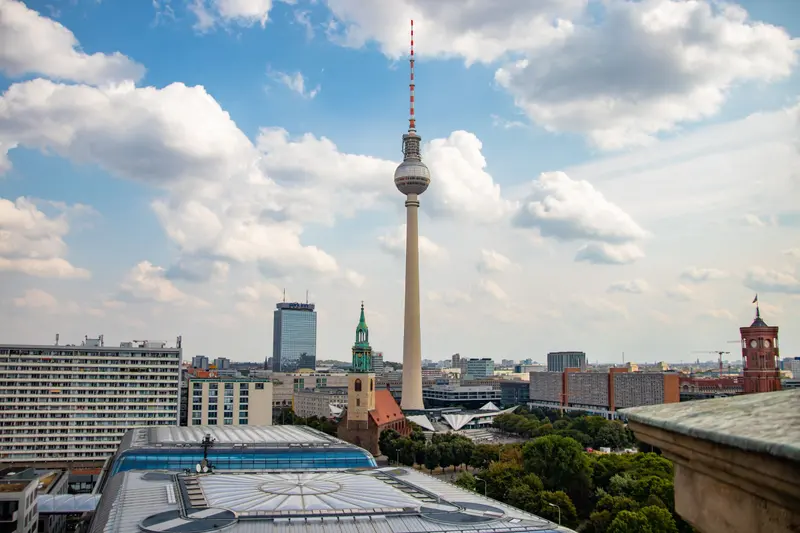
Berlin
Roasters in Kreuzberg and Neukölln, Kaffee und Kuchen in Prenzlauer Berg and cafés in Mitte. 2532 cafés.
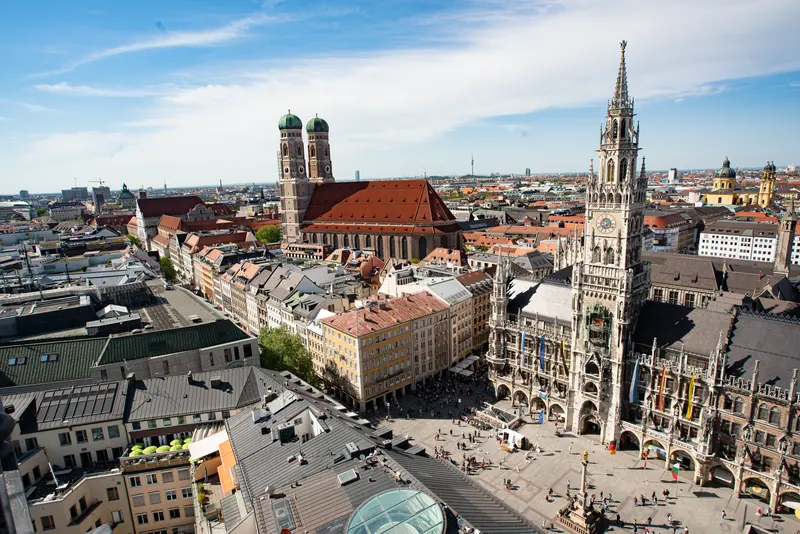
Munich
Kaffee und Kuchen in Schwabing, roasters in the Glockenbach and cafés by the Viktualienmarkt. 791 cafés.
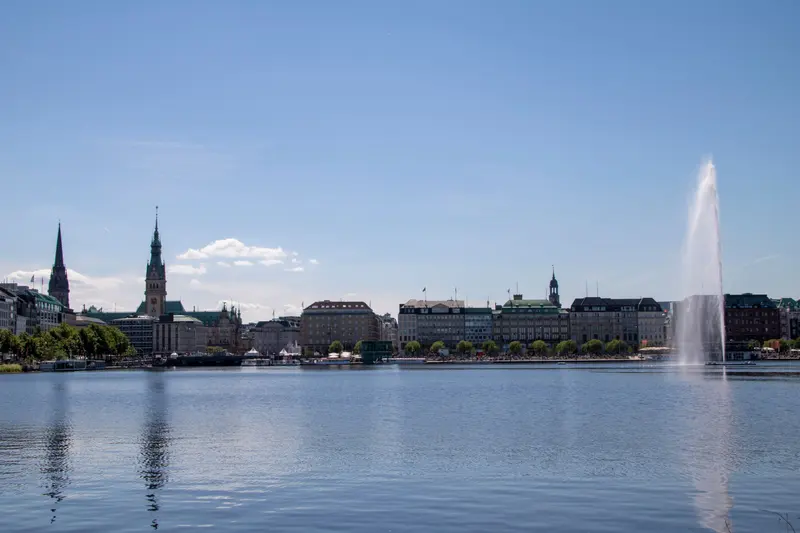
Hamburg
Franzbrötchen with coffee, roasters in the Speicherstadt and cafés in the Schanze and Ottensen. 775 cafés.
Coffee sniffers and the Kaffeesteuer
Coffee has been a tax target for centuries. From 1781 to 1787 Frederick the Great of Prussia put a high luxury tax on it and allowed only state roasteries to roast. About 400 disabled veterans, nicknamed Kaffeeriecher (coffee sniffers), searched homes and travelers for smuggled beans and were hated for it.3
A version of that tax survives. Green beans enter Germany free of duty and coffee tax; roasting is what makes them taxable, at €2.19 per kilogram of roasted coffee and €4.78 per kilogram of instant.4 The Kaffeesteuer is a national excise outside EU harmonization, and in 2018 it brought the federal budget about €1 billion. Coffee sold as goods also carries the reduced 7% VAT rate.4
Melitta's filter and the Vollautomat
German filter coffee has a named inventor. On 20 June 1908 Melitta Bentz of Dresden filed a coffee filter with a domed, recessed base and slanted outflow holes as a utility model, after testing the idea with a perforated brass cup and blotting paper from her son's exercise book.5 Her company entered the commercial register on 15 December 1908 with 72 Reichspfennig of capital, patented the paper filter in its familiar shape in the 1930s and later moved to Minden.5
Filterkaffee (drip coffee) has lost ground at home. In 2025 sales of whole beans reached a record 193,800 tonnes, up 130% in ten years, while ground coffee fell by about 38% over the same decade.1 One household in three now owns a Vollautomat, a bean-to-cup machine, and one cup in ten is made with instant coffee.1
Hamburg, the coffee port
Hamburg opened its first coffeehouse in 1677, after merchants back from long voyages talked up the drink.6 In 1886 the firms in the trade formed an association, and in 1887 it pushed through a coffee futures exchange on the Sandtorkai. Bombs destroyed that exchange in the Second World War.6 Its successor, the Kaffeebörse on Pickhuben, was finished in 1956.7
Both stood in the Speicherstadt, the warehouse district built between 1883 and 1927 in Hamburg's free port, where imports could be stored duty-free. Coffee, tea and spices lay on five floors, each block with a canal on one side and a street on the other.7 Most of the coffee came from South and Central America, where Hamburg merchants also owned plantations, in Guatemala among other places, and the Speicherstadt became the world's largest coffee warehouse. Since 5 July 2015 it has been a UNESCO World Heritage Site.7
The trade stayed. More than half of Germany's coffee imports come into Hamburg, and the city's coffee business includes Darboven, Tchibo and the Neumann Kaffee Gruppe.6 Tchibo began there in 1949 as a mail-order firm founded by the merchant Max Herz and Carl Tchiling, sending roasted coffee by post; its first store opened at Caffamacherreihe 10 in 1955, where customers could taste a cup before buying.8
Kaffee-Mix: East Germany's coffee crisis
In the East, coffee was subsidized, and gift parcels from West Germany covered about 20% of demand. When poor harvests in the mid-1970s pushed prices up and dearer oil drained foreign-currency reserves, the government answered on 26 July 1977 with Kaffee-Mix, a blend containing only 51% coffee.9 The rest was substitutes, among them roasted peas, rye, barley and sugar-beet pulp.10
From August 1977 it replaced the cheaper brands Kosta and Mocca-Fix Silber. The swelling grounds clogged older machines, more than 14,000 letters of complaint arrived, and a Hamburg taster called it musty and earthy. The price was cut in September, and in January 1978 the Politburo stopped production.10
Berlin, Munich and Hamburg
Germany's small roasters cluster in the big cities, Berlin, Hamburg, Munich and Frankfurt among them, and Bonanza Coffee Roasters and The Barn, both in Berlin, are among the best known.2 The Barn, open since 2010, added a roastery and café in the Brunnenviertel in September 2020, inside AEG's former headquarters, a building from 1883.11 The country had 490 specialty coffee cafés on European Coffee Trip in late 2025, up from 294 in 2021.2
Munich's grand café is the Luitpold on Brienner Straße, built by the architect Otto Lasne and opened in 1888.12 Bombing on the night of 18 December 1944 put out its lights; it reopened on 6 September 1962 and, redesigned, on 9 September 2010. A 1962 entry in its chronicle lists the cakes behind its Kaffee und Kuchen (afternoon coffee and cake): Swabian apple cake, Zwetschgendatschi (plum sheet cake), Sacher torte and Zug cherry torte.12
Munich's roasters are newer. Fausto, by the Auer Mühlbach, roasts more than ten espressos and supplies cafés across the city; Man versus Machine roasts light Central American, Kenyan and Ethiopian coffees for its bars on Müllerstraße, at Marienplatz and in the Maxvorstadt, and serves no syrups; the Kaffeerösterei Viktualienmarkt uses a drum roaster.13
Hamburg's pastry is the Franzbrötchen, laminated dough filled with sugar and cinnamon, eaten at breakfast or with afternoon coffee.14 One of its oldest traces is an 1825 handbill in which the baker Hieronymus Frisch offered Franzschbrod made to the recipe of the French baker in Altona, then under Danish rule; since the early 2000s it has spread to other German cities.14 Roasters such as Kaffee Stark and Café El Rojito work in the city.6
Sources
- Deutscher Kaffeemarkt 2025 stabil (press release, 2 April 2026), Deutscher Kaffeeverband, accessed October 2026
- The German market potential for coffee (updated 24 November 2025), CBI (Centre for the Promotion of Imports from developing countries), accessed October 2026
- Kaffeeriecher, Wikipedia (German), accessed October 2026
- Steuern auf Kaffee und kaffeehaltige Produkte in Deutschland (WD 4 - 3000 - 140/18), Deutscher Bundestag, Wissenschaftliche Dienste, accessed October 2026
- The invention of the coffee filter, Deutsches Patent- und Markenamt (DPMA), accessed October 2026
- Hamburgs Kaffeegeschichte, Hamburg Tourismus, accessed October 2026
- Speicherstadt, Wikipedia (German), accessed October 2026
- History, Tchibo, accessed October 2026
- 26 July 1977: Coffee crisis, Deutschlandmuseum, accessed October 2026
- Betrug am Arbeiter: Die Kaffeekrise in der DDR, Bundesarchiv, accessed October 2026
- How Ralf Rüller built The Barn (10 December 2020), World Coffee Portal, accessed October 2026
- Chronik des Luitpoldblocks, Luitpoldblock München, accessed October 2026
- 11 Cafés in München, in denen ihr richtig guten Kaffee bekommt (Farina Böcher), Mit Vergnügen München, accessed October 2026
- Franzbrötchen, Wikipedia (German), accessed October 2026
Cafés in Germany: questions
How much coffee do people drink in Germany?
In 2025 the Deutscher Kaffeeverband put average coffee consumption in Germany at about 161 liters per person, and roasters sold around 456,000 tonnes of roasted coffee. Germans use about 5.4 kg of coffee per person a year, against a European average of 5 kg, and out-of-home consumption hit a record 125,500 tonnes in 2025.
What makes Hamburg the center of the coffee trade in Germany?
More than half of Germany's coffee imports come into Hamburg. Its first coffeehouse opened in 1677, a coffee futures exchange opened on the Sandtorkai in 1887, and the Speicherstadt, built between 1883 and 1927 in the free port, became the world's largest coffee warehouse. Tchibo was founded in Hamburg in 1949, and Darboven and the Neumann Kaffee Gruppe are part of the city's coffee business.
Who invented the paper coffee filter in Germany?
Melitta Bentz of Dresden filed her coffee filter as a utility model on 20 June 1908, after experimenting with a perforated brass cup and blotting paper from her son's exercise book. Her company was registered on 15 December 1908 with 72 Reichspfennig of capital, patented the paper filter shape in the 1930s and later moved to Minden.
Your café deserves better than a pin someone else dropped
Free listings are free for good. A featured page gives you photos, a menu and your own URL, in your café's own design, for less than a coffee a day.