Cafés in Sweden Stockholm
Five coffee bans, fika as living heritage, kaffeost in the north, the roasters of Gävle, Karlstad and Helsingborg, and Stockholm.
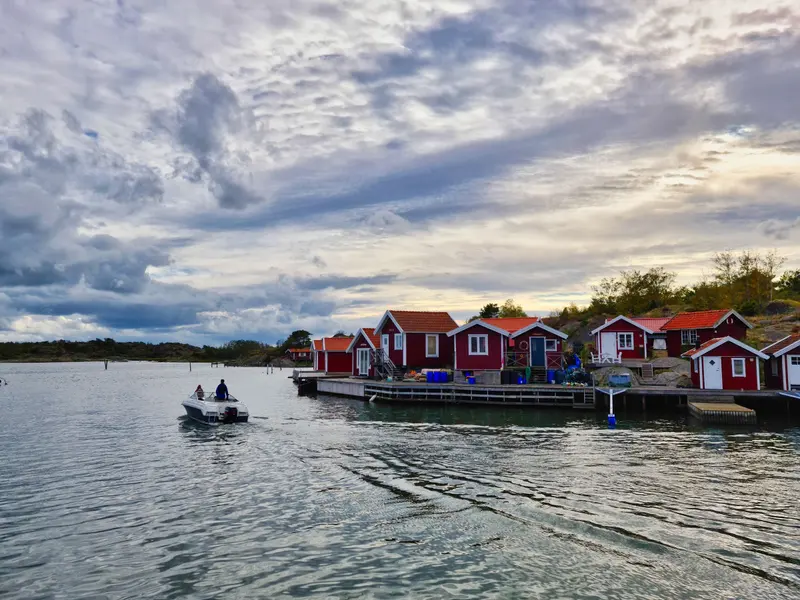
Photo: Martin Magnemyr, Pexels License
Sweden imported 105,000 tonnes of green coffee in 2022, the tenth-largest volume in Europe, and its roasters turned out about 88,000 tonnes in 2020, the sixth-largest roasting industry on the continent.2 Filter coffee is the everyday brew, and most Swedes drink it black. Four big roasters share most of the market, while 80 to 100 micro roasters hold about 6% of it, mainly in specialty and premium coffee.2
Coffee came in the 1680s as a pharmacy product. Gothenburg's archives record 425 g arriving from Amsterdam in the summer of 1685, the earliest documented shipment.34 Imports grew after Karl XII came home from the Ottoman Empire with the habit, and Lund took about 600 kg of beans from Rostock in 1716–1718.4 Today fika, the coffee break taken with others, is on Sweden's national list of living cultural heritage.1
Sweden's café cities
Five bans and a royal experiment
Sweden banned coffee five times between 1756 and 1817, and the last ban ran until 1822.5 The first was pushed through the Riksdag by the peasant estate, in retaliation for a ban on distilling brandy at home; it was lifted in 1769 and replaced by an import duty.3 The worry was the economy more than health. Offenders could lose their cups and dishes, and later penalties included prison.5
Gustav III tried to prove coffee harmful. He had a pair of identical twins, both prisoners under sentence, drink large daily amounts, one of coffee and one of tea. The king was assassinated in 1792, the two supervising doctors died next, and the tea drinker lived to 83. Nobody recorded when the coffee drinker died.5
From kafferep to the factory break
At first, the coffee itself was the fika; only later did the word come to mean the break and the small bite that goes with it.1 Coffee was drunk mostly at home in the 1700s, and it went with the kafferep, gatherings where women met to do handicrafts. Regulated morning and afternoon breaks in factories did much to shape the modern habit.1
A proper kafferep needed seven kinds of cookies, a custom known since the late 1800s. A hostess who baked fewer was thought stingy and one who baked more a show-off, and in 1945 the custom became the recipe book Sju sorters kakor (Seven kinds of cookies).6 Home coffee parties grew rarer in the late 1900s, and from the 1980s cafés took over as meeting places.1
Kaffeost in the north
In the far north, coffee comes with cheese. Kaffeost (coffee cheese) is a fresh cheese of whole reindeer, goat or cow's milk, cut into cubes and dropped into hot coffee, where it softens and takes on the coffee's flavor.7 The EU gave it a protected designation of origin in 2025, for cheese made in Norrbotten, Västerbotten, Lappland, Jämtland, Härjedalen and Ångermanland.7
Its roots are in Tornedalen and northern Finland, and in Meänkieli, the Tornedalen language, it is kahvijuusto. Eaten plain, it squeaks against the teeth; in coffee it stops squeaking. The other way to eat it is on the side, with cloudberry jam.8
Roasters in Gävle, Karlstad and Helsingborg
Most of the coffee Swedes buy is roasted in three provincial towns. Gevalia, roasted in Gävle, has about 40% of the market, Zoégas of Helsingborg about 20% and Löfbergs of Karlstad about 15%.2 Gevalia is the Latin name for Gävle. The Engwall trading house had roasted coffee since 1913 before launching the brand in 1920, and Gevalia is still roasted at Alderholmen.9
The Löfberg brothers founded their firm in Karlstad in 1906, and it is still family-owned, now in its third and fourth generations.10 Carlos Zoéga started trading coffee in Landskrona in 1881 and founded Zoégas in Helsingborg in 1886. Its dark Skånerost blend began in 1918 as Horns blandning, and in 2017 Zoégas held about 65.7% of Swedish dark-roast sales.11
Sources
- Fika, Levande kulturarv, Institutet för språk och folkminnen (updated 1 October 2024), accessed October 2026
- What is the demand for coffee on the Scandinavian market? (updated 23 April 2024), CBI, Netherlands Ministry of Foreign Affairs, accessed October 2026
- Kaffe, Wikipedia (Swedish), accessed October 2026
- Kaffe: en het historia, Kulturen i Lund, accessed October 2026
- Why coffee was banned in Sweden five times (Victoria Martínez, 2 July 2018, updated 23 September 2022), The Local Sweden, accessed October 2026
- Sju sorters kakor, Wikipedia (Swedish), accessed October 2026
- Kaffeost får skyddad ursprungsbeteckning i EU (press release, 26 June 2025), Livsmedelsverket (Swedish Food Agency), accessed October 2026
- Kaffeost, Wikipedia (Swedish), accessed October 2026
- Gevalia, Wikipedia (Swedish), accessed October 2026
- Löfbergs, Wikipedia (Swedish), accessed October 2026
- Zoégas, Wikipedia (Swedish), accessed October 2026
Cafés in Sweden: questions
Why was coffee banned in Sweden?
Sweden banned coffee five times between 1756 and 1817, with the last ban lasting until 1822. The worry was economic more than medical, and the first ban was pushed by the peasant estate in retaliation for a ban on home distilling. Offenders could have their cups and dishes confiscated, and later penalties included prison.
What is kaffeost in Sweden?
Kaffeost, coffee cheese, is a fresh cheese from northern Sweden made with whole reindeer, goat or cow's milk. It is cut into cubes and dropped into hot coffee, where it softens and takes on the coffee's flavor, or eaten on the side with cloudberry jam. Since 2025 it has had EU protected designation of origin.
What is the seven kinds of cookies tradition in Sweden?
At a Swedish kafferep, a coffee party, the hostess was expected to serve seven kinds of cookies, a custom known since the late 1800s. Fewer looked stingy and more looked showy. In 1945 the custom gave its name to the recipe book Sju sorters kakor.
Your café deserves better than a pin someone else dropped
Free listings are free for good. A featured page gives you photos, a menu and your own URL, in your café's own design, for less than a coffee a day.