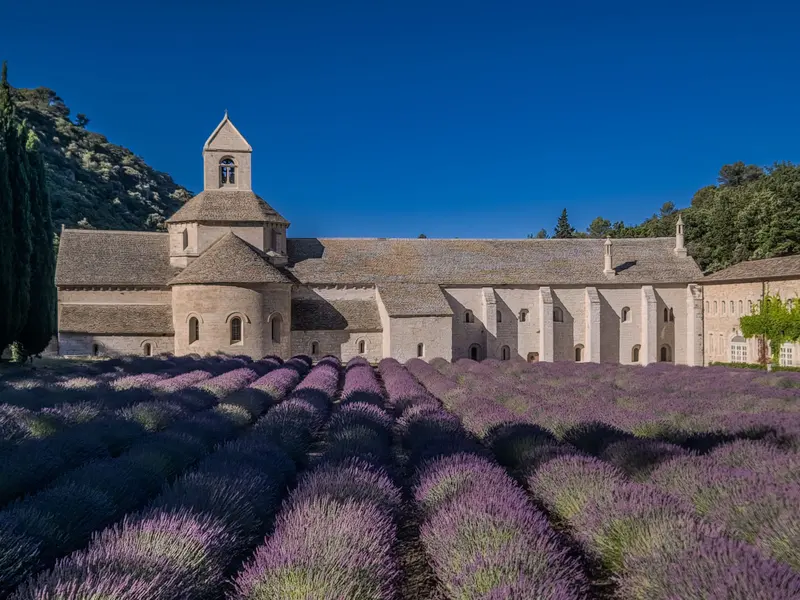
Cafés in France Paris and Lyon
The waiters' race in Paris, Lyon's specialty roasters and coffee fest, Réunion's Bourbon pointu, chicory from the Nord and the café gourmand.
Photo: Hub JACQU, Pexels License
France roasts its coffee at home from imported beans. It bought more than 226,000 tonnes of green coffee in 2023, and 147,000 tonnes of that, 67%, came straight from producing countries, Brazil and Vietnam above all.1 Re-exports were small, at 8,619 tonnes in 2023.1
Much of it ends up in capsules. Pods made up 34% of the coffee sold in France by volume in 2022 and 65% of its retail value; JDE Peet's held 39% of the pod market and Lavazza 19%.1 The retail coffee market as a whole was worth €2.8 billion.1
Spending in cafés and restaurants has not returned to its old level. The out-of-home coffee market was worth €9.3 billion in 2023, against €11.2 billion in 2018, while specialty coffee grew to about 4% of the market in 2020, up from 1–2% in 2017.1
Marseille, Versailles and the Atlantic ports
Coffee reached France across the Mediterranean. In 1660 about 20,000 quintals of coffee from Turkey arrived in Marseille, and in 1669 the Turkish ambassador in Paris offered it to Louis XIV.2 A century later the trade had moved to the Atlantic: Bordeaux imported about 28,000 tonnes in 1786, and at the end of the 18th century Le Havre received 15,000 tonnes, over a third of French imports.2
Much of that coffee grew in French colonies. In 1720 the naval officer Gabriel de Clieu carried seedlings from the royal botanical garden in Paris to Martinique and, by his own account, shared his rationed drinking water with them.3 His claim to have brought coffee to the Americas is disputed, since it was reportedly growing in Saint-Domingue from 1715.3 By 1789 more than 80% of the world's coffee came from the Americas.2
Bourbon pointu, the coffee of Réunion
France still grows coffee on Réunion, the Indian Ocean island once called Bourbon. A royal order of 27 June 1715 led to six Mocha plants being sown at Saint-Paul that September.2 A natural mutation later produced the Bourbon pointu, a compact, conical tree with narrow leaves. Plantings grew from about 2,000 ha in 1865 to nearly 6,000 ha in 1880, then sugar cane and disease pushed coffee out, and by around 1950 it had gone.4
Interest from Japanese buyers helped revive it in 2002, and a research program with CIRAD, the French agricultural research center, traced close to 2,000 surviving trees.4 The variety holds about 0.4–0.75% caffeine, against 1.2–1.6% for other arabicas.5 Today the Bourbon Pointu cooperative, founded in 2008, has 53 growers on about 15 hectares, who produce around 1 tonne of green coffee a year, or 500–600 kg after a cyclone.4
Cherries are picked from June to December, and most of the crop stays on the island: the cooperative sells about 80% of its green coffee and all of its roasted coffee locally, at markets, grocers and museums, and exports an average of 300 kg a year, mainly to Japan, the United States and Switzerland.4 An AOP (protected designation of origin) for coffee grown at 600 to 1,200 m between Saint-Joseph and Saint-Paul was due to be finalized during 2026.4
Chicory from the Nord
Northern France also drinks chicory. The roasted root became a coffee substitute on a large scale during the Continental Blockade of 1806, when coffee ran short, and France is now the world's largest producer, at about 90,000 tonnes a year, sown in April and lifted in October and November.6 Drunk alone or mixed with coffee, chicory is still treated as a regional symbol in Belgium and Nord-Pas-de-Calais.6
The main processor, Leroux, has been in Orchies since 1858 and works with more than 200 growers and roasters, most of them on the plains of Flanders.7
The café gourmand
The café gourmand is younger than it looks. Bernard Boutboul, head of the restaurant consultancy Gira Conseil, created it for the La Criée restaurant chain, and it was first served in Paris in September 1990.8 It is an espresso brought with at least three mini desserts, such as chouquettes, a small crème brûlée or macarons.8
Paris and Lyon
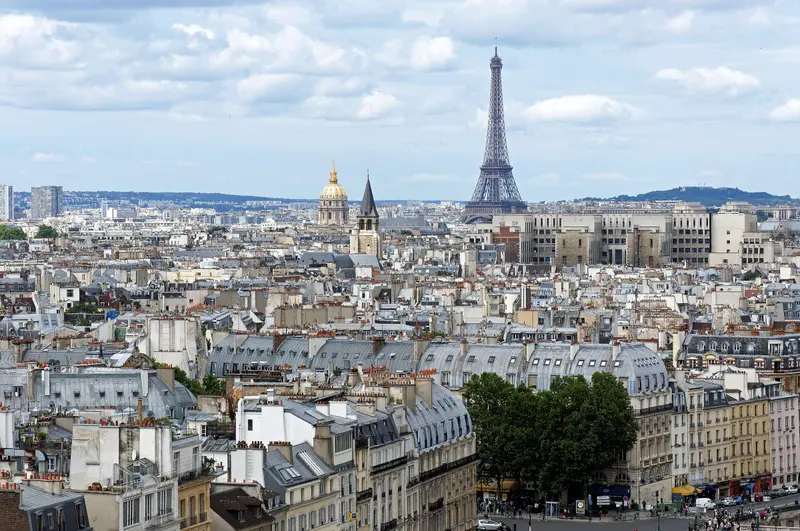
Paris turns café service into a sport. The Course des cafés, a race for waiters, first appeared in 1914 according to the historian Laurent Bihl, stopped for lack of funding and was revived by the city in 2024; in 2025 it ran 4 km through the Marais from the Hôtel de Ville.9
Competitors carry a tray with a glass of water, a coffee and a croissant, walk fast without running, and win only if nothing is spilled or eaten.9 The 2026 edition, set for 20 September, was postponed, with no new date announced as of August 2026.10
A Paris café also hosted the Lumière brothers' first paid public screening. On 28 December 1895, 33 spectators paid one franc each in the Salon indien of the Grand Café, 14 Boulevard des Capucines, to watch films that included La Sortie de l'usine Lumière à Lyon, workers leaving the Lumière factory in Lyon.11
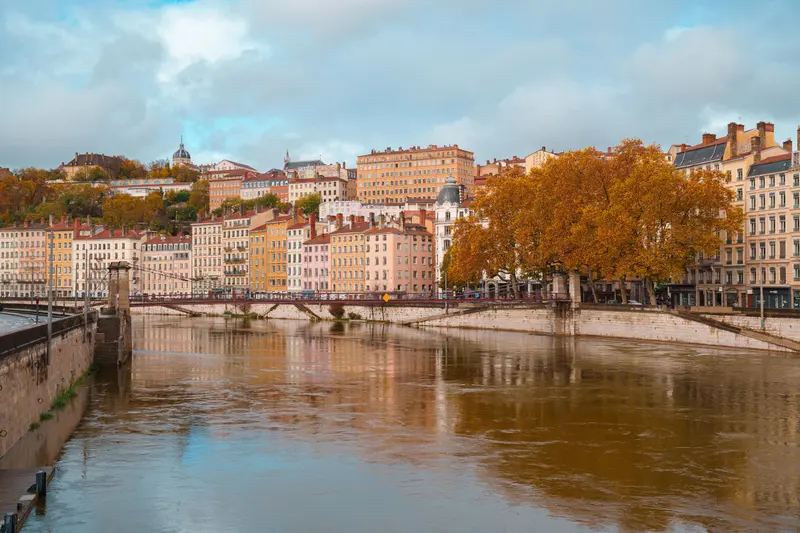
Lyon, about two hours from Paris by train, is described by Sprudge as one of Europe's fastest-growing specialty coffee markets.12 Its pioneer was the roaster Mokxa, founded in 2011, whose former base at 3 Rue de l'Abbé Rozier, in the 1er arrondissement, now houses another coffee bar.1213 Lyon Coffee Fest, run by the association Lyon Coffee Events, ran from 27 April to 3 May 2026, with its main fair at H7 in the Confluence district.14
Sources
- The French market potential for coffee (updated 16 April 2025), CBI (Centre for the Promotion of Imports from developing countries), accessed October 2026
- Histoire du café, Wikipédia (French), accessed October 2026
- Gabriel de Clieu, Wikipedia, accessed October 2026
- Filière café (Agreste La Réunion, Essentiel n°3, June 2026), DAAF La Réunion, Ministère de l'Agriculture, accessed October 2026
- Bourbon pointu, Wikipédia (French), accessed October 2026
- Chicorée à café, Wikipédia (French), accessed October 2026
- La filière française, Leroux, accessed October 2026
- Café gourmand, Wikipédia (French), accessed October 2026
- La course des cafés remise à flot (updated 22 September 2025), Ville de Paris, accessed October 2026
- La Course des Cafés n'aura finalement pas lieu en septembre à Paris (updated 5 August 2026), Sortir à Paris, accessed October 2026
- Salon indien du Grand Café, Wikipédia (French), accessed October 2026
- The Sprudge Guide To Coffee In Lyon, France (Emily Sujka, 16 June 2025), Sprudge, accessed October 2026
- La Boîte à Café (published 25 August 2025, updated 9 December 2025), Le Fooding, accessed October 2026
- Lyon Coffee Fest is back in 2026 (10 April 2026), Le Bonbon Lyon, accessed October 2026
Cafés in France: questions
Is coffee grown in France?
Yes, on Réunion, the French island in the Indian Ocean. Its Bourbon pointu, a natural mutation of arabica with about 0.4–0.75% caffeine, had disappeared by around 1950 and was revived from 2002. The cooperative's 53 growers produce around 1 tonne of green coffee a year, and most of it is sold on the island.
What is chicory coffee in northern France?
A drink made from roasted chicory root, taken alone or mixed with coffee. It spread as a coffee substitute during the Continental Blockade of 1806, and France is the world's largest chicory producer, at about 90,000 tonnes a year. The main processor, Leroux, has worked in Orchies since 1858 with growers on the plains of Flanders.
What is a café gourmand in France?
An espresso served with at least three mini desserts, such as chouquettes, a small crème brûlée or macarons. Bernard Boutboul of the consultancy Gira Conseil created it for the La Criée restaurant chain, and it was first served in Paris in September 1990.
Your café deserves better than a pin someone else dropped
Free listings are free for good. A featured page gives you photos, a menu and your own URL, in your café's own design, for less than a coffee a day.