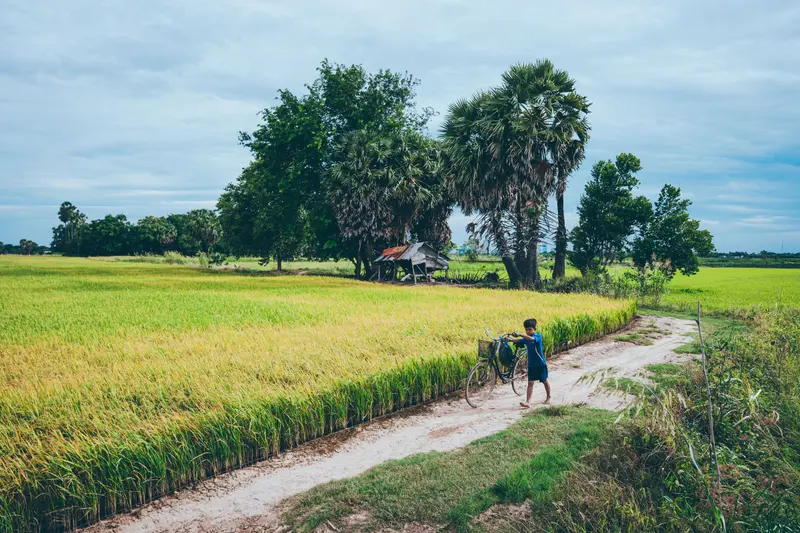
Cafés in Cambodia Phnom Penh and Siem Reap
Iced coffee with condensed milk, robusta from Mondulkiri and Ratanakiri, Phnom Penh's carts and roasters, and early coffee in Siem Reap.
Photo: Chorn Travit, Pexels License
Cambodia drinks far more coffee than it grows. The Ministry of Agriculture, Forestry and Fisheries put the 2025 harvest at 1,333 tonnes from 563 hectares, while the Cambodia Coffee Association counted about 12,000 tonnes of green beans imported that year, worth more than US$70 million.1 The association reckons that Cambodians aged 20 to 69 drink about 1.5 million cups a day, some 11,200 tonnes a year.1
The local crop is mostly robusta. About 90% of the country's roughly 600 coffee farmers grow it, according to the association, and the rest grow arabica.2
The word itself came from France: kaafee (កាហ្វេ) is borrowed from café.3 Coffee entered Khmer kitchens from French cuisine along with condensed milk, chocolate, beer and wine, and so did the baguette, nom pang (នំប៉័ង), still sold as a hot sandwich in the big towns.45
Mondulkiri and Ratanakiri, the robusta highlands
The ministry names five coffee provinces: Mondulkiri, Ratanakiri, Pursat, Pailin and Tboung Khmum.1 Mondulkiri is the largest province in the country, 14,288 km² at 190 to 1,000 m, and its capital, Senmonorom, is about 390 km from Phnom Penh; the Bunong are the largest of its ten indigenous minorities.6
Coffee there is recent. Planting in Mondulkiri began in 1996, nearly stopped in 2000 and 2001 when bean prices collapsed, and picked up again as prices recovered, Yang Saing Komar, formerly of the NGO CEDAC, told Thmey Thmey in 2019.7 He estimated nearly 300 hectares in the province in 2018, about double the year before.7
Ratanakiri, a basalt plateau of red soils around the town of Banlung, had large French plantations, but of rubber, not coffee.8 Its coffee peaked in the mid- to late 1990s, when more than 500 hectares grew it and beans sold for US$2 a kilo.9 One grower in O'Yadaw who started in 1997 at about US$2,500 a tonne had seen prices fall as low as US$400 by 2009, and only 150 hectares were left, the provincial agriculture department said, as farmers turned to cashews, cassava and rubber.9
A small crop in a hot year
Part of the harvest goes abroad: 601 tonnes in 2025, to Estonia, China, Japan and Russia.1 In October 2026 Kiri Coffee, a Mondulkiri producer, showed its beans at SIAL Paris in a Cambodian pavilion of 16 companies.1
The 2026 season was hard on the trees. Mondulkiri has become a key growing area thanks to its altitude and climate, but a strong El Niño brought heatwaves and drought, and one grower there told Bernama that about 30% of his newly planted trees had died.2 The association, which values the industry at US$200 million, urged smallholders to improve water management and irrigation.2
Iced, sweet and mostly imported
The everyday cup is cold. Street stalls pour sweet iced coffee with condensed milk for commuters every morning, and over the past decade specialty cafés have added pour-over, siphon and cold brew.10 Their customers have changed too: "Customers now ask about the farms, the roasting process, and even brewing styles," the Phnom Penh roaster Kimheng Chhay said at a coffee event in the capital.10
Most beans in those cups still come from abroad, at an average of about US$6,000 a tonne in 2025, according to Dup Piseth, president of the coffee association.1 Back in 2019, Yang Saing Komar put Cambodia's own beans at between 5% and 10% of what the country drank.7
Phnom Penh and Siem Reap
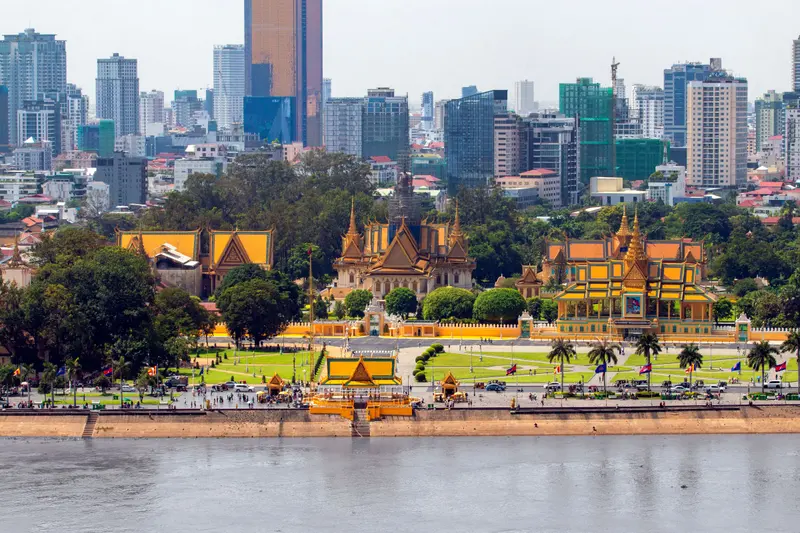
Phnom Penh, the capital, is where the street cart and the roaster share a block. Brew houses have sprung up on its street corners in recent years, Thmey Thmey noted in 2019.7 The city's cafés range from sidecar stalls and 24-hour counters to roasters near the Russian Market and in Toul Kork.
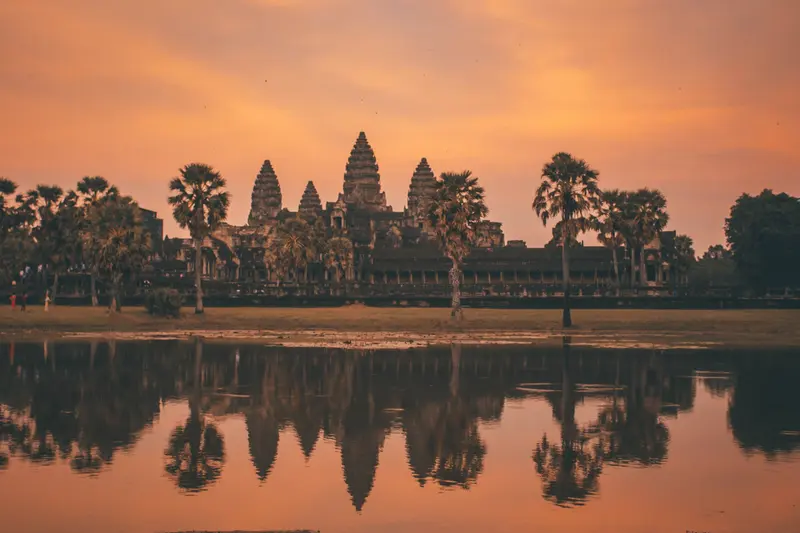
Siem Reap runs on the temple timetable. Its cafés cluster on both banks of the Siem Reap River, around Wat Bo, Taphul and the Old Market, and several open at 06:00 for visitors heading out to Angkor.
Sources
- Cambodian Coffee Producers Seek Global Markets as Imports Outstrip Local Output, Cambodianess (Phoeurng Phearak, October 21, 2026), accessed October 2026
- Cambodia Coffee Production Faces Heat Stress As El Nino Threat Mounts, Bernama (September 4, 2026), accessed October 2026
- កាហ្វេ, Wiktionary, accessed October 2026
- Cambodian cuisine, Wikipedia, accessed October 2026
- Cuisine cambodgienne, Wikipédia (French Wikipedia), accessed October 2026
- Mondulkiri province, Wikipedia, accessed October 2026
- Cambodia's Thirst for Coffee Drives Massive Imports, Thmey Thmey (Ky Soklim, March 29, 2019), accessed October 2026
- Ratanakiri province, Wikipedia, accessed October 2026
- Coffee Farmers Struggling With Limited Local Market, The Cambodia Daily (Neou Vannarin, March 26, 2009), accessed October 2026
- From colonial cafés to creative coffee spaces: Cambodia's coffee culture is finding its own flavor, Seasia.co (Mohammad Reiza, September 29, 2025), accessed October 2026
Cafés in Cambodia: questions
Where is coffee grown in Cambodia?
Cambodia's coffee grows mainly in Mondulkiri, Ratanakiri, Pursat, Pailin and Tboung Khmum, according to the Ministry of Agriculture. The 2025 harvest was 1,333 tonnes from 563 hectares, and about 90% of the roughly 600 coffee farmers grow robusta. Mondulkiri's plantations date from 1996; Ratanakiri's peaked in the 1990s and had shrunk to 150 hectares by 2009.
How much coffee does Cambodia import?
The Cambodia Coffee Association counted about 12,000 tonnes of green coffee imported in 2025, worth more than US$70 million, at an average of about US$6,000 a tonne. Cambodia's own harvest that year was 1,333 tonnes. The association estimates that Cambodians aged 20 to 69 drink about 1.5 million cups of coffee a day.
What did the French leave in Cambodian coffee culture?
The Khmer word for coffee, kaafee, comes from the French café. Coffee entered Cambodian cooking from French cuisine along with condensed milk, chocolate, beer and wine, and so did the baguette, nom pang, sold as a hot sandwich. Sweet iced coffee with condensed milk is now the everyday cup at Cambodia's street stalls.
Your café deserves better than a pin someone else dropped
Free listings are free for good. A featured page gives you photos, a menu and your own URL, in your café's own design, for less than a coffee a day.