Cafés in Estonia Tallinn
Maiasmokk's marzipan since 1864, Tartu's Café Werner, Soviet-era Pegasus, and Tallinn's cafés from the Old Town to Kalamaja.
Photo: Raul Ling, Pexels License
Coffee reached Estonia in the 18th century through its port cities, Tallinn among them.5 The first café in Tallinn, A. D. Carvallido's, stood at Raekoja plats 12, on the Town Hall Square, in the early 18th century.1 By the 19th century, cafés were places to read, debate and meet artists.5
Today most Estonians brew strong filter coffee at home and order espresso drinks in cafés.5 Beans have become expensive. By October 2024 the Prisma supermarket chain had raised coffee prices by more than 50% in two years, Rimi's coffee sales volume had fallen 20% over the same period, and nearly 80% of the coffee Rimi sold went out on promotion.7 Shoppers were trading beans for cheaper ground coffee, and sales of automatic coffee machines fell by up to 20% that year.7
Estonia's café cities
Maiasmokk and the confectioners' cafés
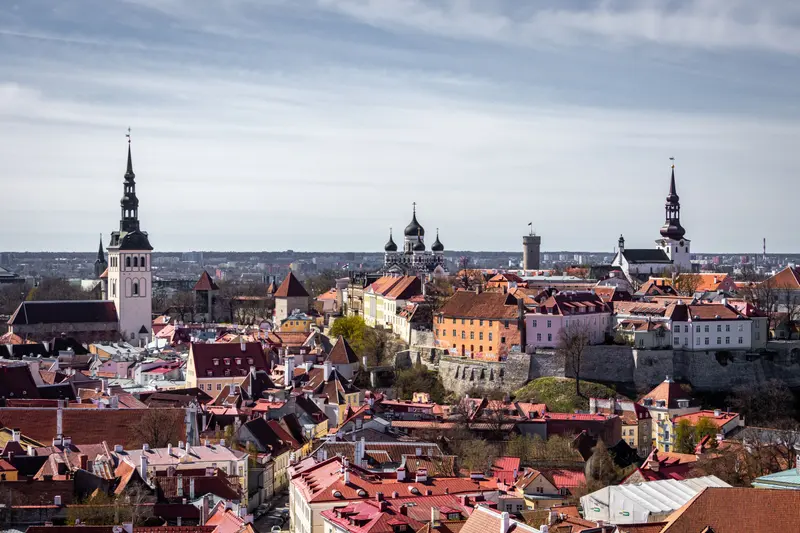
Estonian cafés grew out of confectioneries, which is why coffee here still comes with cake, cinnamon buns or chocolate.5 The oldest still running is said to be Maiasmokk (the Sweet Tooth) in Tallinn's Old Town. In 1806 the sugar baker Lorenz Caviezel got the rights to the plot and set up a bakery; in 1864 the Baltic German confectioner Georg Stude bought and rebuilt the property, and a café has run there since.2
In the late 19th century Stude's marzipan went to the Russian imperial family. The company was nationalized in 1941, but the café stayed open through the Soviet occupation, became a private business again in 1997, and has belonged to the confectioner Kalev since 2004.2 Its marzipan room holds about 200 figures made from molds more than a century old.2
Werner and the Tartu tradition
The university town of Tartu built its own café culture around students, writers and academics.5 In 1895 Johann Werner took over a confectionery there and advertised it as Viennese; the café now stands at Ülikooli 11. Its regulars included the writer Friedebert Tuglas, the painter Konrad Mägi and the politician Jaan Tõnisson, and the poet and professor Gustav Suits held exams there.3
In Soviet times the café's official name was Tartu, though people kept calling it Werner, and it was one of the few with chess tables in a back room. A fire destroyed it on 22 October 1983, and it did not reopen until May 1998.3 Madis Kõiv set a play, Endless Coffee Drinking, in a Tartu café modeled on Werner.1
Tallinn's kohvikud, 1920s to 1960s
A kohvik (café) could be political or literary. Tallinn City Museum counts Centum, with a 1920s interior by the architect Edgar Johan Kuusik, among the politically important cafés, and Pegasus and Kloostri Ait among the cultural ones.1 Pegasus fills three floors of the Writers' House at the corner of Harju and Vana-Posti. August and Heili Volberg designed the building in 1958, and it opened in spring 1963, housing the Estonian Writers' Union and the editors of Looming magazine.4
Väino Tamm designed the Pegasus interior in 1963, and Café Pärl belongs to the same decade.1 The museum's exhibition Endless Coffee Drinking, in the Short Leg Gate Tower of the Kiek in de Kök fortifications museum, shows furniture made for these cafés and borrows its title from Kõiv's play.1
Filter at home, espresso out
Estonian cafés pour mostly cappuccinos, lattes and plain espressos, with little of the customizing found elsewhere. Iced coffee turns up in summer without displacing hot drinks, and coffee to go is common on Tallinn's busier streets.5
In October 2023 a small cappuccino in central Tallinn cost €3.20 and a small black coffee €3. Café customer numbers in Tallinn were up 12% on the year despite higher prices, and rents for central premises had risen by about a fifth.6
Tallinn beyond the Old Town
Tallinn's cafés spread from the Old Town to Kalamaja, Kadriorg and Telliskivi.5 Kalamaja means fish house: fishermen and fishmongers held the area from the 14th century, and after the railway to St. Petersburg opened in 1870, factories arrived and wooden houses went up for their workers. Next door, Telliskivi Creative City fills former factory and railway buildings.10
Each April the Tallinn Coffee Festival takes over Kultuurikatel, a converted power station at Kursi 3 built more than a century ago.89 The eighth edition, in 2024, expected up to 5,000 visitors and over 60 exhibitors, and hosted the Estonian Latte Art Throwdown and the Estonian Cupping Championship.9
Sources
- Exhibition 'Endless Coffee Drinking' at the Kiek in de Kök Fortification Museum, in the Gate Tower, Tallinn City Museum, accessed October 2026
- Maiasmokk, Wikipedia, accessed October 2026
- Werner (kohvik), Wikipedia (Estonian), accessed October 2026
- Writers' House, Museum of Estonian Architecture, accessed October 2026
- Inside Estonia's cafè culture (Giulia Galbiati, 10 January 2026), Estonian World, accessed October 2026
- How do coffee prices in Tallinn cafés compare to those in other big cities? (Veronika Uibo, 23 October 2023), ERR News, accessed October 2026
- Kohvi kiire hinnatõus maailmaturul on jõudnud ka Eesti poodidesse (Merilin Pärli, 14 October 2024), ERR, accessed October 2026
- Tallinn Coffee Festival, Visit Estonia, accessed October 2026
- What to Expect at This Year's Tallinn Coffee Festival (22 March 2024), Barista Magazine, accessed October 2026
- Kalamaja, Telliskivi, Noblessner, Visit Tallinn, accessed October 2026
Cafés in Estonia: questions
What is the oldest café in Estonia?
Maiasmokk in Tallinn's Old Town is said to be the oldest café still operating in Estonia. A sugar baker set up a bakery on the site in 1806, and the confectioner Georg Stude opened the café in 1864. It stayed open through the Soviet occupation, became private again in 1997, and has belonged to the confectioner Kalev since 2004.
How much does a cappuccino cost in Tallinn, Estonia?
In October 2023 a small cappuccino in central Tallinn cost €3.20 and a small black coffee €3. Café customer numbers were still up 12% on the year despite higher prices. Shop prices kept rising after that: by October 2024 one supermarket chain had raised coffee prices by more than 50% in two years.
How do people in Estonia drink coffee?
Most people in Estonia brew strong filter coffee at home and order espresso drinks in cafés, mostly cappuccinos, lattes and plain espressos with little customizing. Coffee usually comes with a pastry, cake, cinnamon bun or chocolate, a habit from cafés' roots in confectioneries. Coffee to go is common in Tallinn, and iced coffee appears in summer.
Your café deserves better than a pin someone else dropped
Free listings are free for good. A featured page gives you photos, a menu and your own URL, in your café's own design, for less than a coffee a day.