Cafés in Ethiopia Addis Ababa
Buna at home and at the counter in Addis Ababa, plus the coffee of Sidama, Yirgacheffe, Harar and Kafa, where wild arabica still grows.
Photo: Ludo Van den Nouweland, Pexels License
In 2026/27 Ethiopia may pass Indonesia as the world's fourth-largest coffee producer, for the third time in five seasons. The USDA forecast a harvest of 12.1 million 60-kg bags, about 726,000 tonnes, from 800,000 hectares.1 Output has nearly tripled since 2005/06, when it was about 4.5 million bags, and coffee earns nearly a third of the country's export revenue.2
The Ethiopian fiscal year that closed in July 2026 set a record of US$3 billion in coffee exports, according to Adugna Debela, director general of the Ethiopian Coffee and Tea Authority. He put the average price at US$7,500 a tonne, up from US$6,000, with Saudi Arabia, Germany and China the main buyers.4
A large share never leaves the country. The USDA's Foreign Agricultural Service put home consumption at 3.6 million bags in 2024/25, close to a third of that year's 11.46-million-bag harvest, or about 2.3 kg per person.32
Ethiopia's café cities
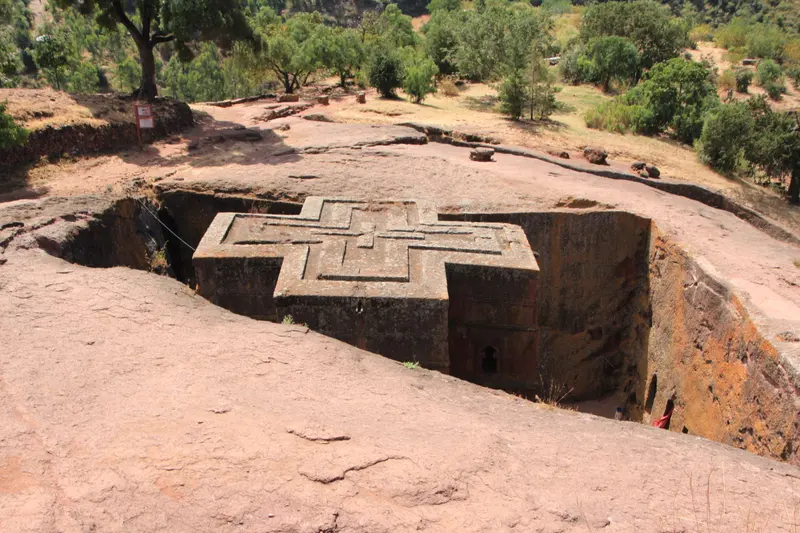
Kafa, Harar and the coffee road to Arabia
Wild arabica still grows in the southwest. UNESCO designated the Kafa Biosphere Reserve in 2010: 760,144 ha about 460 km southwest of Addis Ababa, with close to 5,000 wild varieties of the plant and more than half of Ethiopia's remaining montane forest.5
The trade ran east. Harar, a walled hilltop city at 1,885 m, was "the emporium of the coffee trade" in Richard Burton's 1855 account, and Arthur Rimbaud returned there in 1888 to deal in coffee, musk and skins.6 Its old town, Harar Jugol, has been a World Heritage Site since 2006.6 Ethiopian coffee went to Aden through the Somali port of Berbera, and by Captain Haines's account Mocha bought up to two-thirds of its coffee from Berbera-based merchants.7
When the church came round to buna
For Orthodox Christians, coffee was long a Muslim drink. The Ethiopian Orthodox Church banned it some time before the 18th century, and the historian Richard Pankhurst credited the change of attitude in the late 1800s largely to Emperor Menelik, who drank it himself.7 Abuna Matewos, head of the church, did much to dispel the clergy's belief.7 Amharic sources date his approval to 1881 in the Ethiopian calendar, the year Menelik became emperor: 1889 in the Gregorian count.8
The bean is not the only part people drink. Among the Oromo, buna qela mixes roasted beans with butter and salt.7 Kuti (ቁጢ) is coffee leaves boiled with milk, and ashara (አሻራ) is brewed from the husks; neither drink has a known following outside Ethiopia.8
Sidama, Yirgacheffe and the growing regions
Oromia grew 59.5% of the crop over the three seasons to 2026, Southwest Ethiopia 13.7%, Sidama 12.9% and Southern Ethiopia 7.1%.1 Sidama became a region of its own after a referendum on 20 November 2019, when 98.52% voted for more autonomy, and was formally established on 18 June 2020 with Hawassa as its capital.9 It supplies over 40% of the washed coffee sent to the central market.9
Yirgacheffe, a name buyers know from coffee bags, is a town at 1,880 to 1,919 m in the Gedeo Zone and the seat of a woreda (district) that is an important coffee-growing area.10
The exchange, the floor price and direct export
Most commercial coffee has passed through the Ethiopia Commodity Exchange, set up in April 2008 to build what its founding proclamation called "an efficient modern trading system".11 It handled 138,000 tonnes of all commodities in its first year, and by its third, trade was split nearly evenly between coffee and oilseeds and pulses.11
The rules have loosened since. Producers may now export directly, foreign investors can export raw coffee, banks can issue export permits, and contracts no longer have to be registered at the exchange; oversight moved to the Ethiopian Coffee and Tea Authority.3 A minimum export price, adjusted weekly, ties contracts to world prices.3 After the US$3 billion year, the government set a new target of US$6 billion a year within five years.4
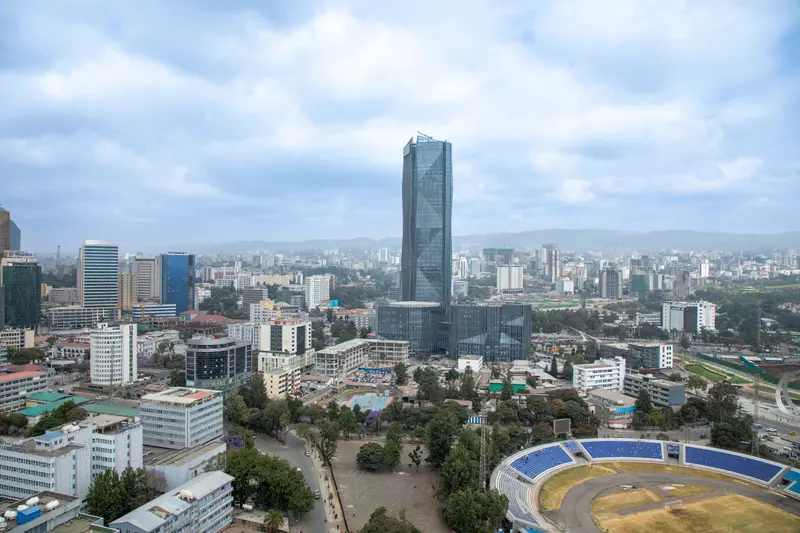
Addis Ababa, where the regions meet in one cup
Coffee from all these regions ends up in the capital, from the clay jebena (coffee pot) of a home ceremony to the espresso machines of the café counters. The exchange's trading floor is in Addis Ababa, and so is East Africa's first national coffee tasting and training center.1112
Sources
- Ethiopia Set to Overtake Indonesia as Fourth-Largest Coffee Producer in 2026/2027, Ecofin Agency (Stéphanas Assocle, May 22, 2026), accessed October 2026
- Ethiopia set to become World's fourth largest coffee producer in 2026/27 – USDA, Food Business Middle East & Africa (May 26, 2026), accessed October 2026
- Ethiopia Coffee Report: Production, Consumption and Exports All Up, Daily Coffee News, on the USDA FAS Ethiopia Coffee Annual (June 9, 2025), accessed October 2026
- Ethiopia earns record 3 bln USD from annual coffee exports, The Star, via Xinhua (July 5, 2026), accessed October 2026
- Kafa Biosphere Reserve, Ethiopia, UNESCO Man and the Biosphere Programme, accessed October 2026
- Harar, Wikipedia, accessed October 2026
- History of coffee, Wikipedia, accessed October 2026
- ቡና, ውክፔዲያ (Amharic Wikipedia), accessed October 2026
- Sidama Region, Wikipedia, accessed October 2026
- Yirgacheffe, Wikipedia, accessed October 2026
- Ethiopia Commodity Exchange, Wikipedia, accessed October 2026
- Ethiopia's Coffee Export Revenue Soars 147% to All-Time High, Ethiopian Business Review, accessed October 2026
Cafés in Ethiopia: questions
Where is coffee grown in Ethiopia?
Oromia grew 59.5% of Ethiopia's coffee over the three seasons to 2026, followed by Southwest Ethiopia with 13.7%, Sidama with 12.9% and Southern Ethiopia with 7.1%. Sidama supplies over 40% of the washed coffee sent to the central market. Wild arabica grows in the Kafa Biosphere Reserve in the southwest, and Harar in the east was a coffee-trading city by 1855.
How much of its coffee does Ethiopia drink at home?
The USDA put Ethiopia's home consumption at 3.6 million 60-kg bags in 2024/25, close to a third of that year's 11.46-million-bag harvest, or about 2.3 kg per person. The rest is exported: the 2025/26 Ethiopian fiscal year brought a record US$3 billion in coffee exports, with Saudi Arabia, Germany and China the main buyers.
When did Ethiopian Orthodox Christians start drinking coffee?
The Ethiopian Orthodox Church banned coffee some time before the 18th century as a Muslim drink. Attitudes changed in the late 1800s, largely because Emperor Menelik drank it himself, and Abuna Matewos, head of the church, approved it in 1881 in the Ethiopian calendar, 1889 in the Gregorian one, the year Menelik became emperor.
Your café deserves better than a pin someone else dropped
Free listings are free for good. A featured page gives you photos, a menu and your own URL, in your café's own design, for less than a coffee a day.