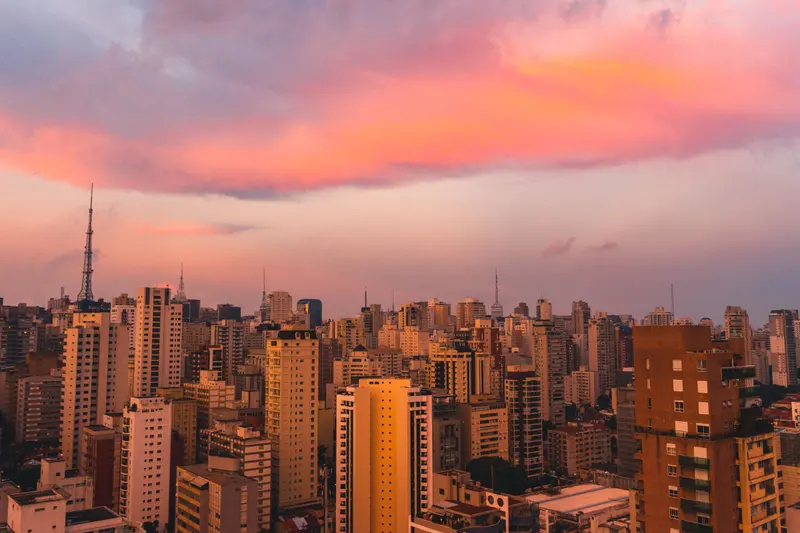
Cafés in Brazil São Paulo and Rio de Janeiro
The cafezinho, São Paulo padarias, Rio de Janeiro's port and coffee valley, Minas Gerais farms and the Cup of Excellence.
Photo: Jean depocas, Pexels License
Brazil is the world's largest coffee producer and its leading exporter.12 Conab, the national supply agency, put the 2025 harvest at 56.5 million 60-kg bags, the third-largest in its records: 35.76 million bags of arabica and a record 20.8 million of conilon, as Brazil calls its robusta.3
Exports fell in 2025 but earned more. Cecafé, the exporters' council, counted about 40.05 million bags shipped to 121 countries, 20.8% fewer than in 2024, for a record US$15.59 billion; Germany (13.5%) and the United States (13.4%) were the largest buyers.4 Brazilians drank 21.41 million bags themselves in the 12 months to October 2025, or 4.82 kg of roasted and ground coffee per person, which makes Brazil the second-largest consumer after the United States.5
From the Paraíba valley to the Oeste Paulista
Coffee reached Brazil in 1727, an introduction credited to Francisco Palheta, but it was not grown commercially at first.6 From 1825 it spread through the Vale do Paraíba, between Rio de Janeiro and São Paulo, worked by enslaved people; in 1836–37 the town of Bananal alone produced about 11% of São Paulo province's coffee.6 After the African slave trade was banned in 1850, planters turned to the internal slave trade, and some, like Senator Nicolau Vergueiro, brought European sharecroppers to their farms.6
The frontier then moved west. The Oeste Paulista overtook the Paraíba valley around 1870, and in 1894 Santos passed Rio de Janeiro in coffee exports, becoming the largest coffee export center in the world.6 Coffee made up 61.5% of Brazil's exports in 1880 and 64.5% in 1890.6 Overproduction came next: with 11 million sacks unsold in 1905, the Convênio de Taubaté of 1906 had the government buy the surplus.6
The 1929 crash broke the system, burning surplus stocks became common, and the coffee cycle is usually dated as ending with the Revolution of 1930.6 The glut also produced instant coffee: Nestlé began work in 1932 on a project started by a bank with surplus coffee in its warehouses, and launched the result as Nescafé in Switzerland on 1 April 1938.7
Minas Gerais, Espírito Santo and the conilon states
Minas Gerais is the main arabica state, with 25.17 million bags in 2025.3 Its growing regions include the Sul de Minas, Cerrado Mineiro, Matas de Minas and Mantiqueira de Minas.8 Espírito Santo grows mostly conilon and harvested 14.2 million bags, up 43.8%. São Paulo state produced 4.7 million bags, Bahia 3.29 million bags of conilon and Rondônia 2.32 million.3
Cafezinho, and drinking less of it
The cafezinho, the small black coffee that Brazilians of all ages drink through the day, is sweet by design: sugar or rapadura (unrefined cane sugar) boils with the water before the grounds go in. It often comes in a small glass or a plastic cup, since it is not meant to sit.9
High prices changed the habit. Consumption fell 2.31% in the 12 months to October 2025.5 In an ABIC survey of 4,200 people that September, 24% said they had cut back, the highest share in the series, 39% chose the cheapest option, against 16% in 2023, and the share who went to cafeterias fell from 51% to 39%.10
Cup of Excellence and the specialty trade
The Cup of Excellence, the competition and auction now held across the coffee-growing world, began in Brazil in 1999. BSCA, the Brazil Specialty Coffee Association, launched it with the International Coffee Organization and the Specialty Coffee Association, and the first winning lot went to the British importer Mercanta.11
The 26th edition, decided in São Paulo on 1 November 2025, went almost entirely to Minas Gerais, which took 29 of the top 30 places. The top score, 91.68, went to a Geisha from Fazenda Rio Verde in Conceição do Rio Verde, in the Mantiqueira de Minas.8 Higher grades are now a sizable share of the trade: differentiated coffees, meaning sustainable, superior-quality or specialty lots, made up 20.3% of 2025 exports by volume and 22.6% by value.4
São Paulo and Rio de Janeiro
São Paulo state is still in the coffee business: it harvested 4.7 million bags in 2025, and the Alta Mogiana region around Franca hosted the 2024 Cup of Excellence awards.311 Santos, its port, shipped 78.7% of Brazil's coffee exports in 2025.4 In the capital the padaria (bakery) is the everyday café; the city's bakers turn out about 20 million French rolls a day, and pão na chapa, a roll toasted on the griddle with butter, is on the breakfast menu of practically all of them.12
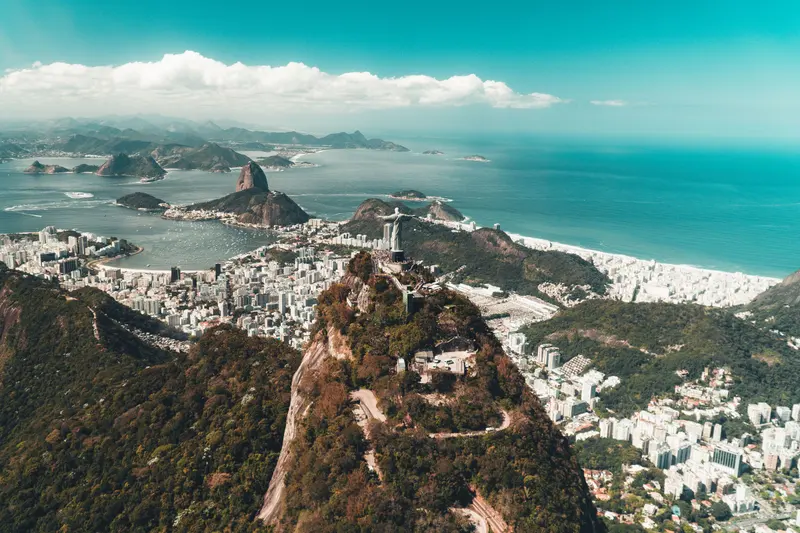
Rio de Janeiro lost its lead as a coffee port to Santos in 1894 but still ships a share: its port complex sent out 7.092 million bags in 2025, 17.7% of the total.64 The farms that once fed it lie in the Paraíba valley. Vassouras, 111 km from the city, grew rich on coffee in the 19th century, and in 1850, 19,210 of its 28,638 residents were enslaved.13
Some of the valley's fazendas (coffee estates) now open their doors for music. The Festival Vale do Café has run since 2003, and its 21st edition, from 22 to 26 July 2026, held events in Vassouras, Valença, Rio das Flores, Barra do Piraí and Pinheiral, at estates including Fazenda Florença and Fazenda Monte Alegre.14
Sources
- Brazil Coffee Report: Record Crop and Exports Expected for 2026/27, Daily Coffee News (June 4, 2026, citing USDA FAS), accessed October 2026
- Brasil é o maior produtor e exportador de café do mundo e consumidor americano será onerado com tarifa, afirma Cecafé, Money Times / Reuters (July 10, 2025), accessed October 2026
- Produção de café é estimada em 56,5 milhões de sacas em 2025, Agrolink (December 4, 2025, citing Conab's 4th survey), accessed October 2026
- Exportação de café do Brasil cai em 2025, mas receita é recorde, Revista Cultivar (January 19, 2026, citing Cecafé), accessed October 2026
- Consumo de café no Brasil cai quase 3% em 2025, diz indústria, CNN Brasil (January 29, 2026, citing ABIC), accessed October 2026
- Ciclo do café, Wikipedia (Portuguese), accessed October 2026
- Nescafé, Wikipedia, accessed October 2026
- Mineiros dominam premiação do 26º Cup of Excellence, Diário do Comércio (November 5, 2025), accessed October 2026
- When It Comes To Coffee In Brazil, The Cafézinho Reigns Supreme, Tasting Table (December 17, 2022), accessed October 2026
- Alta de preços faz 24% dos brasileiros reduzirem consumo de café, BrasilAgro (September 30, 2025, citing ABIC and Instituto Axxus), accessed October 2026
- Cup of Excellence celebrates 25 years in its country of origin, Brazil, Tea & Coffee Trade Journal (October 31, 2024), accessed October 2026
- São Paulo! Veja curiosidades da nossa gastronomia! (18 November 2024, citing SampaPão), Rádio Tupi, accessed October 2026
- Vassouras, Wikipedia (Portuguese), accessed October 2026
- Festival Vale do Café 2026, Festival Vale do Café, accessed October 2026
Cafés in Brazil: questions
How much coffee does Brazil produce?
Conab put Brazil's 2025 harvest at 56.5 million 60-kg bags, the third-largest in its records, with 35.76 million bags of arabica and a record 20.8 million of conilon. Minas Gerais grew 25.17 million bags and Espírito Santo 14.2 million. Brazil exported about 40.05 million bags to 121 countries in 2025.
How much coffee do Brazilians drink?
Brazilians drank 21.41 million 60-kg bags in the 12 months to October 2025, or 4.82 kg of roasted and ground coffee per person, making Brazil the world's second-largest consumer after the United States. Consumption fell 2.31% as prices rose, and in a September 2025 survey 24% of Brazilians said they had cut back.
When did Brazil hold the first Cup of Excellence?
The first Cup of Excellence was held in Brazil in 1999, launched by BSCA, the Brazil Specialty Coffee Association, with the International Coffee Organization and the Specialty Coffee Association. In the 26th edition, in November 2025, Minas Gerais took 29 of the top 30 places, led by a Geisha from Fazenda Rio Verde that scored 91.68.
Your café deserves better than a pin someone else dropped
Free listings are free for good. A featured page gives you photos, a menu and your own URL, in your café's own design, for less than a coffee a day.