
Cafés in Canada Toronto, Vancouver and Montreal
Little Portugal and Queen West in Toronto, Gastown roasters in Vancouver, Mile End in Montreal, plus how Canadians take coffee.
Photo: JP, Pexels License
Coffee is the most consumed drink in Canada after tap water.2 In the Coffee Association of Canada's winter 2025 survey, 71% of adults had drunk a coffee beverage the previous day: 45% a traditional cup and 29% an espresso-based drink.1 Statistics Canada, which began tracking supply in 1966, counted 107.42 liters of coffee available per person in 2023, against 88.51 liters in that first year and an all-time high of 111.82 liters in 2022.3
Every bean is shipped in. In June 2024 alone Canada imported 20.5 million kg of unroasted coffee, 38.2% of it from Colombia, followed by Brazil (21.4%), Guatemala (12.9%) and Honduras (9.9%), plus 5.1 million kg that arrived already roasted.3 The US Department of Agriculture puts the country's total coffee imports at about 5.05 million 60 kg bags in 2025/26, counted in green-bean equivalent.4
Canada's café cities
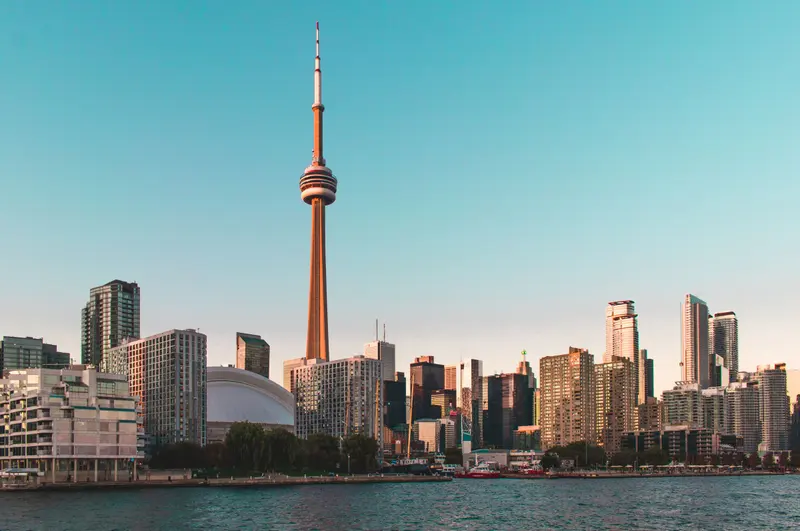
Toronto
Espresso on Ossington and Queen West, Portuguese bakeries in Little Portugal and cafés in Kensington Market. 709 cafés.

Vancouver
Roasters in Gastown and Mount Pleasant, cafés on Main Street and Commercial Drive. 488 cafés.

Montreal
Italian espresso in Little Italy, cafés on the Plateau and Mile End, bagels next door. 582 cafés.
Tim Hortons and the national cup
The chain that set Canadian coffee habits began as a doughnut shop. Tim Horton, an ice hockey player, and Jim Charade opened Tim Horton Donuts on Ottawa Street in Hamilton, Ontario, on May 17, 1964, and Ron Joyce took over the shop at 65 Ottawa Street North the next year.5 Roll Up the Rim to Win, the contest printed under the lip of the paper cup, first ran in 1986, and by 2007 it was handing out more than 31 million prizes a year.5
In the mid-1990s the menu moved past drip coffee and doughnuts, adding flavored cappuccino, iced cappuccino and iced coffee.5 By March 2006 Tim Hortons held 62% of the Canadian coffee market, against 7% for Starbucks in second place.5 At the end of 2018 it ran 3,802 restaurants in Canada out of 4,846 worldwide.5 The owners are no longer Canadian: Wendy's merged with the company in 1995, and since December 2014 it has belonged to Restaurant Brands International, the parent formed with Burger King.5
Second Cup, Starbucks and the espresso turn
The first national café chain came from Toronto. Tom Culligan and Frank O'Dea founded Second Cup there in 1975, and Culligan, after buying out his partner, built it into a chain of 150 stores; since 2021 it has belonged to Foodtastic, a Quebec company.6
Espresso is still the smaller order. In the 2025 survey, traditional coffee outdrew espresso-based drinks by 45% to 29% of adults on a given day, and eight in ten Canadians said they had noticed coffee prices rising.1 Statistics Canada measured the rise at 1.4% for coffee between June 2023 and June 2024.3
Roasting coffee in a country that grows none
Most of what Canada imports is roasted at home; the 5.1 million kg of coffee that came in already roasted in June 2024 was shipped from a wide range of countries and US states.3 About 3 million of the 5.05 million bags imported in 2025/26 arrive as green beans,4 and in June 2024 Statistics Canada counted 637 coffee and tea manufacturing locations across the country, up from 591 a year earlier; together they sold and shipped C$215.5 million of goods that month.3
The association's September 2026 study put the whole coffee business, from importers and roasters to cafés, at C$34.7 billion in economic output, nearly 215,000 jobs and more than C$11 billion in wages.2
Toronto, Vancouver and Montreal
Toronto, where Second Cup began,6 drinks along its immigrant streets. In Little Portugal, Portuguese businesses line Dundas Street West and College Street, and west of Ossington Avenue Dundas carries a second name, Rua Açores; in recent years residents of Brazilian background have joined the Portuguese majority.8
Vancouver is where Starbucks first left Seattle, opening at Waterfront Station in 1987, the same year as its first Chicago shop.7 A few blocks east, Gastown's cafés fill the oldest part of the city, which grew up around a saloon opened in 1867.9
In Montreal, Mile End was the main Jewish quarter until the 1950s and keeps the city's two best-known bagel bakeries, Fairmount and St-Viateur, among galleries, designers' workshops and cafés.10
Sources
- Coffee Consumption Remained Strong in Canada in 2025, Despite Rising Prices, Coffee Association of Canada (February 17, 2026), accessed October 2026
- Canada's Coffee Industry Generates $34.7 Billion in Economic Impact, Coffee Association of Canada, via BNN Bloomberg (September 29, 2026), accessed October 2026
- A hot cup of coffee stats, Statistics Canada (September 18, 2024), accessed October 2026
- Coffee: World Markets and Trade (July 2026), US Department of Agriculture, Foreign Agricultural Service, accessed October 2026
- Tim Hortons, Wikipedia, accessed October 2026
- Second Cup, Wikipedia, accessed October 2026
- History of Starbucks, Wikipedia, accessed October 2026
- Little Portugal, Toronto, Wikipedia, accessed October 2026
- Gastown, Wikipedia, accessed October 2026
- Mile End, Montreal, Wikipedia, accessed October 2026
Cafés in Canada: questions
How much coffee do Canadians drink?
In winter 2025, 71% of Canadian adults had drunk a coffee beverage the previous day, 45% a traditional cup and 29% an espresso-based drink, which makes coffee Canada's most consumed drink after tap water. Statistics Canada counted 107.42 liters of coffee available per person in 2023, up from 88.51 liters in 1966 and just below the 2022 record of 111.82 liters.
Where does Canada get its coffee from?
Canada grows no coffee and imports all of it. In June 2024, 38.2% of its unroasted coffee imports came from Colombia, 21.4% from Brazil, 12.9% from Guatemala and 9.9% from Honduras. The US Department of Agriculture puts Canada's imports at about 5.05 million 60 kg bags in 2025/26, about 3 million of them as green beans roasted in Canada.
When and where did Tim Hortons start in Canada?
Tim Hortons began as Tim Horton Donuts, opened by the ice hockey player Tim Horton and Jim Charade on Ottawa Street in Hamilton, Ontario, on May 17, 1964. Roll Up the Rim to Win followed in 1986. By March 2006 the chain held 62% of Canada's coffee market, and it now belongs to Restaurant Brands International.
Your café deserves better than a pin someone else dropped
Free listings are free for good. A featured page gives you photos, a menu and your own URL, in your café's own design, for less than a coffee a day.