Cafés in Malaysia Kuala Lumpur and Penang
Hainanese kopitiams, Ipoh white coffee, Johor liberica and the ZUS chain boom, plus the cafés of Kuala Lumpur and Penang.
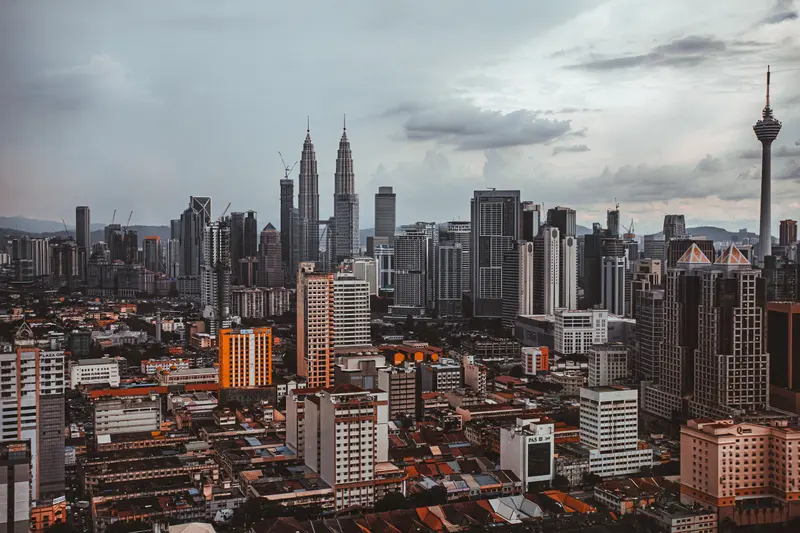
Photo: Max Mishin, Pexels License
Malaysia grows a small fraction of the coffee it drinks. In 2024 its farms produced 2,861 tonnes on 2,924 hectares, mostly in Johor, Sabah and Sarawak, while the country imported 126,062 tonnes of beans, the agriculture minister told the Dewan Negara in December 2025.1 Vietnam is the largest supplier, with almost 47% of import volume in the first nine months of 2021.3
The home crop is unusual. Liberica, a species that makes up less than 1% of the world's coffee, accounts for 87% of Malaysian cultivation, robusta for 10% and arabica for 3%.12 National output has fallen from close to 40,000 tonnes in the late 1990s and early 2000s, and the kopitiam blend is typically robusta and liberica roasted with palm-oil margarine.2
Liberica, Johor's coffee
Leaf rust largely wiped out Malaysia's arabica in the late 19th century, and liberica replaced it; families have grown it for generations since.2 The plants grow like trees rather than shrubs, which slows picking, and the cherries have a thick, tough pulp that makes the beans hard to roast.2
Johor grows most of it.2 In June 2023 MARDI, the government's agricultural research institute, launched three new liberica clones, MKL 8, MKL 9 and MKL 10, at its station in Kluang, and the deputy minister named Kluang and Batu Pahat as suitable places to grow the species.4 Natural-processed liberica from My Liberica, a Johor café with its own farm, can taste winey with jackfruit notes; honey-processed, it leans toward hazelnut and chocolate.2
Kopitiams from Taiping to Johor Bahru
The kopitiam is largely a Hainanese institution. Hainanese migrants were among the last Chinese groups to arrive, in the late 1800s, when Hokkien, Cantonese and Teochew settlers already dominated trade, farming and mining, so many worked as cooks and staff in hotels, bakeries, households and British military canteens.5 Most kopitiams are still run by Hainanese families, handed from father to son, and by the 1960s they could be found in nearly every corner of Malaysia.5
Some of the early ones still trade: Restoran Yut Sun in Taiping, Perak (1921), White House Kopitiam in Kota Bharu (1935), Kluang Rail Coffee in Johor (1938) and Restoran Hua Mui in Johor Bahru (1946).5 The classic room had plain white marble tables and green floral porcelain, and the menu ran from toast and coconut jam to chicken chop with green peas and brown sauce.5
White coffee, from Ipoh to the sachet
White coffee comes from Ipoh, Perak's tin-mining town, where Hainanese settlers working the mines adapted the coffee the British drank to local tastes.6 It went national in a packet. OldTown, co-founded by Goh Ching Mun, whose family runs Ipoh's Nam Heong coffee shop, began making 3-in-1 instant white coffee in 1999 and opened its first OldTown White Coffee café in Ipoh in 2005.6 The chain reached 200 stores in Malaysia in 2013, and in 2017 Jacobs Douwe Egberts bought it for about RM1.47 billion and took it off Bursa Malaysia.6
ZUS, Kenangan and the chain boom
Malaysia's largest coffee chain is an app-first business. ZUS Coffee started in late 2019 as a kiosk built around delivery through its own app, overtook Starbucks in early 2024 as Malaysia's largest coffee chain, and by April 2025 ran 743 stores in the country against Starbucks' 320.7 It passed 1,000 stores across Southeast Asia in the last quarter of 2025.10
Competition came from Indonesia. Kopi Kenangan, which began as a small kiosk in Jakarta in 2017, opened its first Malaysian outlets in October 2022 as Kenangan Coffee; its best-known drink, the Kenangan Latte, is sweetened with gula aren, an organic brown palm sugar.9
Kuala Lumpur and Penang
The capital is where the chains started out. ZUS opened its first outlet in November 2019 in a kiosk of about 19 m² at Binjai 8, in the Kuala Lumpur City Centre district, and Kenangan's first Malaysian openings in October 2022 included one at Suria KLCC, the mall at the foot of the Petronas Towers.89 The city's Hainanese coffee shops follow the older pattern, with the same marble tables, kaya toast and kopi sweetened with condensed milk found in kopitiams across the country.5
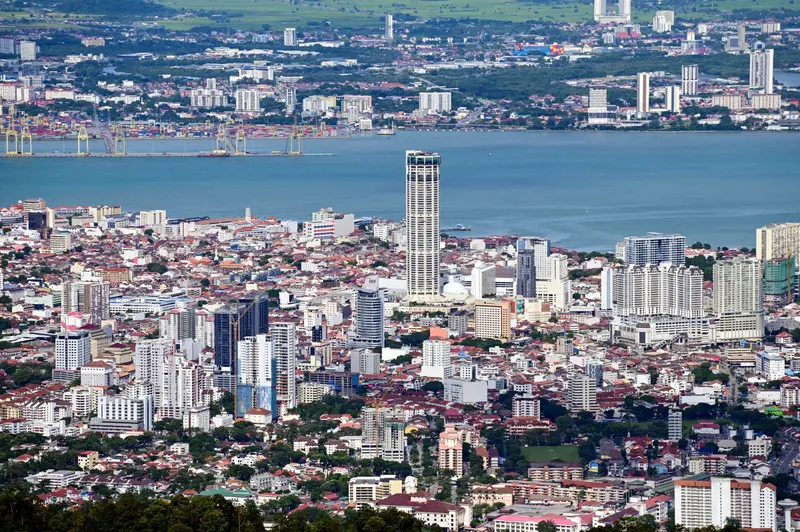
Penang's coffee shops keep an older layout. Most take the corner lot of a row of shophouses, and the owner's family used to live upstairs; outside the old family shops of George Town's inner city, the upper floor is now more often home to the shop's foreign workers.11 Many never put the word kopitiam on the signboard and go by Kedai Kopi (coffee shop), Kedai Makan (eating shop) or simply Cafe.11
The two specialty scenes share people. Joachim Leong, a co-founder of Ome by Spacebar Coffee in George Town, was a founding barista at VCR in Kuala Lumpur, where he and his partner met before opening Spacebar Coffee in Penang.12
Sources
- Malaysia To Boost Development Of Coffee Industry Due To High Import, Low SSR (3 December 2025), Bernama, accessed October 2026
- How is Malaysia's coffee culture evolving? (Michelle Anindya, 19 May 2021), Perfect Daily Grind, accessed October 2026
- Vietnam's coffee makes up half of Malaysia's total import volume (17 December 2021, citing ITC data), Vietnam Agriculture and Nature, accessed October 2026
- Mardi doing research to produce more coffee variants (17 June 2023), Malay Mail, accessed October 2026
- Did You Know: Kopitiam Culture In Malaysia Is Over 150 Years Old (May Vin Ang, 21 January 2021), SAYS, accessed October 2026
- OldTown White Coffee: the brand's history (29 March 2023), Vulcan Post, accessed October 2026
- ZUS Coffee brews massive expansion with nearly 200 new Southeast Asia stores planned (24 April 2025), Malay Mail, accessed October 2026
- Zus Coffee, Wikipedia, accessed October 2026
- Indonesia's Biggest Coffee Chain Has Landed In Malaysia! (Timothy Tuan, 20 October 2022), SAYS, accessed October 2026
- ZUS Coffee to take on some of Southeast Asia's most formidable coffee chains (2 February 2026), World Coffee Portal, accessed October 2026
- Penang Kopi Tiam, Penang Travel Tips (Timothy Tye), accessed October 2026
- The Sprudge Coffee Guide To Penang, Malaysia (Tung Nguyen, January 6, 2020), Sprudge, accessed October 2026
Guides
Café opening hours around the world
When cafés open and close: 06:00 coffee in Vietnam, Italian bars shut by 20:00, Melbourne cafés done by 15:00, Sundays in Berlin, Ramadan in Dubai.
How to orderHow to order kopi in Singapore and Malaysia
How to order kopi in Singapore and Malaysia: kopi-O, kopi-C, siew dai, gao, peng, teh tarik and tak kiu, how drink stalls work, and 2025–2026 stall prices.
Cafés in Malaysia: questions
Does Malaysia grow its own coffee?
Yes, but little of what it drinks. In 2024 Malaysia produced 2,861 tonnes of coffee on 2,924 hectares, mainly in Johor, Sabah and Sarawak, and imported 126,062 tonnes of beans, with Vietnam the largest supplier. Liberica makes up 87% of Malaysian cultivation, robusta 10% and arabica 3%, and Johor grows most of the liberica.
What is Malaysian white coffee from Ipoh?
Malaysian white coffee comes from Ipoh, the tin-mining town in Perak, where Hainanese settlers working the mines adapted the coffee the British drank to local tastes. The OldTown brand, co-founded by a member of the family behind Ipoh's Nam Heong coffee shop, turned it into a 3-in-1 instant mix in 1999 and opened its first café in 2005.
What is the largest coffee chain in Malaysia?
ZUS Coffee became Malaysia's largest coffee chain in early 2024, overtaking Starbucks. It started in late 2019 as a delivery-focused kiosk in Kuala Lumpur, ran 743 stores in Malaysia against Starbucks' 320 by April 2025, and passed 1,000 stores across Southeast Asia in the last quarter of 2025.
Your café deserves better than a pin someone else dropped
Free listings are free for good. A featured page gives you photos, a menu and your own URL, in your café's own design, for less than a coffee a day.