 By Yannick Schroth
Working from cafés · 6 min read · October 2026
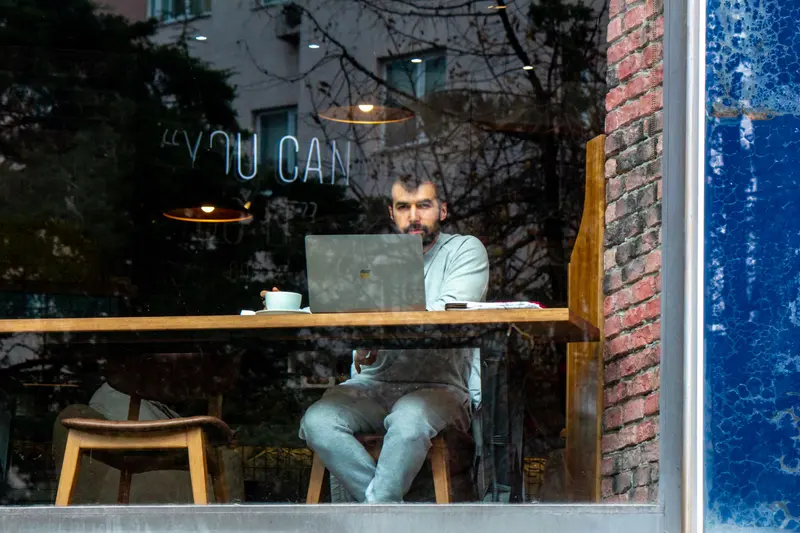
A café is not a coworking space, even when the Wi-Fi is fast and there is a socket under the bench. The owner is renting you a table for the price of a drink, and the terms shift with the clock: generous at 15:00 on a Tuesday, strained at 10:30 on a Saturday. Most of the friction comes from three questions: how long one order lasts, whose electricity you are using, and who has to listen to your calls.
Cafés are answering those questions more bluntly than they used to. Starbucks Korea asked customers in August 2025 to stop bringing desktop computers and printers,6 some Spanish cafés have posted peak-hour bans on remote work,4 and a Japanese lawyer has set out when a posted time limit binds you.7 What follows are the habits that keep you welcome, and the point at which a coworking day pass becomes the better deal.
Order on arrival, then every hour or two
Order when you sit down, not after you have unpacked. Advice on the follow-up varies: some etiquette writers say buy something every hour, others every two hours, and hourly is the more common view.1 Chowhound's own rule of thumb is that four hours is about the point to move on, and that in a packed room or a café with few tables you should order more often or keep the visit to an hour.1
Some places turn the rule into a price. At CAMP, the study and work space in Chiang Mai's Maya Lifestyle Shopping Centre, every 50฿ spent buys two hours of free Wi-Fi, so an eight-hour day costs 200฿ in drinks and snacks.11 In Bali, ZIN@Work in Canggu and Tribal in Pererenan let you work in their coworking areas free with a café order.12
In Vietnam the complaint owners repeat is the customer who stays from morning to afternoon on one drink.9 The Vietnamese daily Tuổi Trẻ found them divided: a café owner in Đà Nẵng said laptop users make the room look busy, readers suggested surcharges for long stays, and a food-and-beverage operator proposed separate work zones with their own counter and higher prices.9
Work around the rush hours
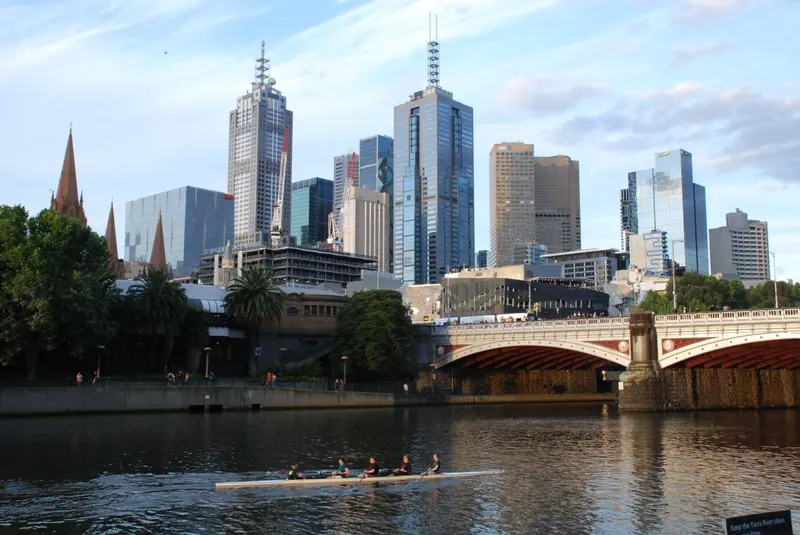
In Melbourne, Concrete Playground reported in December 2025 that cafés banning or restricting laptop workers are becoming more common, as owners try to raise table turnover and keep the room pleasant.2 Its advice was to work off-peak: weekdays, and outside brunch.2 The same piece covered Cafe Workplace, a platform for finding Melbourne cafés that want laptop customers in their quiet hours, among them Arcadia in Fitzroy and Panenka in Abbotsford.2
Sydney's laptop cafés run on their own timetables. Algorithm in Potts Point gets busy in the early morning and thins out around 11:00, and the advice at Angus in Marrickville is to work outside the morning and lunch rushes, since it is not designed as a coworking café.3 Wolfies in Manly was closing at 14:00 as of September 2026, which makes it a morning office.3
Parts of Europe have gone further. Some Spanish cafés put up posters banning remote work during peak hours, 08:30 to 12:30, and cafés in Valencia, Santiago and Barcelona have switched off their Wi-Fi to discourage it.4 Euronews counts Lisbon among the cities where cafés have been taking a stand against remote workers for several years.4
Outlets are not part of the order
In South Korea the power question became national news. In August 2025 Starbucks Korea posted notices asking customers not to bring desktop computers, printers or other bulky equipment, while laptops and smaller devices stay welcome.6 The target was the cagongjok, a word built from the Korean for café, study and tribe that has turned pejorative; some café owners call them electricity thieves who sit for hours over a single cup.6
Japanese law treats electricity as property. Article 245 of the Penal Code deems it a thing that can be stolen, so charging without permission can count as theft under Article 235.8 A single unauthorized charge is unlikely to lead to charges, but repeated use, or carrying on after a warning, could.8 Sockets at seats marked for customers are generally fine; ones on a bare wall or behind the register are probably for staff, so ask before plugging in.8
Charge your laptop and phone before you leave, take the outlet seat only if you need it, and give it up once the battery is full. In Japanese, an outlet is a konsento (コンセント), which is the word to point at on a sign.
Calls and headphones
Video calls are the quickest way to lose the room. In a YouGov poll of 5,195 British adults in May 2024, only 8% said a video call while working in a café is acceptable, 48% said it is acceptable only with headphones on, and 38% said it is not acceptable at all.5 Wear headphones at a minimum, keep your voice down, and step outside for anything longer than a quick check-in.1
Schedule long calls for a quiet hour or a booked room. A café that has gone silent around you is telling you something, even if nobody says it.
Time limits and laptop bans
Japan is where time limits are most often written down, and a lawyer writing for President Online in January 2025 explained how they work. If a shop clearly states a rule such as 混雑時90分まで (up to 90 minutes when crowded), customers have to follow it, and ordering more coffee does not reset the clock.7 There is no legal standard for how many minutes one cup buys.7
The notice matters as much as the rule. To rely on a limit, the shop has to make it knowable before you order; a sign you only see on the table after sitting down is more likely to count against the shop.7 At chains where you pay at the counter, the contract is formed when you buy, so read the signs by the register before you pay.7
A laptop ban is the blunter tool. Some European cafés have banned laptops outright, others charge an hourly rate for using one, and some in Spain let you stay but ask you to move when a group or regulars need the table.4
Tipping and what counts as spend
Whether a tip counts toward your rent depends on the country. In Japan, tipping is not common in cafés, bars, restaurants, taxis or hotels, so goodwill shows in what you order rather than what you leave.10 In Australia a tip is voluntary and not expected, though smaller places such as cafés often keep a jar on the counter.14
Where tipping is not the custom, the long-stay courtesy is another order: a pastry at the two-hour mark, or lunch at noon instead of a walk to the food court. One Vietnamese café owner interviewed by Tuổi Trẻ suggested that staff politely offer combos to customers who stay for hours.9
When a coworking day pass is the better deal
Count the day before you commit to a café. If you need a call booth, a proper desk or eight hours on one socket, a day pass is the honest option. In Chiang Mai, Time Out listed day passes in January 2026 from 90฿ at Heartwork in Hai Ya, 180฿ at Smart&Start above Weave Artisan Society in Wua Lai, 200฿ at The Social Club and 220฿ at Alt_ PingRiver in Wat Ket.11 Punspace started at 289฿ and Yellow Coworking in Nimmanhaemin at 429฿.11
Against CAMP's 50฿ for two hours, a full day of café spending in Chiang Mai lands in the same range as the cheaper passes.11 In Bali, Honeycombers' July 2026 list put day passes in Ubud from Rp130,000 at Ubud Coworking, Rp170,000 at Ubud Space and from Rp248,000 at Outpost.12 In Canggu, Puco Rooftop started at Rp200,000 and Tropical Nomad at about Rp260,000; BWork in Uluwatu started at Rp299,000.12
Melbourne costs more. WeWork sells day passes from A$60 at its three city locations, 120 Spencer Street, 152 Elizabeth Street and 222 Exhibition Street, as of 2026.13 That buys a desk nobody will ask you to leave, which counts for most on a Saturday morning.
Tip. Ask at the counter before you open the laptop: one question about time limits and which sockets customers may use settles both rules, and in Japan a limit you were shown before ordering is one you have to keep.7