Centro Histórico
Mexico
Cafés in Oaxaca chocolate de agua, café de olla
Chocolate and café de olla off the Alcalá walkway, Pluma coffee in the specialty bars and patio cafés in Jalatlaco.
- Map and “near me”
- “Open now” filter
- Paid placements always labeled
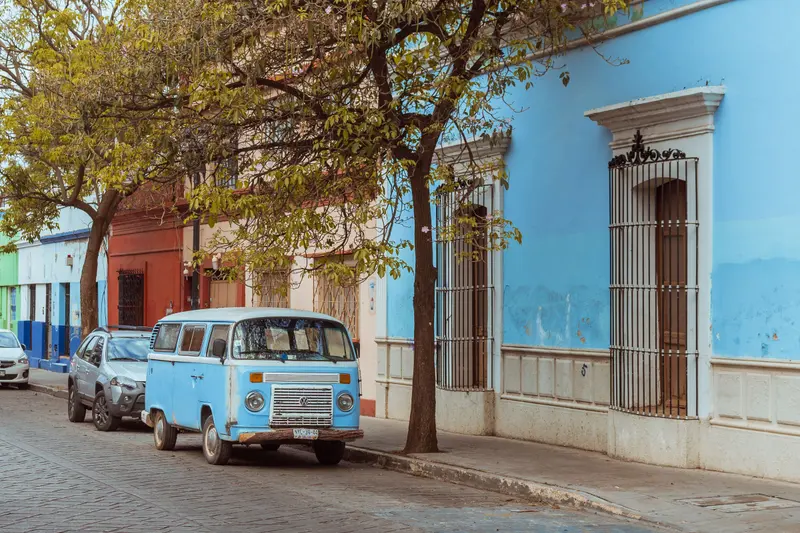
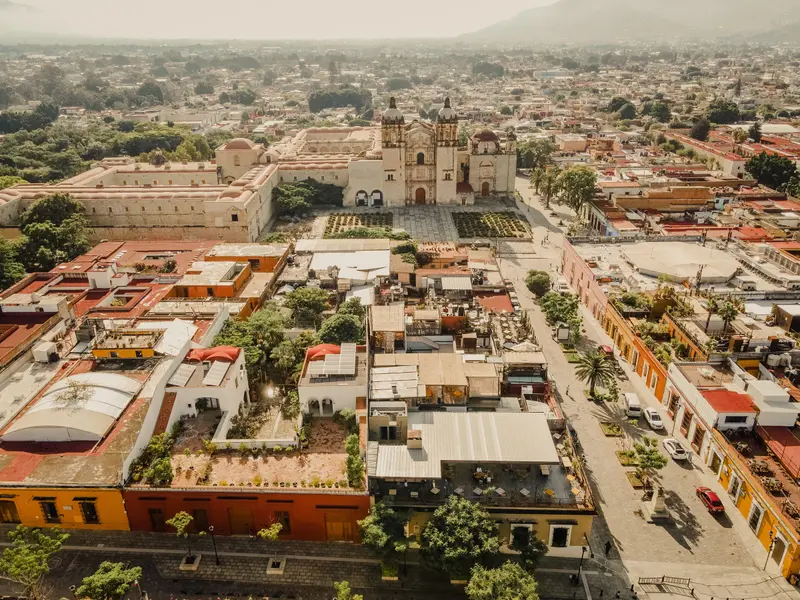
Photo: Omar Luis, Pexels License
165Cafés listed
0Open by 6am
6Open past 10pm
4Specialty & roasters
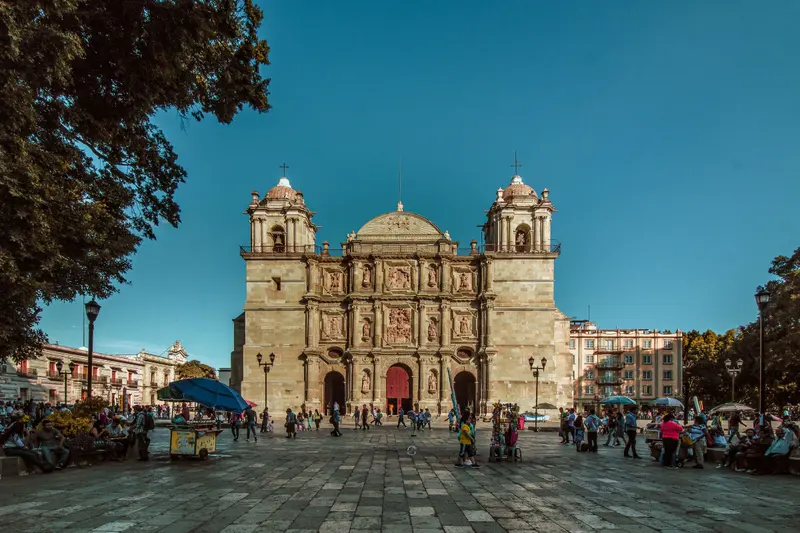
Oaxaca de Juárez sits at 1,555 m in the Central Valleys, which keeps it cooler than lowland towns at the same latitude: January nights average 9 °C.1 The historic center and the nearby ruins of Monte Albán were inscribed together as a UNESCO World Heritage Site in 1987.1 At its core is the Andador Macedonio Alcalá, a pedestrian street paved in green cantera stone that links the Templo de Santo Domingo with the heart of the city.2
Coffee shares the table with chocolate here. Oaxacan drinking chocolate is cacao ground with cinnamon, almonds and sugar, pressed into tablets and boiled in water or milk, and the cup traditionally comes with pan de yema, a bread made with egg yolks.13
The specialty cafés lean on Oaxacan beans. Café Brújula, a local mini-chain that Eater dates to 2006, set out to buy directly from small growers around Pluma Hidalgo, and its own farm in that region, Brujufinca, grows Geisha and Bourbon among other varieties.45 When Sprudge surveyed the city's coffee in 2023, beans from Oaxacan farms and families were at the core of several of the cafés it chose, and some roasted their own.6
Start with a barrio
Oaxaca by area
The Centro Histórico, the colonial grid around the Zócalo and Santo Domingo, has the densest choice of cafés. Jalatlaco, just east of it, became Oaxaca's first Barrio Mágico, a federal tourism designation, in March 2023.12
Or start with what you need
Browse by mood and hour
New in Oaxaca
Recently opened and recently added
Centro Histórico
Oscuro Brebaje
- Open late
Centro Histórico
A Que Te Sabe Local
Centro Histórico
acopalé
Centro Histórico
Amá Terraza
Reforma & the north
Antico Caffé
Jalatlaco 17 cafés
Elefante café
Jalatlaco Café
ME Brew Bar & Coffee Art
- Specialty
Café Finca El Olivo
Castizo, Café de Barrio.
La Flor de Huayapam
Mextizo Café
Okame
Once in Oaxaca
- Bakery café
- Brunch
Panela
Ruta
Santa Hierba
- Vegetarian options
Reforma & the north 44 cafés
Café Claveria
OvejaNegra Café
Antico Caffé
Blossom Café & Bakery
- Bakery café
Breve
Brõnch
Café Café
Café Canijo
Cafe Criollo
Café La Casita de Naela
Café La Organización
Cafe Mava
Centro Histórico 104 cafés
More about cafés in Centro Histórico
Arcadia Juegos de Mesa
Café Bien
Café Caracol Púrpura
- Vegetarian options
- Bakery café
Café Los Cuiles
- Wi-Fi
- Open late
Café SL28
- Brunch
Cáfebre
- Open late
Cafeto & Baristas
- Wi-Fi
- Wheelchair access
- Specialty
Cupco Cafe
Filemón y Sagrado
- Bakery café
- Specialty
Grillo
Kiyo Café
La Selva de los Gatos
- Wi-Fi
- Outdoor seating
- Vegetarian options
No café matches all of those filters. Try removing one, or tell us about a café we're missing.
Coffee chains in Oaxaca
Branches by area
Chain
Café Brújula
Show 4 locations
- Centro Histórico
- Calle de González Ortega 508Mon–Sat 09:00–16:00
- Calle de Macedonio Alcalá 104Mon–Sat 08:00–22:00 · Sun 08:00–21:00
- Reforma & the north
- Café Brújula Belisario Domínguez, Av Belisario Domínguez 608d
- Calz. Porfirio Díaz 233
Chain
The Italian Coffee Company
Show 4 locations
Chain
Casa Blasón
- Centro Histórico
- Centro HistóricoSun 11:30–18:30
- Av Benito Juárez 801
- Jalatlaco
- Calle del 5 de MayoMon–Sat 08:00–21:00 · Sun 13:00–20:00
Chain
Starbucks
- Reforma & the north
- Reforma & the north
- Paseo San Isidro No400 Interior 1 A Col Barrio De
Before you sit down
How coffee and chocolate work in Oaxaca
Café de olla is boiled with cinnamon and piloncillo in a clay pot, so it arrives sweet and spiced; recipes may add clove or orange peel.7 Specialty bars pour espresso drinks, pour-overs and cold brew. Marito & Moglie, on Avenida Miguel Hidalgo, roasts off-site, using green coffee from Red Fox Merchants.6
Chocolate comes de agua, made with water, or de leche, made with milk. The tablet is dissolved in the hot liquid and beaten with a molinillo, a wooden whisk, or a wire one.8 Tejate is the cold alternative: a drink of pre-Hispanic origin made from roasted maize, fermented cacao beans, mamey seeds and rosita de cacao, a flower that grows only in San Andrés Huayápam, all ground and mixed with cold water.9
Leaving a tip is up to you in Mexico. Profeco, the federal consumer agency, says a café or restaurant may not add a tip to the bill without your consent, and treats such a charge as an abusive practice. By custom, people leave about 10–15% of the bill.10
Many cafés in the center close by 18:00, and some close on Sundays, among them Cafeto & Baristas and la ttertulia. Café Los Cuiles and Cáfebre stay open until 22:00 every day. Rain falls mostly in the summer months, roughly May to October, and June is the wettest month.1
What coffee costs in Oaxaca
| Drink | Typical price |
|---|---|
| Americano Black coffee at a specialty café | MX$40–55 Oaxaca specialty cafés, 2026 |
| Latte Espresso with steamed milk, specialty café | MX$55–75 Oaxaca specialty cafés, 2026 |
| Espresso Single espresso at a neighborhood café | MX$30–45 Mexico-wide, 2026 |
| Café de olla Clay-pot coffee with cinnamon and piloncillo | MX$25–45 Neighborhood cafés, Mexico-wide, 2026 |
Prices as of 2026, from Cafeteriamos's August 2026 guide to café prices in Mexico. The americano and latte ranges are its figures for specialty cafés in Oaxaca and Xalapa, below Mexico City's Roma, Condesa and Polanco (MX$60–75 for an americano); the espresso and café de olla ranges are its national figures for neighborhood cafés.11
Sources
- Oaxaca City, Wikipedia, accessed October 2026
- Andador Macedonio Alcalá, Programa Destinos México, accessed October 2026
- Dónde puedes tomar chocolate caliente delicioso en México, México Desconocido (Escapadas), accessed October 2026
- Café Brújula (quoting Eater, "The 32 Essential Restaurants in Oaxaca", February 15, 2022), TripExpert, accessed October 2026
- 6 cafés de productores independientes que todo coffee lover debe probar, Food & Pleasure (January 20, 2021), accessed October 2026
- The Sprudge Guide To Coffee In Oaxaca City, Sprudge (August 28, 2023), accessed October 2026
- ¿Cuál es el origen del café de olla?, El Financiero (October 6, 2021), accessed October 2026
- Mayordomo, Wikipedia, accessed October 2026
- Tejate, Wikipedia, accessed October 2026
- Por qué no se puede cobrar propina en cafés y restaurantes, El Cronista México (August 5, 2026, citing Profeco), accessed October 2026
- ¿Cuánto cuesta un café en México? Precios reales 2026, Cafeteriamos (August 16, 2026), accessed October 2026
- Oaxaca anda de estreno: Jalatlaco es su primer Barrio Mágico, UnoTV (March 29, 2023), accessed October 2026
More to read
Guides
How to order
Café etiquette around the world
Tipping in cafés from Tokyo to Lima, counter and table prices in Italy and Lisbon, paying at the till, Vietnam's free trà đá and indoor smoking rules.
Working from cafésCafé Wi-Fi for travelers who need to work
Café Wi-Fi abroad: public-network safety, eSIM and SIM registration in Vietnam, Thailand and Peru, mobile vs fixed speeds for 2026, and plug types by country.
Coffee travelThe coffee harvest calendar and when to see it
Coffee harvest months in Vietnam, Thailand, Indonesia, Colombia, Mexico and Peru, with Brazil and Ethiopia: when to visit farms and when new crop arrives.
FAQ
Cafés in Oaxaca: common questions
How much does a coffee cost in Oaxaca?
As of 2026, an americano at a specialty café in Oaxaca typically costs MX$40–55 and a latte MX$55–75, less than in Mexico City's Roma, Condesa and Polanco. Across Mexico, neighborhood cafés charge about MX$30–45 for an espresso and MX$25–45 for café de olla, the clay-pot coffee with cinnamon and piloncillo.
Which neighborhood of Oaxaca has the most cafés?
Centro Histórico and Reforma & the north have the most cafés, followed by Jalatlaco. Inside the center, the longest runs are on Calle Manuel Bravo, with Cáfebre, Nuevo Mundo and Kiyo Café, on the Alcalá walkway and on Avenida Miguel Hidalgo.
What is chocolate de agua in Oaxaca?
Chocolate de agua is Oaxacan drinking chocolate made with water; chocolate de leche is the milk version. The tablets are cacao ground with cinnamon, almonds and sugar, dissolved in the hot liquid and beaten with a molinillo, a wooden whisk. The cup traditionally comes with pan de yema, a bread made with egg yolks.
Do you tip in cafés in Oaxaca?
Tipping is voluntary in Mexico, Oaxaca included. Profeco, the federal consumer agency, says a café or restaurant may not add a tip to the bill without the customer's consent and treats such a charge as an abusive practice. By custom, people leave about 10–15% of the bill, but the amount is up to you.
What is tejate, the cold cacao drink of Oaxaca?
Tejate is a non-alcoholic drink of pre-Hispanic origin from Oaxaca, made from roasted maize, fermented cacao beans, mamey seeds and rosita de cacao, a flower that grows only in San Andrés Huayápam. The ingredients are ground to a paste and mixed with cold water, and the drink is served cold.
When is the rainy season in Oaxaca City?
Rain in Oaxaca City falls mostly in the summer months, roughly from May to October, and June is the wettest month. At 1,555 m in the Central Valleys, the city stays cooler than lowland towns at the same latitude, and January nights average 9 °C.
For café owners
Run a café in Oaxaca?
Your free listing is probably already on this page. Claim it in two minutes, or turn it into a featured page in your own design, with photos, a menu and your own link.