 By Yannick Schroth
Coffee travel · 4 min read · October 2026
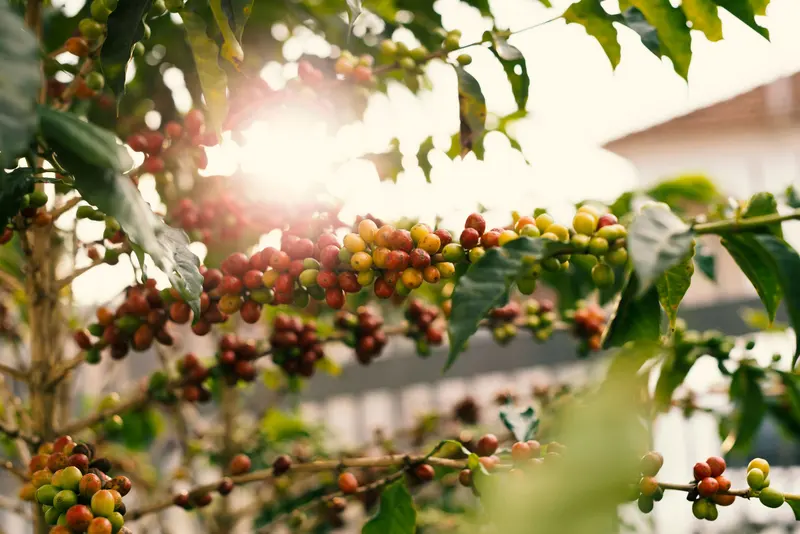
Coffee is picked when the cherries ripen, and that happens at different times on each side of the equator and at each altitude. The trade handles this with crop years: the International Coffee Organization counts them from 1 April, 1 July or 1 October depending on the country, then converts everything into a coffee year that begins on 1 October.2
The USDA uses a similar split, with Indonesia and Peru on an April–March year, Brazil on July–June, and Colombia, Ethiopia, Mexico, Thailand and Vietnam on October–September.1 The two bodies don't always agree: the ICO starts Brazil's crop year in April.2 These dates mark when a new crop starts to count, not when every farm is picking, so the regional detail below matters more for a trip than the headline months.
Harvest months by country and region
The months below are where picking is documented by producers' groups, governments and the ICO. Higher farms ripen later than lower ones in the same valley, and weather moves the start too: in 2024 rain pushed Honduras's harvest two months late, and in 2026 a dry spell held Peru's back by one.412
| Country or region | When picking happens | Notes |
|---|---|---|
| Vietnam, Central Highlands | From October; under way in Đắk Lắk by late November38 | Crop year October–September1 |
| Thailand, northern highlands | About October to February on Doi Chang9 | Crop year October–September1 |
| Indonesia, Bali (Kintamani) | One harvest, about July to September10 | Crop year April–March1 |
| Indonesia, Sumatra and Java | Crop year counted from April1 | About 75% of national output; Gayo farms hit by November 2025 floods5 |
| Colombia, central zone | Main crop October to March6 | Mitaca (fly crop) from April at lower altitudes to July higher up6 |
| Colombia, Antioquia | About 70% of the crop September to December13 | The rest in the early-year mitaca13 |
| Mexico | Usually from October, as across Central America4 | Crop year October–September1 |
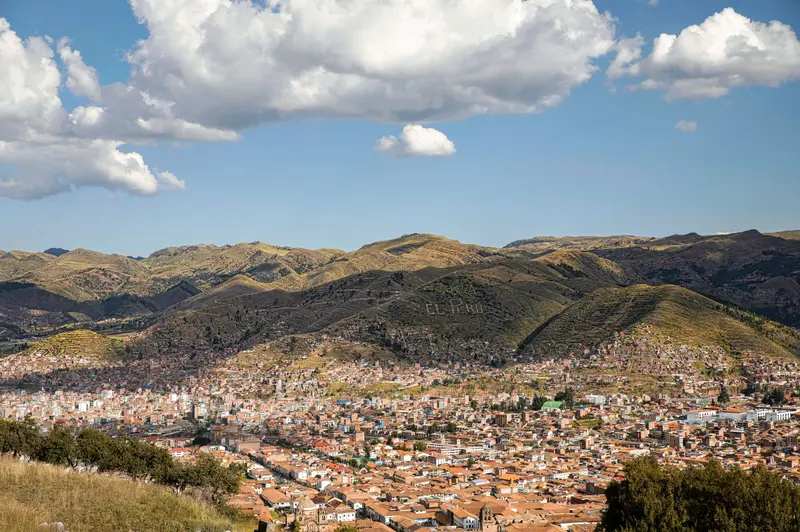
| Peru, La Convención (Cusco) | April in the lower zones to September in the highest11 | Nationally, the 2026 start slipped from April to May12 |
| Brazil | Crop year from April; 64% picked by 15 July 202626 | USDA counts from July1 |
| Ethiopia | Crop year counted from October1 | Record 12.1 million bags forecast for 2026/271 |
Crop years from the USDA and the ICO; harvest months from the sources cited in each cell.12
Vietnam and Thailand: a harvest that starts in October
Vietnam's coffee season begins on 1 October, at the end of the rainy season in the south, when the cherries turn bright red and firm.7 Most are stripped from the branch by hand, ripe and unripe together, and nearly 80% of processing is done by drying in the sun.7 Robusta made up 97% of output in the ICO's 2019 country profile, and Đắk Lắk is the largest province, with more than 212,000 ha of coffee producing over 530,000 tonnes a year.78
On 24 November 2025, Đắk Lắk's provincial government noted that its districts were going into the 2025–26 harvest and issued instructions on picking, processing and selling the crop, with a warning about storms and heavy rain in the months ahead.8 Vietnam marks National Coffee Day on 10 December, in the thick of the picking; the first celebration was held in Lâm Đồng in 2017.7
In northern Thailand, on Doi Chang in Chiang Rai province, the arabica harvest runs roughly from October to February. The village's coffee academy schedules its training sessions, which follow the bean from plantation and picking to roasting and brewing, for those months.9
Indonesia: Bali in midyear, Sumatra under strain
Bali's coffee comes in once a year, roughly from July to September, which makes the Kintamani highlands a midyear trip rather than a winter one.10
Most Indonesian coffee is robusta from the lowlands of southern Sumatra and Java, where about three-quarters of the crop is grown, and the USDA expects robusta output to fall by 1.0 million bags in 2026/27 after heavy rain disrupted flowering there.1 In northern Sumatra, floods in November 2025 left nearly a quarter of the coffee farms in the Gayo Highlands unworkable, with about 8,000 ha of trees lost or buried, according to the ICO.5
Colombia, Mexico and Peru
Colombia picks for much of the year. The main harvest runs from October to March, and the mitaca, or fly crop, begins in April at lower altitudes and works uphill through July.6 Antioquia leans on the main crop: the coffee federation's regional office said in 2018 that about 70% of the department's coffee comes in from September to December, and that eight of its municipalities needed 80,000 pickers, half of them from outside the area.13
In Mexico and Central America the harvest usually starts in October; in 2024 heavy rain, including Tropical Storm Sara in November, pushed Honduras's start back to December.4 In Pluma Hidalgo, a coffee town in Oaxaca at 1,340 m, the population doubles during the harvest as workers arrive from the central valleys.14
Peru runs on an April–March crop year.1 Near Machu Picchu, the farms of the COCLA cooperatives lie between about 1,300 and 2,200 m, and picking starts in April in the lower zones and reaches the highest in September.11 In 2026 a lack of rain pushed the start of the national harvest from April to May, a delay expected to leave less coffee available later in the year.12
Brazil and Ethiopia for context
Brazil sets the pace for world supply. The USDA forecast a record 71.9 million bags for 2026/27, with arabica up 9.5 million bags after five weak years, and noted that Brazil grows nearly 40% of the world's coffee.1 Rain slowed the 2026 picking: Safras & Mercado put the harvest at 64% complete on 15 July, against a five-year average of 70%, and the Cooxupé cooperative's members had finished 67.3% by the end of July.6
Ethiopia's crop is counted from October, like Colombia's and Vietnam's, and the USDA expects a record 12.1 million bags in 2026/27, helped by the replanting of more than half of its coffee area with higher-yielding varieties over four years.1
Farm visits and new crop in cafés
For a farm visit, go in the picking months, when there is fruit on the trees and work on the drying patios. That means from October in the Central Highlands, October to February on Doi Chang, July to September in Kintamani, April to September in the valleys near Cusco, and either harvest in Colombia.3910116
New crop takes a while to reach a café abroad. The ICO notes a lag of three to four months between the start of Vietnam's harvest and the arrival of its coffee in importing countries, so beans picked from October show up in the trade figures from January or February at the earliest.3 Cafés in the growing regions, in Đà Lạt, Chiang Mai, Bali or Cusco, sit at the start of that chain.
Exports follow the picking closely. For Colombia the ICO measured a 98% correlation between monthly production and exports from 2010/11 to 2024/25, and in July 2026 a weak mitaca pulled exports down.6