Heart's Cafe
- Wi-Fi
- Vegetarian options
- Brunch
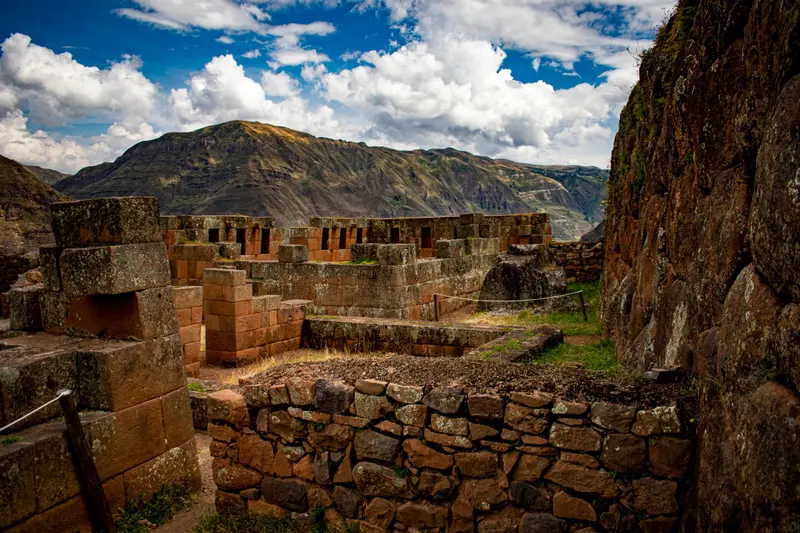
House-roasted coffee at the train station, specialty bars on Calle Ventiderio, and Latente in the Inca grid.
Photo: Gilmer Diaz Estela, Pexels License
Ollantaytambo sits at 2,792 m where the Patakancha River meets the Urubamba, here called the Willkanuta.1 In the mid-15th century the Inca emperor Pachacuti razed an older town on the site, rebuilt it as part of his royal estate and terraced the valley around it.1 During the conquest it became Manco Inca's stronghold, and in 1537 he beat back a Spanish expedition on the plain of Mascabamba by flooding it.1
Calle Ventiderio has the most cafés. A few more sit inside the old Inca grid, on Calle del Medio and La Convención, around the Plaza de Armas and at the station end of Avenida Ferrocarril.
Local tip: If you have a train to catch, skip the queue at the station gates and wait at Café Mayu: its bar is inside El Albergue's grounds, a short walk from the boarding platforms.
Nothing matches those filters here. See all cafés in Pisac & Sacred Valley.
The old town keeps its Inca plan: four long streets crossed by seven parallel ones.1 Each block in the southern half held two kanchas, walled compounds of four one-room buildings around a courtyard, and some of these houses rank among the oldest continuously occupied dwellings in South America.1 The Plaza de Armas, on the southern edge, was rebuilt over an Inca esplanade that once held the town's entrance.1
Latente is on Calle del Medio, in the middle of that grid, open daily 09:00–18:00. La Esquina describes itself as a resto-bar and coffee house on the Plaza de Armas with Peruvian and international food.2 Coffee Time is a few blocks away at La Convención 126.
El Albergue, the hotel at Ollantaytambo's railway station, first opened in 1925, under another name.3 Its Café Mayu roasts its own beans, choosing profiles for coffees from the Selva Alta, Cusco's high jungle, and serves them at a bar inside the hotel grounds a few steps from the platforms.4 The menu runs from espresso and filter methods to Irish coffee and carajillo, with breads, desserts and dishes from the hotel kitchen.45
The roastery takes visitors together with Destilería Andina, El Albergue's distillery, and a visit includes a cup brewed by one of the café's methods.5 During the 2026 World Cup the café screened every match for people waiting on their trains.4
Calle Ventiderio packs the closest run of cafés. Central Coffee at No. 226 and Emiliano's Café at No. 105 both serve specialty coffee, and Heart's Cafe, on the same street, opens daily 07:00–21:00 with brunch and vegan dishes. At the station end of Avenida Ferrocarril, Saramama sits at No. 1.
Opposite the station, a rock face above the Vilcanota, as the Urubamba is also called, holds a cross venerated as the Señor de Choquekillka.6 According to a 1966 monograph of the town by Valentín Martínez, a rider thrown into the gorge there one night saw a glowing cross turning in a whirlpool, and the spot's ghosts stopped appearing once locals set the cross in the rock.6
West of the town, across the Patakancha in the Araqhama quarter, rises Cerro Bandolista, where the Incas built a ceremonial center.1 It is usually called the Fortress, although its functions were mainly religious; stairways climb the Pumatallis terraces to the unfinished Sun Temple and its Wall of the Six Monoliths.1
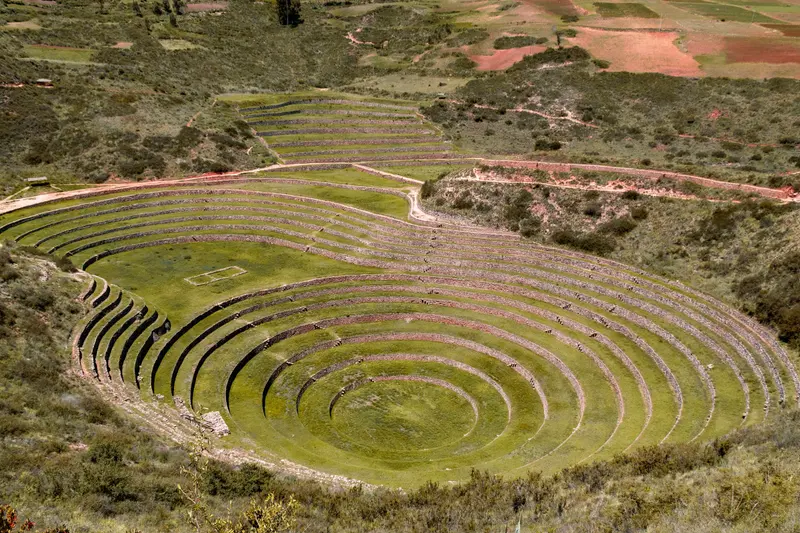
South of the Plaza de Armas, sunken terraces called the Callejón run about 700 m to the river and stay 2–3 °C warmer than the ground above, which let the Incas grow lower-altitude crops.1 Back in town, Café Lucila at Lares K'ikllu 659 has outdoor tables and Wi-Fi and takes cards.
In Ollantaytambo, also browse: Wi-Fi
Café Mayu is inside El Albergue, the hotel at the station, a few steps from the platforms. It roasts its own beans from Cusco's Selva Alta and serves espresso, filter coffee, breads and dishes from the hotel kitchen.
Calle Ventiderio, with Central Coffee at No. 226, Emiliano's Café at No. 105 and Heart's Cafe. Latente is on Calle del Medio in the Inca grid, and Saramama at Avenida Ferrocarril 1, near the station.
The old town keeps its Inca street grid and kancha compounds. West of it, Temple Hill on Cerro Bandolista has the Pumatallis terraces and the Sun Temple, and south of the Plaza de Armas the Callejón sunken terraces run about 700 m to the river.
Free listings are free for good. A featured page gives you photos, a menu and your own URL, in your café's own design, for less than a coffee a day.