Cafés in Serbia Belgrade
Domaća kafa boiled in a džezva, Belgrade's kafanas from Dorćol to Skadarlija and Zemun, and the roasters behind its espresso bars.
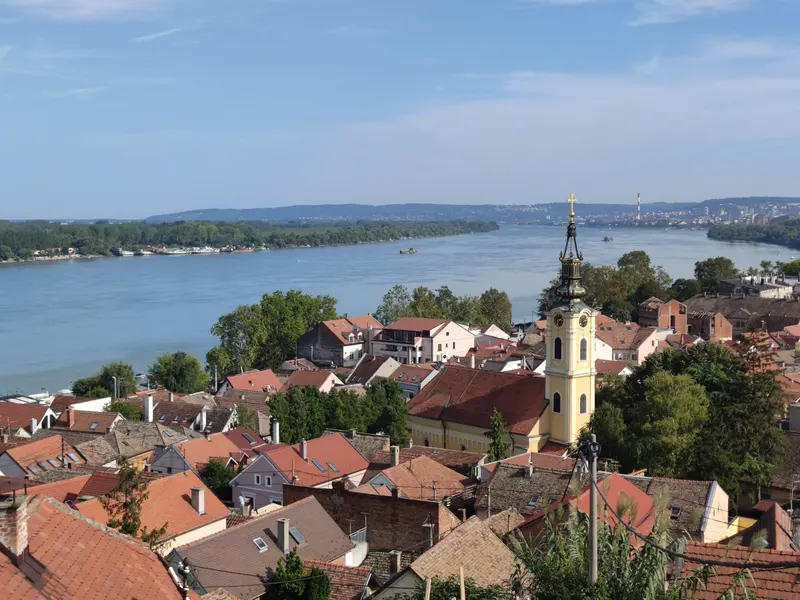
Photo: Boris Hamer, Pexels License
Serbia grows no coffee and imports about 31,000 tonnes a year, mostly from Brazil, Colombia, Ethiopia and Vietnam.1 The volume barely moved between 2018 and 2023, but its value nearly doubled, from €62 million to close to €120 million, and roasted beans rose from 13% to 27% of imports.2 The average resident drinks about 4 kg a year, roughly 600 cups.1
Most of it is the domestic, Turkish-style kind. It is still the most consumed coffee in Serbia, ahead of espresso, cappuccino and latte, which gain ground in the cities.1 In 2023 traditional roast and ground coffee made up almost 90% of the market.6
Serbia's café cities
Dorćol, 1522: how coffee reached Belgrade
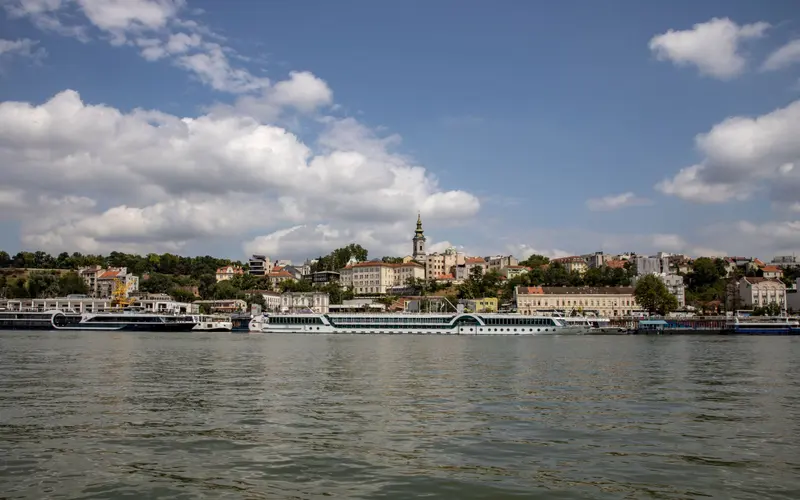
Coffee came with the Ottomans. The first official place to serve it in Serbia opened in Belgrade in 1522, a year after Suleiman's army took the city. It was on the upper floor of a house in Dorćol: guests sat on the floor, only coffee was served, in small cups, and only men were let in.7 The word kafana comes from the Turkish kahvehane, coffee house.7
Belgrade's coffee houses came to be called kafanas after 1739, when the Ottomans took Serbia back from Austria.8 Women took up coffee in the 19th century, when middle-class ladies began hosting coffee gatherings in their salons.7 The kafić, a café bar pouring espresso rather than Turkish coffee, first appeared in Yugoslavia in the late 1970s.8
Domaća kafa and the džezva
Ask for domaća kafa (domestic coffee) or crna kafa (black coffee) and you get Turkish-style coffee, ground to powder and served unfiltered.8 The usual method: bring water to the boil in a džezva (a small long-handled pot), take it off the heat, stir in one or two teaspoons of coffee and put it back on the burner for a few seconds. It comes in a small cup, with or without sugar, and milk is unusual.9
In the Turkish method, sugar goes into the pot, so you choose unsweetened, medium or sweet before it is made; the grounds are left to settle at the bottom, and a piece of ratluk (Turkish delight) sometimes comes with it.7 A 1967 Serbian cookbook, Savremeni kuvar, gives a local variant: boil the water with the sugar first, then let the coffee rise without boiling and settle for a minute or two.7
Espresso has its own vocabulary: kratki is a single, dupli a double, and produženi a single lengthened with water. Nes means instant coffee, hot or iced. Know one more word, sikteruša: the cup a host offers when you have stayed long enough.9
Grand, Doncafé and the price of a bag
Serbia's ground coffee comes mostly from two houses. Grand kafa belongs to Croatia's Atlantic Grupa, and Doncafé was made by Strauss Adriatic in Šimanovci, near Belgrade. From 2013 to 2020 the two largest players never held less than 80% of the wholesale market between them, and in 2021 the competition commission opened an investigation into whether they had coordinated ground-coffee prices.5
In 2023 Atlantic Grupa agreed to buy Strauss Adriatic, with the Doncafé and C kafa brands, its plant near Belgrade and 220 workers, for €40.5 million.6 Shelf prices have followed the bean markets. In September 2021 a 200 g pack cost 220–240 dinars, with 270–300 dinars expected from October.4 By November 2024 a kilogram averaged 1,894 dinars in Serbian shops, 9.2% more than a year earlier.3
The ? and the kafanas of Skadarlija
The kafana has long since become a tavern as much as a coffee house. The building at Kralja Petra 6 was put up in 1823 by the merchant Naum Ičko for Prince Miloš Obrenović. In 1892 the church objected to its owner calling his kafana Kod Saborne crkve (By the Cathedral), so he put a question mark on the door, and the name ? stuck. It joined Serbia's list of protected cultural monuments in 1981.10
Skadarlija, a cobbled street under 400 m long just below Republic Square, became the bohemian quarter after the Dardaneli inn was pulled down in 1901 and its writers and actors moved there. It had 15 kafanas in the early 20th century. Tri šešira, founded in 1864, is the oldest still open, and the street has been protected as a cultural-historical unit since 1967.11
Belgrade, from Dorćol to Zemun
Stari Grad and Skadarlija are Belgrade's traditional coffee quarters.8 Dorćol, where the first kafana opened, is also where the specialty scene started: Pržionica D59B began roasting around 2012 at Dobračina 59, in Lower Dorćol. In 2016 an espresso there cost about €1, against €2.50 in Germany, though beans cost more to import into Serbia, which is outside the EU.12
Zemun, across the Sava, was a Habsburg town until 1918 and a separate town until it was absorbed into Belgrade in 1934. Its Danube bank is now a promenade several kilometers long, lined with barge cafés.13
Sources
- Prosečan stanovnik Srbije godišnje popije oko 600 šoljica kafe (5 December 2024), 021.rs / Nova ekonomija, accessed October 2026
- Kafu ćemo u Srbiji piti koliko god ona koštala, pitanje je samo koju vrstu (Marija Jovanović, 11 December 2024), Biznis.rs, accessed October 2026
- Čokolada u Srbiji poskupela čak 50 odsto u 2024; Kafa i konditori najzaslužniji za inflaciju (21 February 2025), Borba, accessed October 2026
- Od oktobra skuplja kafa, pakovanje od 200g koštaće i do 300 dinara (27 September 2021), N1 / RTS, accessed October 2026
- Štelovana cena kafe u Srbiji? Pokrenut postupak protiv vlasnika "Doncafé" i "Grand kafe" (27 September 2021), 021.rs, accessed October 2026
- Atlantic Grupa to acquire Strauss Group's coffee business in Serbia (25 May 2023), World Coffee Portal, accessed October 2026
- Турска кафа, Wikipedia (Serbian), accessed October 2026
- Coffee culture in the former Yugoslavia, Wikipedia, accessed October 2026
- How to Order Coffee in Serbia (Olivera Tolimir), Belgrade Language School, accessed October 2026
- ? (bistro), Wikipedia, accessed October 2026
- Skadarlija, Wikipedia, accessed October 2026
- Pržionica D59B in Belgrade (Kate Robinson, 27 April 2016), Sprudge, accessed October 2026
- Zemun, Wikipedia, accessed October 2026
Cafés in Serbia: questions
What is domaća kafa in Serbia?
Domaća kafa, also called crna kafa, is Serbia's domestic coffee: Turkish-style coffee ground to powder, made in a small pot called a džezva and served unfiltered in a small cup. Sugar is added in the pot, so you choose the sweetness beforehand, and milk is unusual. It is still the most consumed coffee in Serbia, ahead of espresso.
When did the first kafana open in Belgrade, Serbia?
The first official place to serve coffee in Belgrade opened in 1522, a year after the Ottomans took the city. It was on the upper floor of a house in Dorćol, served only coffee and admitted only men. The name kafana comes from the Turkish kahvehane. The ? kafana on Kralja Petra dates from 1823.
How much coffee do people in Serbia drink?
The average person in Serbia drinks about 4 kg of coffee a year, roughly 600 cups. Serbia imports about 31,000 tonnes a year, mostly from Brazil, Colombia, Ethiopia and Vietnam. The import value nearly doubled between 2018 and 2023, to close to €120 million, while the volume stayed about the same.
Your café deserves better than a pin someone else dropped
Free listings are free for good. A featured page gives you photos, a menu and your own URL, in your café's own design, for less than a coffee a day.