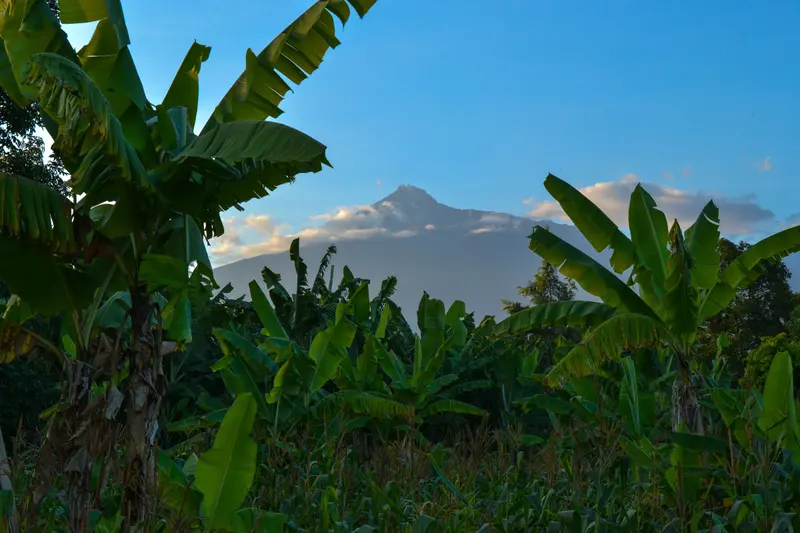
Cafés in Tanzania Dar es Salaam
Kilimanjaro and southern arabica, the Moshi coffee auction, kahawa poured from street kettles, and the cafés of Dar es Salaam.
Photo: Blue Ox Studio, Pexels License
Coffee is Tanzania's largest export crop, and little of it stays at home.1 In 2025/26 the country produced 76.47 million kg and earned US$413 million from exports, according to the Tanzania Coffee Board, with about 92% of the crop sold through direct export channels.4 The US Department of Agriculture expects a record 1.6 million 60 kg bags in 2026/27, in nearly equal parts arabica and robusta, from 270,000 hectares.2
Most of it comes from about 320,000 smallholders, alongside roughly 100 large farms.3 Tanzanians drink about 7% of the crop, and the Registrar of Cooperatives told the 2025 Kahawa Festival he wants that share at 10% within a few years.5 The European Union is the biggest buyer, with about 59% of exports in 2023/24.3
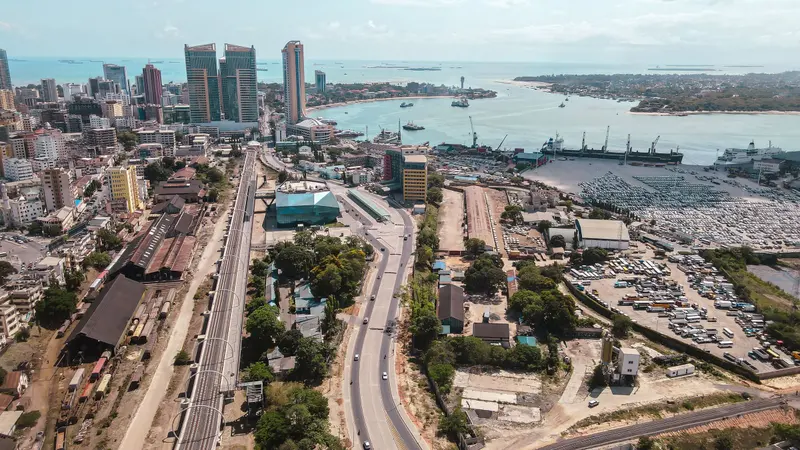
Tanzania's café cities
From Haya currency to Chagga cooperatives
Coffee was in the region long before plantations. The Haya of Kagera, near Lake Victoria, boiled and steamed robusta beans and used them as a stimulant and as currency, and their chiefs controlled who could grow it.1 In 1911 German colonial officials ordered arabica planted across the Bukoba area, and coffee also spread to the slopes of Kilimanjaro and to Tanga.1
On Kilimanjaro the Chagga took up the crop after slavery was abolished. By 1925 they exported 6,000 tonnes worth US$1.2 million, and that year farmers formed the Kilimanjaro Native Planters' Association, the first of the country's many coffee cooperatives.1 The cooperative unions were dissolved in 1977, and reforms in the 1990s privatized the trade and reinstated the Tanzania Coffee Board.1
Kilimanjaro, the southern highlands and Kagera
The name on the bag is often Kilimanjaro. Since 1991 Japan's Fair Trade Council has let all Tanzanian coffee carry the "Kilimanjaro coffee" label, as well as blends with at least 30% Tanzanian beans.1 The region itself raised its output from 8,000 tonnes in 2020 to 12,000 tonnes in 2024,5 though some farmers there have uprooted coffee for bananas, which pay sooner, a Kilimanjaro writer argued in The Chanzo in October 2025.10
Most arabica now grows in the south. The coffee board lists Ruvuma, Songwe, Arusha, Mbeya and Kilimanjaro as the leading arabica regions, and Ruvuma and Songwe alone grow 77.4% of it.4 The post-independence government set up state estates at Mbinga and Mbozi in the southern highlands.1 Robusta comes mainly from Kagera, with Mwanza and Morogoro behind.3
Grades and the Moshi auction
Tanzanian coffee is graded on the British system by bean shape, size and density, in 11 grades that start with AA, A, B and PB.1 The coffee board licenses the trade, grades the beans and runs the Moshi Coffee Exchange, where auctions take place every Thursday through a nine-month season.1 Six other government-approved auction sites now trade alongside Moshi, and direct export contracts must be registered with the board.3
Prices have climbed with the world market. Between 2023/24 and 2025/26 a 50 kg bag of arabica rose from US$100 to US$352, and robusta from US$100 to US$218.4 Moshi also hosts the Kahawa Festival, whose sixth edition ran from 3 to 5 October 2025 at the Tanganyika Coffee Curing Company.5
Kahawa from the kettle
Kahawa, Swahili for coffee, is mostly drunk black from street kettles. In 2022 Xinhua described coffee spots under shade trees as a fixture of Tanzanian cities, with Dar es Salaam leading.6 One vendor in Biafra, in the Kinondoni area, sold up to three 10-liter kettles a day at 15,000 shillings each, using beans bought at Kariakoo for 8,000 shillings a kilogram. Ginger is sometimes added, and coconut peanut brittle comes on the side.6
On Zanzibar, Jaws Corner in Stone Town works the same way: coffee is brewed in metal kettles over sidewalk charcoal and poured strong, black and unsugared into small cups, often for people who stop only briefly on a bicycle or motorbike.8
Dar es Salaam: Kariakoo, the city center and Oyster Bay
Street vendors buy their beans in Kariakoo, the ward whose name is a Swahili rendering of the British "Carrier Corps".67 Its market, which opened in 1923, is the biggest in the city, and after a fire in 2021 a rebuilt six-story complex was inaugurated in February 2026.7
Sit-down cafés sit closer to offices and embassies. In 2015 a café owner with branches in both places described Oyster Bay as a suburb dominated by diplomats, senior officials, expatriates and wealthy business people, and her downtown branch as being in an office building in an area with several foreign embassies.9 Her weekend customers in Oyster Bay, she said, included people who worked near the town branch.9
Sources
- Coffee production in Tanzania, Wikipedia, accessed October 2026
- Tanzania's coffee industry targets another record harvest in 2026-27, Ecofin Agency (May 2026, citing the USDA report of May 18, 2026), accessed October 2026
- Tanzania Coffee Report: Production Rising as Old Farms Get New Life, Daily Coffee News (July 1, 2024, citing USDA FAS), accessed October 2026
- Global coffee price rally unlocks new opportunities for Tanzania, The Citizen (June 11, 2026), accessed October 2026
- Kahawa Festival 2025: Realising lost economic boost hopes, Daily News (October 5, 2025), accessed October 2026
- Feature: Street coffee culture is flourishing business in Tanzania, The Star / Xinhua (May 11, 2022), accessed October 2026
- Kariakoo, Wikipedia, accessed October 2026
- Panorama: Jaws Corner, Stone Town, Zanzibar, Uncornered Market (updated July 23, 2017), accessed October 2026
- In Tanzania, good coffee shops can be good business, says entrepreneur, How We Made It In Africa (February 16, 2015), accessed October 2026
- Kahawa ni Zao Lenye Thamani Kubwa Duniani. Lakini Mbona Wakulima wa Tanzania Hawanufaiki?, The Chanzo (Brayan Silayo, opinion, October 7, 2025), accessed October 2026
Cafés in Tanzania: questions
Where is coffee grown in Tanzania?
Arabica grows mainly in Ruvuma, Songwe, Arusha, Mbeya and Kilimanjaro; Ruvuma and Songwe alone produce 77.4% of Tanzania's arabica, according to the Tanzania Coffee Board. Robusta comes mostly from Kagera near Lake Victoria, with Mwanza and Morogoro behind. About 320,000 smallholders grow most of the crop.
What is Kilimanjaro coffee from Tanzania?
It is the trade name for Tanzanian coffee in Japan, where since 1991 the Fair Trade Council has allowed all Tanzanian coffee, and blends with at least 30% Tanzanian beans, to carry the Kilimanjaro label. Kilimanjaro region itself grew 12,000 tonnes in 2024, and Chagga farmers there founded the country's first coffee cooperative in 1925.
How do people drink coffee in Tanzania?
Mostly black, as kahawa from street vendors' kettles, sometimes with ginger and with coconut peanut brittle on the side. In Dar es Salaam drinkers gather at coffee spots under shade trees, and at Jaws Corner in Zanzibar's Stone Town it is poured strong and unsugared into small cups. Tanzanians drink only about 7% of the national crop.
Your café deserves better than a pin someone else dropped
Free listings are free for good. A featured page gives you photos, a menu and your own URL, in your café's own design, for less than a coffee a day.