
Baso Pâtissier
- Outdoor seating
- Bakery café
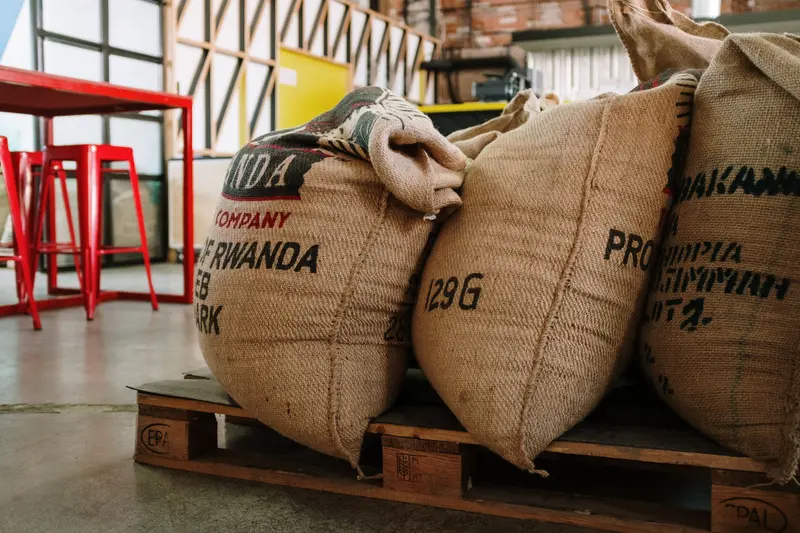
Roasteries on KG 2 Ave and KG 8 Ave, a treehouse café in Kiyovu, rooftop terraces above Kacyiru and fermented-milk bars facing Kimironko Market.
Photo: Faustin NKURUNZIZA, Pexels License
Kigali began as a German administrative outpost founded by Richard Kandt in 1907 and became the national capital at independence in 1962.1 The 2022 census counted 1,745,555 people across its three districts, Gasabo, Kicukiro and Nyarugenge, and the city sits at an average of 1,567 m above sea level.1
Sitting down to a coffee here is a young habit. When Rubia Coffee Roasters started in 2018, about 80% of its customers were expatriates and tourists; by early 2026 about 80% were Rwandans, according to The New Times.2 Kigali menus are shaped by local taste: many Rwandans prefer tea and sweeter drinks, cow's milk carries cultural weight, and many of the newer cafés seat more people outdoors than in.3
Milk bars are the other daily stop. Inyange Industries and Nyanza Milk Industries run franchise milk bars across the city, and independents supplied by smaller dairies, such as one in Nyamirambo, the Muslim quarter, work alongside them.4
Street signs give the district away: KN marks Nyarugenge, which holds the city center, KG marks Gasabo and KK marks Kicukiro.91 The city began replacing street names with these letter-and-number codes in June 2012, so KG 14 Ave is an avenue in Gasabo.10
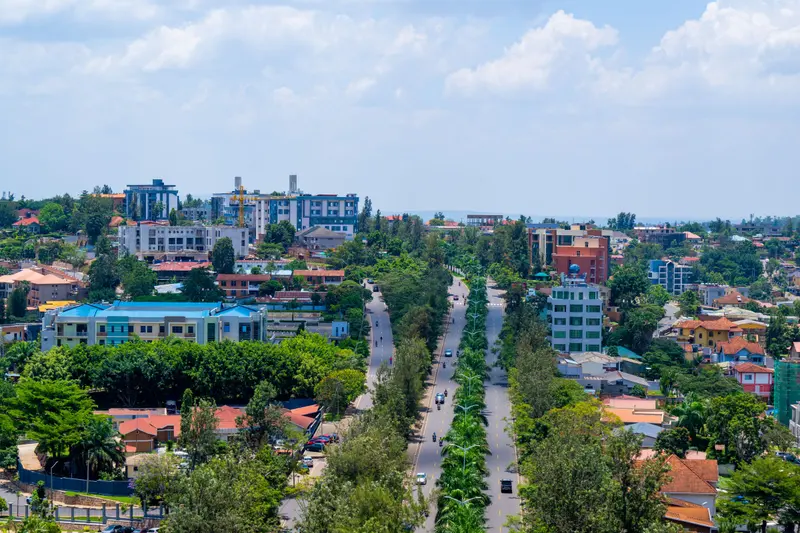
Kigali City Tower, the car-free KN 4 Ave and the tree-lined streets of Kiyovu.
9 cafés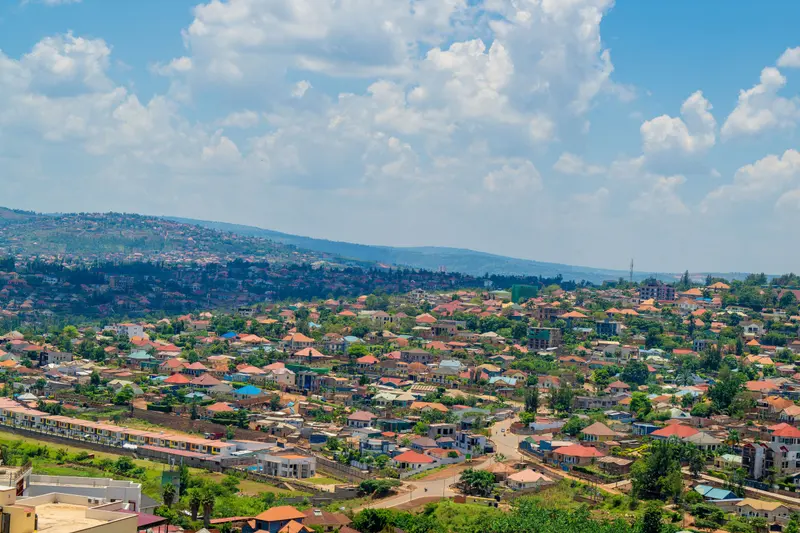
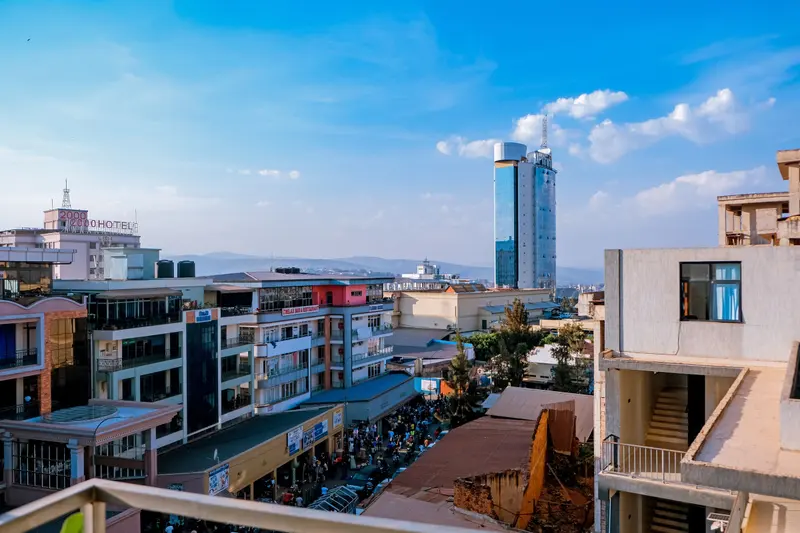
Ministries, the Convention Centre roundabout and the KG 2 Ave courtyard where Rubia roasts.
8 cafés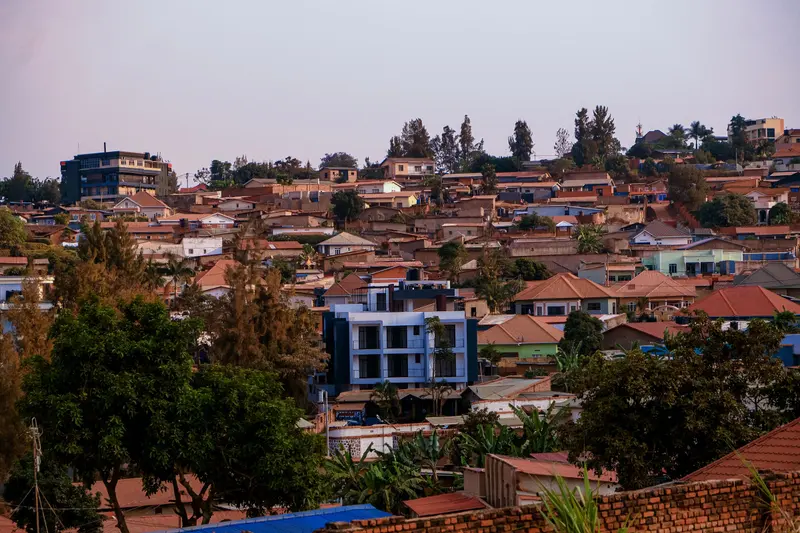
Amahoro Stadium, Kimironko Market and the Gishushu slope of KG 8 Ave, with Question Coffee at the top.
10 cafésMore about cafés in City Centre & Kiyovu
More about cafés in Kimihurura
Fika Café
No café matches all of those filters. Try removing one, or tell us about a café we're missing.
Branches by area
A milk bar sells fresh milk and ikivuguto (fermented milk) by the glass or jug, plus hot milk and cereal porridges. Ask for a "white coffee" there and you get hot milk with a little tea, not coffee. Many regulars bring their own container and buy milk to take home every day.4
Look for African tea and African coffee on menus next to the espresso drinks. In 2026 Issa Coffee in Nyamirambo charged Rwf 2,500 for a pot of African tea and Rwf 3,000 for an African coffee.5 At Golden Coffee Roastery on KG 9 Ave, the African coffee is a milky drink spiced with ginger, cinnamon and cardamom.3
Restaurants, hotels, supermarkets and many shops display a mobile-money code you can pay through at no cost to you, and a tip of Rwf 1,000–5,000 is usual at a sit-down café.6 On the last Saturday of each month comes umuganda (community work): roads, coffee shops and grocery stores close from 07:00 to 11:00, so plan a late breakfast.6
| Drink | Typical price |
|---|---|
| Espresso Single shot | Rwf 1,000–2,000 Issa Coffee, Nyamirambo, and Baso, Kiyovu, 2026 |
| Cappuccino Regular size | Rwf 2,500–6,500 Citywide range, October 2026 |
| Latte Hot, regular size | Rwf 3,000–3,300 Issa Coffee and Baso, 2026 |
| African tea By the pot or cup | Rwf 2,500–4,000 Issa Coffee (pot) and Baso (cup), 2026 |
Prices as of 2026. Espresso, latte and African tea prices are from the menus Issa Coffee and Baso Pâtissier publish online, read in October 2026;57 the cappuccino range is Numbeo's crowd-sourced data, updated on 24 October 2026, with an average of about Rwf 3,570.8
Numbeo's crowd-sourced cappuccino prices in Kigali ran from Rwf 2,500 to 6,500 in October 2026, averaging about Rwf 3,570. Café menus in 2026 put a single espresso at Rwf 1,000 at Issa Coffee in Nyamirambo and Rwf 2,000 at Baso in Kiyovu, and a latte at Rwf 3,000–3,300.
Remera & Kimironko and City Centre & Kiyovu have the most cafés, followed by Kimihurura. Remera and Kimironko have the widest choice, mostly in the streets around Amahoro Stadium and on KG 8 Ave; the city center and Kiyovu come next, then Kimihurura.
Kigali milk bars sell fresh milk and ikivuguto, a fermented milk, by the glass or jug, along with hot milk and cereal porridges. A "white coffee" there is hot milk with a little tea. Inyange Industries and Nyanza Milk Industries run franchise milk bars, and smaller dairies supply independent ones.
Kigali streets carry a letter-and-number code instead of a name, introduced from June 2012. The letters give the district: KN for Nyarugenge, which includes the city center, KG for Gasabo and KK for Kicukiro. A number and a type follow, so KG 14 Ave is an avenue in Gasabo.
Not in the morning. Umuganda, the community work day, falls on the last Saturday of each month, and roads, coffee shops and grocery stores close from 07:00 to 11:00. A late breakfast or brunch after 11:00 is the practical choice that day.
Restaurants, hotels, supermarkets and many shops in Kigali show a mobile-money code you can pay through at no cost to you. A tip of Rwf 1,000–5,000 is usual at a sit-down café or restaurant. Menus are priced in Rwandan francs: in 2026 a cappuccino cost Rwf 3,000 at Issa Coffee in Nyamirambo and Rwf 3,300 at Baso in Kiyovu.
Your free listing is probably already on this page. Claim it in two minutes, or turn it into a featured page in your own design, with photos, a menu and your own link.