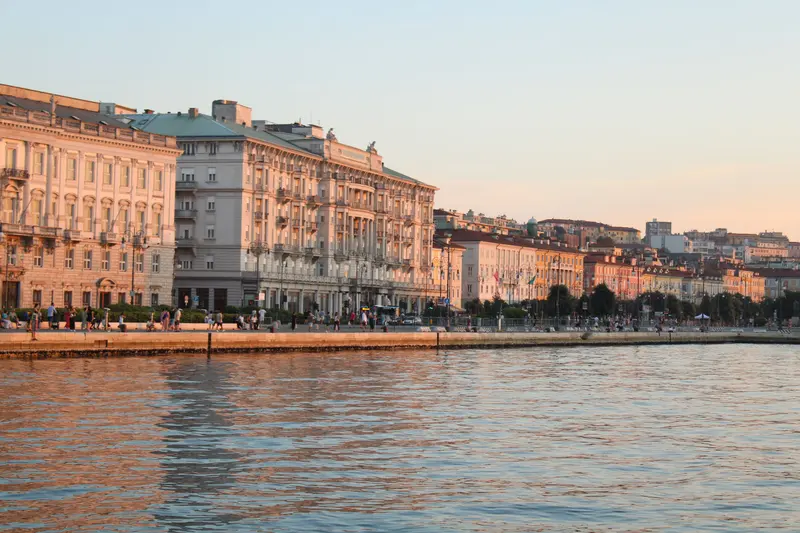
Trieste · San Vito & Campi Elisi
Cafés in San Vito & Campi Elisi
Bars on Viale dei Campi Elisi, coffee by the old Campo Marzio station and the Pedocin, a beach split by a wall.
Photo: Ana Kenk, Pexels License
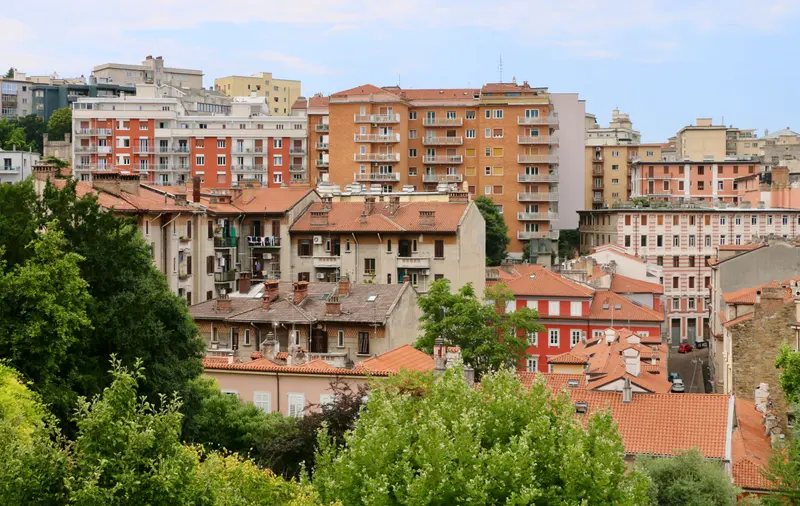
San Vito is a quarter on a hill in the middle of Trieste. It was first called the Colle di San Lorenzo, after a small church at the top of today's Via San Michele, and until the 17th century it was pasture dotted with huts called tigoièr, which gave Via Tigor its name.1 Most of its building came in the 18th and 19th centuries, when the hill became a place to live for the city's colony of British property owners.1
Viale dei Campi Elisi is the one street with two bars, Bar Marino at No. 33 and Bar Contrada de Campedellis at No. 59. The others sit one to a street: by the old Campo Marzio station, on Via Murat, Via Tonello and Via Economo, and in Sant'Andrea.
Local tip: At the Pedocin, check which gate you need before you queue: women and children under 12 enter on one side and men on the other, and crossing into the other section takes a special permit.3
At a glance
8Cafés listed
0With opening hours
–Earliest opening
–Latest closing
Bar Grattacielo
Bar Caffetteria Artistica
Bar Contrada de Campedellis
Bar Marino
Bar Piscina Bianchi
Bar S. Marco
Gelateria Viti
Nothing matches those filters here. See all cafés in Trieste.
The hill, its fort and its gardens
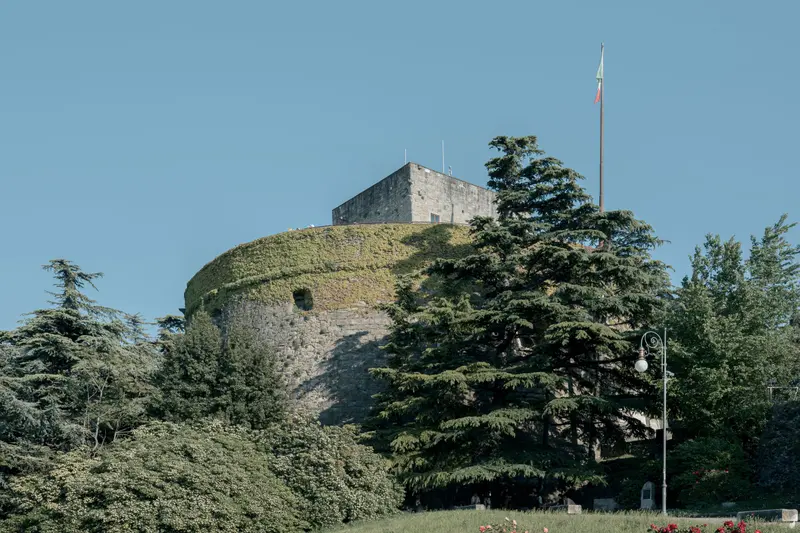
A second chapel, dedicated to San Vito, rose on the summit and gave its name to a square fort built nearby in 1616.1 It was strengthened in 1627, 1733 and 1833 into a castle called della Sanza, from the German Schanze (redoubt), and demolished in 1888–1891, leaving no trace.1 For some decades in the second half of the 20th century, the hilltop held the heavy vehicles of Diego de Henriquez's war museum.1
The quarter's green spaces include Piazzale Rosmini, Piazza Carlo Alberto and the Passeggio Sant'Andrea.1 On the streets in between, Bar Adria is at Via Murat 6, Bar Caffetteria Artistica at Via Tonello 2 and Bar S. Marco at Via Economo 1.
Campo Marzio: Trieste's second station
In 1887 the Austrian state railways opened the line to Erpelle, giving Trieste a second station, then called Trieste Sant'Andrea.2 It was rebuilt in 1901–1906 to a design by Robert Seelig as the terminus of the Transalpina, the line that tied Trieste to the Austrian interior and, through branches, to Vienna and Salzburg, and it was second only to the central station in size and traffic.2
The station was renamed Campo Marzio in 1923 and closed to passengers in 1960; for much of the 20th century a major tram terminus stood in front of it.2 Volunteers later took over part of the building and opened a railway museum there on 8 March 1984.2 Bar Grattacielo is on Via di Campo Marzio, at No. 4.
The Lanterna pier and the Pedocin
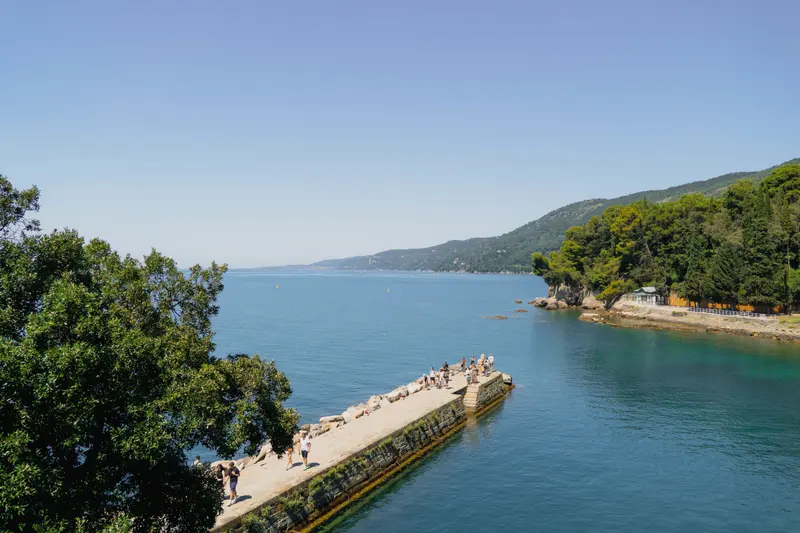
By the Molo Fratelli Bandiera, the Lanterna, or Pedocin, is a municipal bath considered the last beach in Italy, perhaps in Europe, split by sex.3 Women and children under 12 use one entrance and men the other, and inside a white wall over 3 m high divides the beach and continues into the sea.3 It officially opened in 1903, though many say it is older. A fence came first, and the wall was knocked down only once, in 1959, then rebuilt a few meters along to give women more room.3
Lanterna comes from the nearby lighthouse, switched off today but working when the bath opened.4 In dialect, pedocin can mean either a louse or a mussel, and paid entry began in 1938; it cost €1 in 2015.3 The bath was the setting of L'ultima spiaggia, a 2016 film shown as a special screening at that year's Cannes Film Festival.4
Ausonia, Sant'Andrea and the swimming season
Bagno Fontana opened on the same pier at the start of the 20th century; it was rebuilt and enlarged over the years and in the 1930s became the Ausonia bathing complex.5 Ausonia, at Riva Traiana 1, covers almost 6,700 m² with pools, diving boards and restaurants, holds more than 2,000 people, and in 2026 opened from 7 May to 30 September.6
Swimming there is allowed only from 1 June to 30 September, when lifeguards are on duty.6 Back on the Passeggio Sant'Andrea, Bar Piscina Bianchi is at No. 8, and Gelateria Viti is at Viale Romolo Gessi 18.
Sources
- San Vito (Trieste), Wikipedia (Italian), accessed November 2026
- Stazione di Trieste Campo Marzio, Wikipedia (Italian), accessed November 2026
- La spiaggia divisa da un muro a Trieste, Il Post (August 3, 2015), accessed November 2026
- Bagno Marino La Lanterna - El Pedocin, FAI Fondo per l'Ambiente Italiano, accessed November 2026
- Guide to the city's best beaches, Discover Trieste, accessed November 2026
- Ausonia, Discover Trieste, accessed November 2026
FAQ
San Vito & Campi Elisi cafés: questions
What is the Pedocin beach in San Vito, Trieste?
The Pedocin, or Lanterna, is a municipal bath by the Molo Fratelli Bandiera where a white wall over 3 m high separates men from women and children under 12, on the beach and in the sea. It officially opened in 1903 and is considered the last beach in Italy divided by sex.
Which street in San Vito and Campi Elisi, Trieste has the most cafés?
Viale dei Campi Elisi, with Bar Marino at No. 33 and Bar Contrada de Campedellis at No. 59. Bar Grattacielo is on Via di Campo Marzio, Bar Piscina Bianchi on the Passeggio Sant'Andrea and Gelateria Viti on Viale Romolo Gessi.
What was Campo Marzio station in San Vito, Trieste?
It was Trieste's second railway station, opened in 1887 as Trieste Sant'Andrea and rebuilt in 1901–1906 as the terminus of the Transalpina line toward Vienna and Salzburg. It took the name Campo Marzio in 1923, closed to passengers in 1960 and later housed a railway museum.
For café owners
Own a café in San Vito & Campi Elisi?
Free listings are free for good. A featured page gives you photos, a menu and your own URL, in your café's own design, for less than a coffee a day.