
Le Berries Gaya Street
- Air-con
- Bakery café
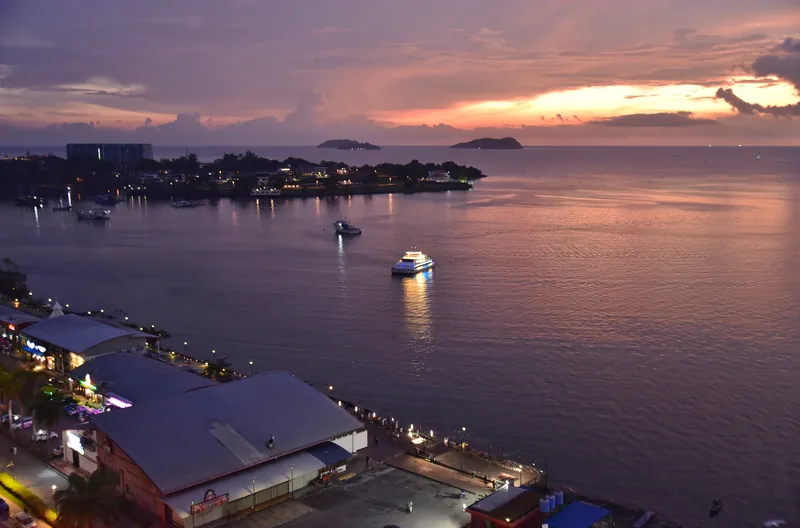
Steamed buns and kopi from 06:00 on Gaya Street, pour-overs along Lorong Dewan, and Sabah-roasted beans at Riverson Walk off the Coastal Highway.
Photo: Bahnfrend, CC BY-SA 4.0
Kota Kinabalu began in 1899 as Jesselton, a British North Borneo Company settlement facing Gaya Island. Allied bombing in 1945 left only three buildings standing, the town was renamed Kota Kinabalu on 22 December 1967, and it became a city on 2 February 2000.1 Gaya Street, the downtown spine, was Bond Street in colonial days and started in 1902 as a railway track bringing rubber from the Tenom estates down to the wharf.2
Robusta has long been Sabah's coffee, above all around Tenom.3 That interior district, about 145 km from the city, is informally Sabah's coffee town, and Yit Foh, founded there by Yong Loong Vun in 1960, still roasts over wood in an oil drum the founder rigged to turn over the fire.4 Closer in, Cap Kuda Coffee Company has worked from 29 Jalan Kilang since the early 1960s and is known for a caramelized local roast.5
Specialty coffee sits a few streets from the old kopitiams (coffee shops). October Coffee House on Lorong Dewan serves its own house blend among a wider choice of beans, and the group roasts at a third café in Taman Bunga Raja.67 Crack Inc., which calls itself a specialty coffee roaster in Sabah, sells its blends from an experience store at Riverson, south of downtown.8
Signal Hill pins the central business district to the shore, so downtown is a narrow strip running south from Jesselton Point, where the island ferries leave.1 The next district down the Coastal Highway grew around Imago, a mall of more than 300 outlets that opened in March 2015.18
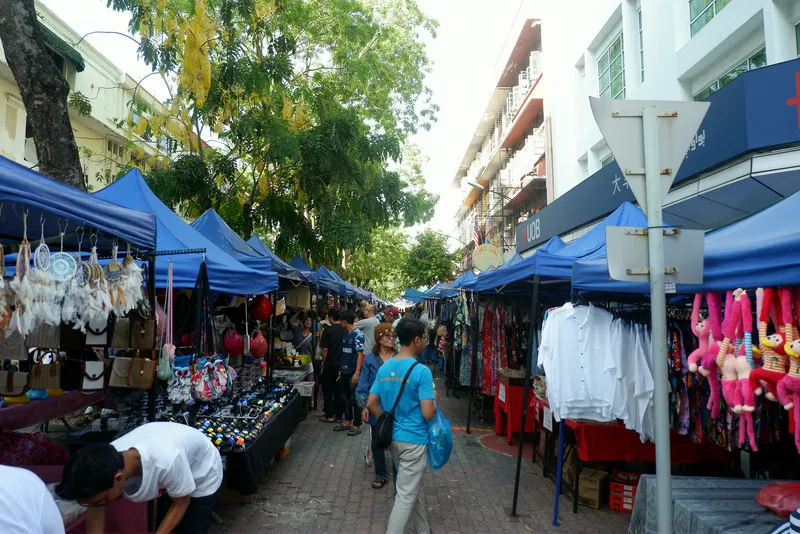
Steamed buns at 06:00 on Jalan Gaya, pour-overs on Lorong Dewan, and the Sunday tamu from 05:30.
71 cafés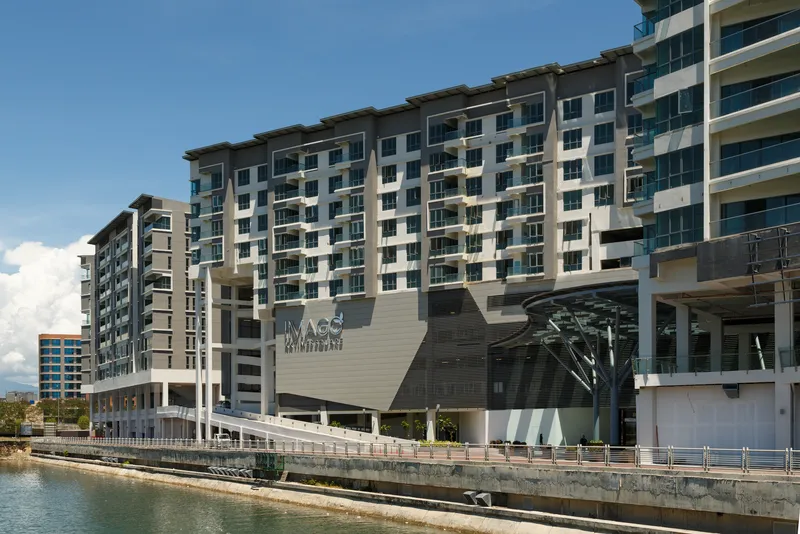
A Sabah roaster and a Korean-run café on Riverson Walk, matcha on Sutera Avenue, and Imago off the Coastal Highway.
25 cafés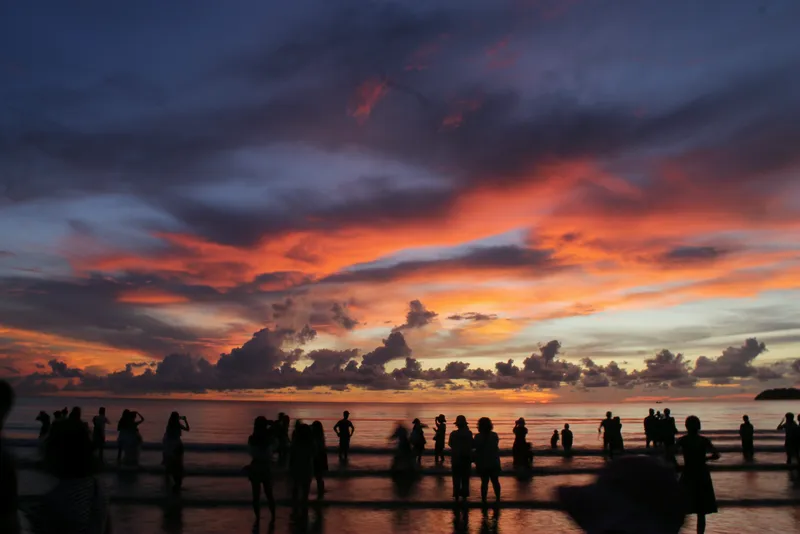
Coffee in the Aeropod blocks by the railway station, a resort café on Jalan Aru and kedai kopi toward Sembulan.
15 cafés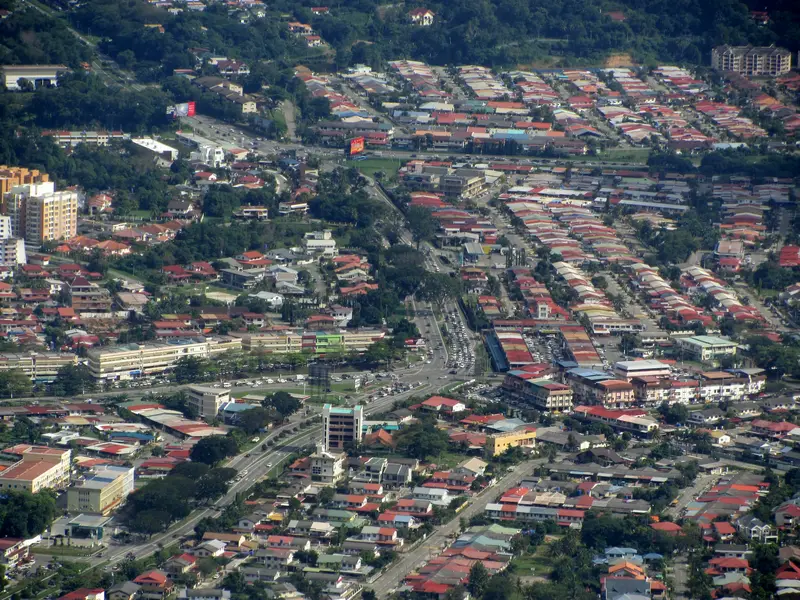
Kopitiams near Foh Sang, a Japanese tea bar on Jalan Lintas, cake cafés at Damai Point and a 2013 tea shop.
65 cafés
Plaza 333 cafés on the bypass, a cyclists' café on Jalan Ganang Villa and kopitiams near the Petagas memorial.
35 cafés
Kedai kopi in Donggongon's townships, a café at the KDCA Kaamatan grounds and bubble tea by the ITCC mall on the bypass.
35 cafés
Cap Kuda's coffee factory on Jalan Kilang, a roaster-café in Taman Bunga Raja and Likas Bay.
72 cafés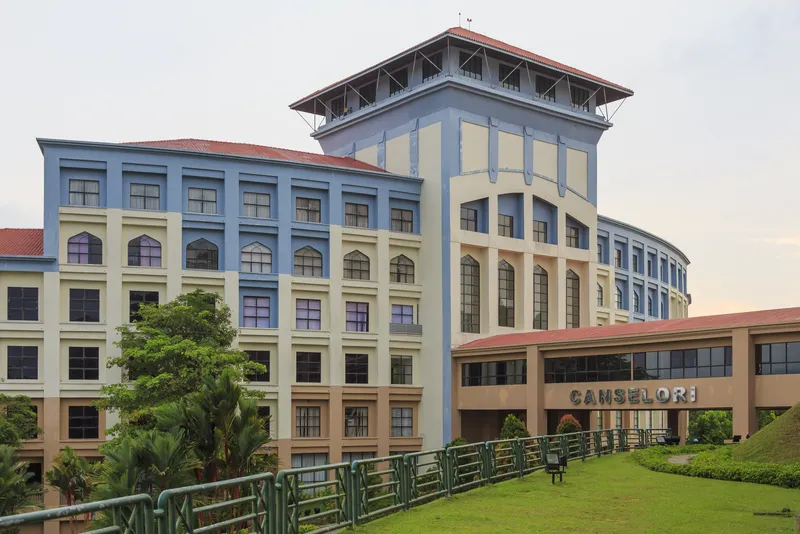
Plaza Kingfisher's shop-lot cafés, cake at 1Borneo beside UMS, and a smoked wild boar stall.
30 cafés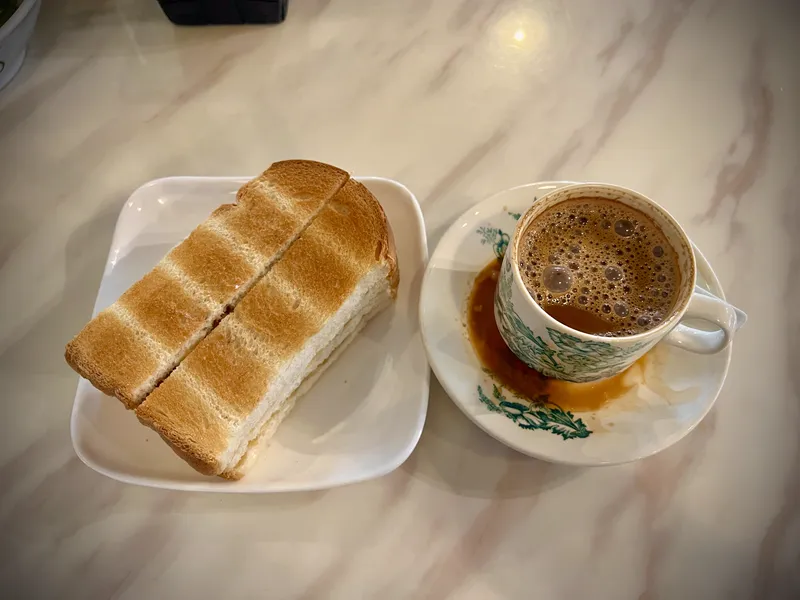
Riverson Walk terraces, Lorong Dewan brunch rooms and filter coffee on Jalan Gaya, all with Wi-Fi.
10 cafés
Evening coffee on Lorong Dewan, cake shops in Likas until 22:00 or later, and Tanjung Aru after the sunset.
6 cafés
Pandan cakes on Jalan Gaya, sourdough on Lorong Dewan and late cake shops along Lorong Bunga Raja.
13 cafésA beach-resort café in Tanjung Aru, a terrace on Riverson Walk and a cyclists' stop in Kepayan.
5 cafésMore about cafés in Gaya Street & City Centre
More about cafés in Imago & KK Times Square
More about cafés in Tanjung Aru & Sembulan
More about cafés in Damai, Luyang & Lintas
More about cafés in Kepayan & Putatan
More about cafés in Likas & Inanam
More about cafés in Alamesra & Sepanggar
Showing up to 6 cafés per area. Each area page has the full list.
No café matches all of those filters. Try removing one, or tell us about a café we're missing.
Branches by area
At a kedai kopi (coffee shop), a plain kopi is roughly four parts coffee to one part condensed milk. Kopi-O is coffee with sugar and no milk, kopi-C uses evaporated milk with sugar, kopi-O-kosong is the black cup with nothing added, and kopi-peng is the iced version of the milky one; ask for kopi-gao when you want it thicker.9 Sabahans tend to order their coffee strong, kaw in local speech, which is why one Kota Kinabalu coffee family has argued for planting liberica.3
Breakfast is noodles or buns with the coffee. Ngiu chap, Sabah's beef noodle soup, lets you choose the noodle and a mix of sliced beef, beef balls, tripe and tongue.10 At Keng Wan Hing on Gaya Street, regulars sit at a long counter over big steamed buns stuffed with pork, chicken, egg and mushroom, with coffee or tea.11 It opens at 06:00 and closes at 13:00 on Sundays.12
Specialty bars price their cups like espresso bars elsewhere in Malaysia. In November 2026 mizumizu coffee on Gaya Street charged RM10 for an espresso and RM13 for a latte, and Willow Coffee at Riverson Walk RM11 for an Americano and RM14 for a latte; Willow lists Wi-Fi and power outlets among its facilities.1314
Tipping is not expected in Malaysia, though some restaurants add a 10% service charge to the bill.15 Halal status varies from counter to counter: mizumizu coffee serves no pork or alcohol, and Crack Inc. says its coffee is halal certified.138
| Drink | Typical price |
|---|---|
| Teh tarik Pulled milk tea, kedai kopi | RM2.67 average Kota Kinabalu district, DOSM, December 2022 |
| Espresso Specialty café | RM10 Gaya Street specialty café, November 2026 |
| Americano Specialty café | RM10–11 Gaya Street and Riverson Walk, November 2026 |
| Latte Chain coffee bar | RM9.90–15.90 ZUS Coffee and Starbucks, Malaysia-wide, September 2026 |
| Latte Specialty café | RM13–14 Gaya Street and Riverson Walk, November 2026 |
Teh tarik is the Department of Statistics Malaysia average for Kota Kinabalu district at the end of December 2022, as reported by Malay Mail.16 Chain lattes are national prices from the New Straits Times in September 2026: RM9.90 for a CEO Latte at ZUS Coffee and about RM15 to RM15.90 at Starbucks.17 Specialty prices come from the menus of mizumizu coffee and Willow Coffee, read in November 2026.1314
When cafés open and close: 06:00 coffee in Vietnam, Italian bars shut by 20:00, Melbourne cafés done by 15:00, Sundays in Berlin, Ramadan in Dubai.
How to orderHow to order kopi in Singapore and Malaysia: kopi-O, kopi-C, siew dai, gao, peng, teh tarik and tak kiu, how drink stalls work, and 2025–2026 stall prices.
In a Kota Kinabalu kedai kopi, plain kopi comes with condensed milk. Kopi-O is black with sugar, kopi-C uses evaporated milk and sugar, kopi-O-kosong has no sugar or milk, and kopi-peng is iced. Ask for kopi-gao for a thicker brew. Sabahans like their coffee strong, which locals call kaw.
Likas & Inanam and Gaya Street & City Centre have the most cafés, followed by Damai, Luyang & Lintas. Likas and Inanam, strung along Jalan Tuaran, and the downtown grid around Gaya Street have the most cafés, with Damai and Luyang close behind.
At the end of 2022 a teh tarik averaged RM2.67 in Kota Kinabalu district. In November 2026 a specialty espresso on Gaya Street cost RM10 and a latte RM13 to RM14 at specialty cafés, while chain lattes ran from RM9.90 at ZUS Coffee to about RM15.90 at Starbucks in September 2026. Tipping is not expected.
Sabah's traditional coffee is mostly robusta, grown above all around Tenom, an interior district about 145 km from Kota Kinabalu. Yit Foh has roasted there over wood since 1960. In the city, Cap Kuda Coffee Company on Jalan Kilang has made a caramelized local roast since the early 1960s, and Crack Inc. roasts specialty coffee.
Keng Wan Hing on Gaya Street opens at 06:00 and closes at 13:00 on Sundays. Regulars sit at its long counter over big steamed buns filled with pork, chicken, egg and mushroom, taken with coffee or tea. Ngiu chap, Sabah's beef noodle soup, is the other standard breakfast with kopi.
Your free listing is probably already on this page. Claim it in two minutes, or turn it into a featured page in your own design, with photos, a menu and your own link.