Lisbon · Marvila & the east
Cafés in Marvila & the east
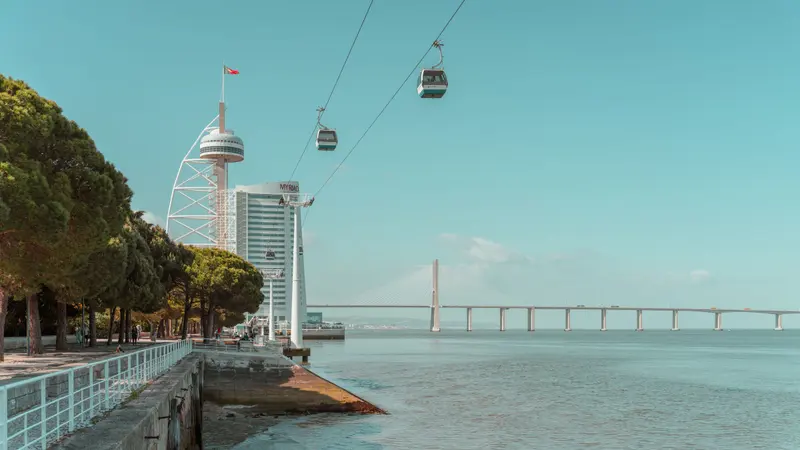
Former warehouses by the river, from Marvila to Parque das Nações.
Photo: thorl5, Pexels License
Marvila and Beato run along the Tagus in eastern Lisbon. Marvila was farms and market gardens until the 20th century, when factories spread from Rua do Açúcar to Braço de Prata and wine merchants filled warehouses by the water.2 Beato industrialized earlier: from the late 18th century, and faster after the 1830s, textile mills and other works moved into former convents and palaces, with workers' housing built alongside.3
Both lost people as the factories closed. Marvila had 47,827 residents in 1991 and 35,479 in 2021; Beato fell from 20,718 in 1981 to 12,183.13 The buildings left behind are being reused for galleries, offices and events, but cafés are still thin on the ground.
Local tip: Plan coffee around where you are going: the tile museum on Rua da Madre de Deus has its own cafeteria, and for the evening, Mustarda Beato is open daily until 23:00.
At a glance
20Cafés listed
8With opening hours
07:00Earliest opening
23:00Latest closing
- Opens earliest: Cafetaria de Xabregas, from 07:00 (Mon–Fri 07:00–19:00).
- Closes latest: Mustarda Beato, until 23:00 (Daily 09:00–23:00).
- Most common features: bakery café (10%), wi-fi (10%), open late (5%).
Cantinho do Sorriso
Classic
Delta Cafés - Delta Prata
Delta The Coffee House Experience Prata Riverside
Jeronymo Riverside
Mustarda Beato
Snack Bar
O Gaveto
A Cubata
Baobá Specialty Coffee Roasters
Bar Da Liga
Cantinho do Café
Os Pereiras
Charlot
Leitaria Tejo
Maianga
Mar da Vila
Metro e 50
Cafeteria MNAz
Café Snack-Bar Pérola Da Calçada
Nothing matches those filters here. See all cafés in Lisbon.
From army bakery to creative hub
The Hub Criativo do Beato occupies the former Manutenção Militar, the army's bread factory. The site began as a convent founded in 1662 by Queen Luísa de Gusmão, and in 1897 the former Convento das Grilas was turned into a military bread factory.3 In 2016 the Ministry of Defence handed the buildings, dating from 1772 and covering more than 35,000 m², to the city.3
Conversion began in 2017 with an initial budget of about €8 million, and the hub opened to the public in 2018. It was designed to bring about 20 scale-up companies a year to Lisbon, which is why the Portuguese press calls it the Fábrica de Unicórnios (unicorn factory), and it now also hosts cinema, food and cultural events.3
Wine warehouses and galleries in Marvila
The warehouses of the wine merchant Abel Pereira da Fonseca are now cultural spaces. A saying attributed to him sums up the trade: "enquanto o Tejo tiver água, nunca deve faltar vinho a Lisboa" (as long as the Tagus has water, Lisbon must never lack wine).2 Other old warehouses have become cultural venues, and the Underdogs Gallery opened as a cultural center in 2013.1
Further along, the Braço de Prata factory, built in 1904–1908 to make war materiel, later became a cultural center, and the Luso-Belga rubber factory closed in 1975.1 Visit Lisboa describes eastern Lisbon's galleries and restaurants, many in former industrial buildings, as a growing urban art scene.5
Xabregas and the tile museum
The National Azulejo Museum, devoted to Portugal's glazed tiles, occupies the Madre de Deus convent, founded in 1509 by Queen Leonor, at 4 Rua da Madre de Deus. It was set up in 1965 and became a national museum in 1980; its best-known piece is the Great View of Lisbon, a tile panel from about 1700.4 The museum has its own cafeteria.
The Xabregas viaduct, built after the railway opened in 1856, was rebuilt in concrete and masonry in 1954, and the old Convento de São Francisco de Xabregas now houses the Teatro Ibérico.3 On Rua de Xabregas, Leitaria Tejo is at 21–25 and Metro e 50 at 20.
Where to find coffee in the east
By the river at Braço de Prata, Jeronymo Riverside is open daily 08:00–21:00 and Delta The Coffee House Experience Prata Riverside daily 08:00–20:00. Mustarda Beato on Rua Simões Telhadas stays open latest, daily until 23:00.
For an early start, Cantinho do Sorriso and O Gaveto both open at 07:00 every day and close at 19:00, and Classic opens at 07:30 Monday to Saturday.
Sources
- Marvila (Lisbon), Wikipedia, accessed October 2026
- Marvila (Lisboa), Wikipédia (Portuguese), accessed October 2026
- Beato (Lisbon), Wikipedia, accessed October 2026
- National Azulejo Museum, Wikipedia, accessed October 2026
- Lisboa Oriente, Visit Lisboa (Turismo de Lisboa), accessed October 2026
Keep exploring
More of Lisbon
Baixa & Chiado
94 cafés
Alfama, Graça & Mouraria
81 cafés
Bairro Alto & Príncipe Real
81 cafés
Cais do Sodré & Santos
55 cafés
Estrela & Campo de Ourique
79 cafés
Arroios & Anjos
128 cafés
Avenidas Novas & Saldanha
191 cafés
Alvalade & north
264 cafés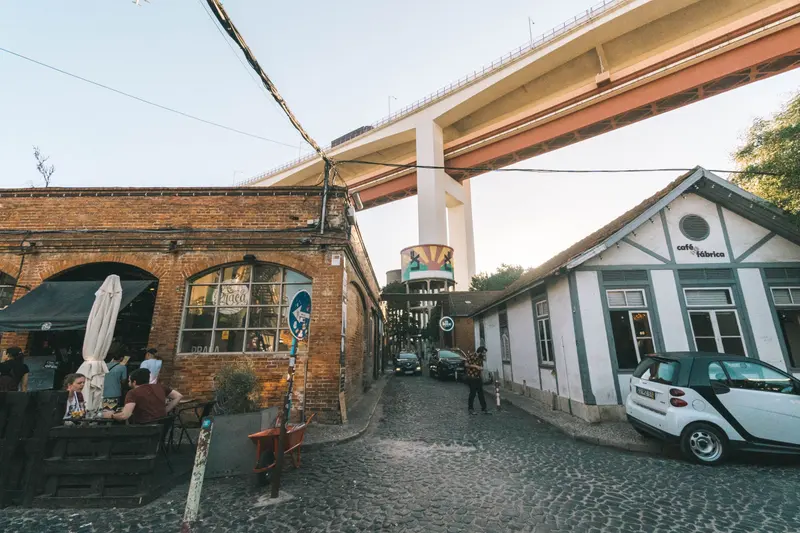
Alcântara
47 cafés
Belém
49 cafésIn Marvila & the east, also browse: Specialty coffee Pastelarias Wi-Fi Open late
FAQ
Marvila & the east cafés: questions
What is the Hub Criativo do Beato in eastern Lisbon?
It is a creative and business hub in the former Manutenção Militar, the army bread factory set up in 1897 in a convent founded in 1662. The city took over the buildings, more than 35,000 m², in 2016, began converting them in 2017 for about €8 million and opened the hub in 2018. It also hosts cinema, food and cultural events.
Where is the National Azulejo Museum in eastern Lisbon?
The National Azulejo Museum is at 4 Rua da Madre de Deus, in the Madre de Deus convent founded in 1509 by Queen Leonor. It opened in 1965 and became a national museum in 1980; its best-known piece is the Great View of Lisbon tile panel from about 1700. It has its own cafeteria.
Where can you get coffee by the river in Marvila, Lisbon?
At Braço de Prata, Jeronymo Riverside is open daily 08:00–21:00 and Delta The Coffee House Experience Prata Riverside daily 08:00–20:00. Mustarda Beato on Rua Simões Telhadas stays open until 23:00 every day. Leitaria Tejo and Metro e 50 are on Rua de Xabregas.
For café owners
Own a café in Marvila & the east?
Free listings are free for good. A featured page gives you photos, a menu and your own URL, in your café's own design, for less than a coffee a day.