Rifredi & Novoli
Caffè Pasticceria Serafini
- Outdoor seating
- Air-con
- Indoor seating
- Card payment
- Partial wheelchair access
- Toilets
- Smoke-free indoors
- Bakery café
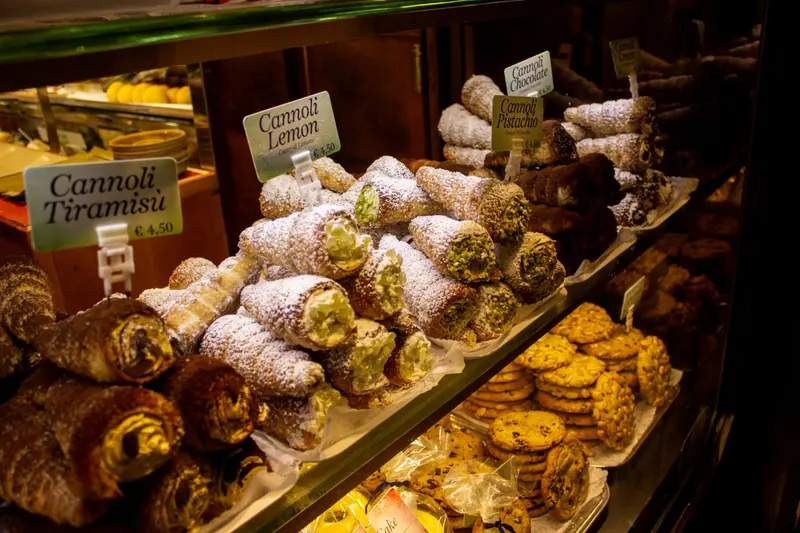
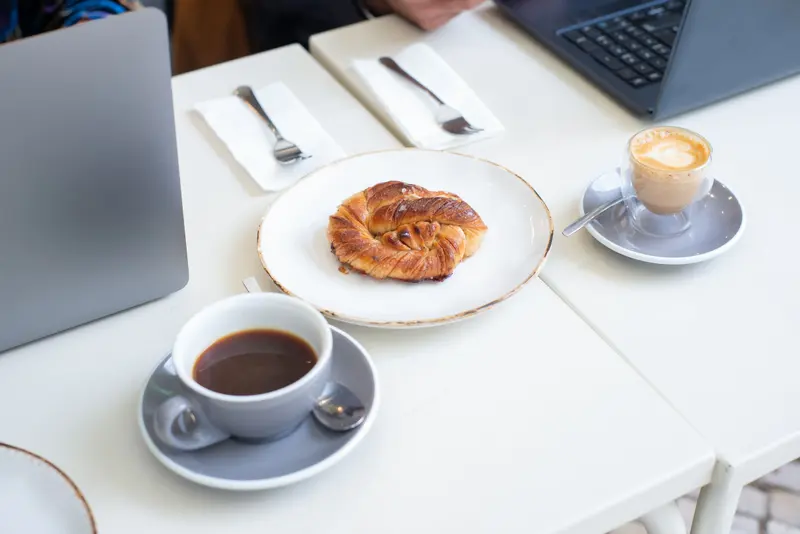
Budino di riso, bomboloni and Carnival schiacciata, from Via San Zanobi to Piazza Dalmazia and Viale Europa.
Photo: Natalia Sevruk, Pexels License
In Florence the pasticceria (pastry shop) is usually a bar as well: you eat standing at the counter with a cappuccino. The city has three pastries of its own to look for, the budino di riso, the bombolone and, at Carnival, the schiacciata alla fiorentina.
The neighborhoods have more of them than the center. Rifredi and Novoli, north of the station, have the most pastry bars, followed by Campo di Marte, with Gavinana, Isolotto and the old city behind; Piazza Dalmazia, Viale Europa and Via Gioberti are the streets to know.
Local tip: Order the budino di riso in the morning; at Caffè Lietta on Piazza della Libertà, one of the best-known, the tray is often empty before noon.5
Where these cafés are: Rifredi & Novoli (14), Campo di Marte (5), Gavinana (3), Isolotto & Legnaia (3), San Lorenzo & San Marco (2), Oltrarno (2), Santa Croce (2), Sant'Ambrogio (2), Duomo & Centro Storico (2).
Nothing matches those filters here. See all cafés in Florence.
The budino di riso comes in two shapes, a small round tortina or a taller cylinder with an oval base, and the regional taste for rice sweets is linked to the mondine, women from the Tuscan-Emilian Apennines who worked the rice fields of Piedmont and Veneto in the early 1900s and were sometimes paid in sacks of rice.1
The Tuscan bombolone is a filled doughnut made without eggs, unlike the krapfen of the north-east, and it is filled from the top, so the custard often shows.2 Tuscans eat them even at the beach, bought from carts.2
Schiacciata alla fiorentina is made with flour, sugar, butter or lard, whole milk, eggs and orange zest, baked in a half-size tray like those used for pizza al taglio.3 Cream-filled versions have spread in recent years; purists keep it plain.3
At the counter of I Dolci di Patrizio Cosi, a pastry bar in the center, a coffee and a croissant came to €2.80 in August 2025, €1.30 plus €1.50.4 Sitting down cost more, and the bar charged €0.50 to use the toilet without buying anything.4
Procacci, at Via de' Tornabuoni 64r, began as a delicatessen in 1885 and fills its small bomboloncini with chantilly cream; it opens at 10:00.5 Pasticceria Nencioni, at Via Pietrapiana 24r, was opened in 1950 by Maria Luisa Falai and Vinicio Nencioni as a neighborhood bakery and makes millefoglie, Sacher torte and rice tortini.5
Near Porta Romana, Pasticceria Gualtieri on Via Senese still uses moulds that belonged to the owner's great-grandfather Alfredo.5 Galleria Iginio Massari, on the ground floor of the Hotel Helvetia & Bristol, makes zuccotto among its Florentine pastries.6
Piazza Dalmazia has two big counters: Pasticceria Crociani and Caffè Pasticceria Serafini, which opens Monday to Saturday 07:00–21:30. Pasticceria Querci and Caffè Vieusseux share Piazza Giampietro Vieusseux, and Pasticceria Cosi has two shops, on Viale Redi and Via Celso. Bar pasticceria Silvano e Valentino opens at 05:15 every day, and Pasticcieria Anna on Via Santo Stefano in Pane at 06:00 except on Sundays.
South-east of the river, Marcello...La Pasticceria on Viale Europa opens at 06:30 Monday to Saturday, and Pasticceria Rimani Europa is on the same avenue. In Isolotto, Caffe Pasticceria Giurovich is on Via dell'Olivuzzo and La Fabbrica del Pane on Via Masolino. In San Lorenzo, the pastry counters are Caffe Rainer on Via San Zanobi and Pasticceria Goretta 1929 on Via San Gallo.
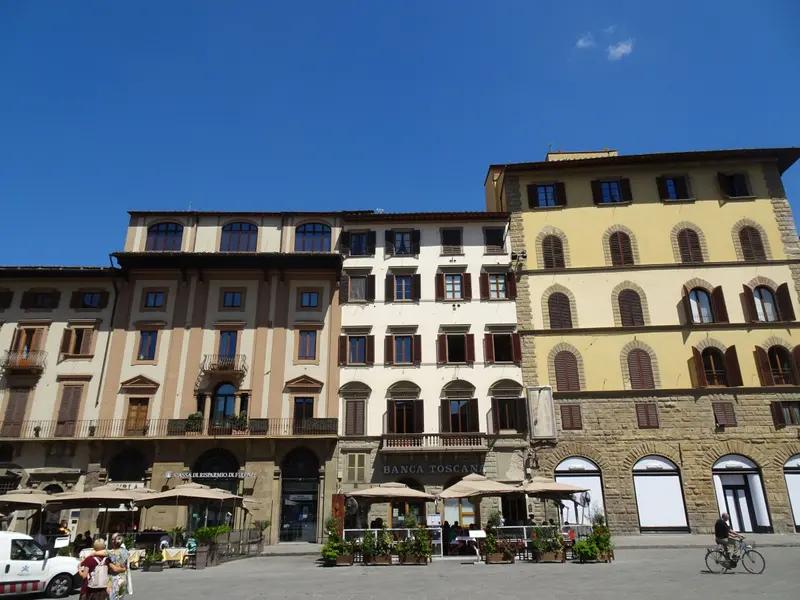
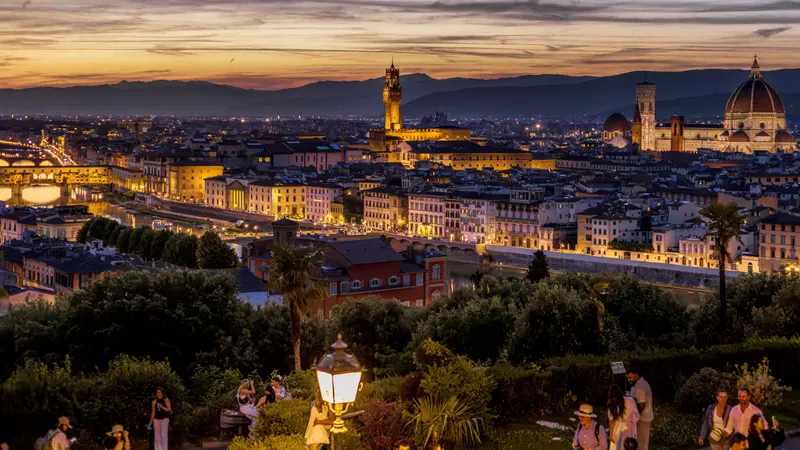
By area: Oltrarno Duomo & Centro Storico Sant'Ambrogio Santa Croce San Lorenzo & San Marco Campo di Marte
The budino di riso, a small shortcrust pastry filled with rice cooked in milk; the bombolone, a Tuscan filled doughnut made without eggs and filled from the top; and, at Carnival, schiacciata alla fiorentina, a flat orange-scented sponge baked in a half-size tray and dusted with sugar.
Procacci on Via de' Tornabuoni, founded as a delicatessen in 1885, fills small bomboloncini with chantilly cream. Pasticceria Nencioni on Via Pietrapiana dates from 1950, and Pasticceria Gualtieri on Via Senese near Porta Romana still uses the moulds of the owner's great-grandfather.
At the counter of one pastry bar in the center in August 2025, a coffee cost €1.30 and a croissant €1.50, so breakfast came to €2.80. Sitting at a table cost more there, and using the toilet without buying anything cost €0.50.
Free listings are free for good. A featured page gives you photos, a menu and your own URL, in your café's own design, for less than a coffee a day.