ドリトル
Doolittle
- Wi-Fi
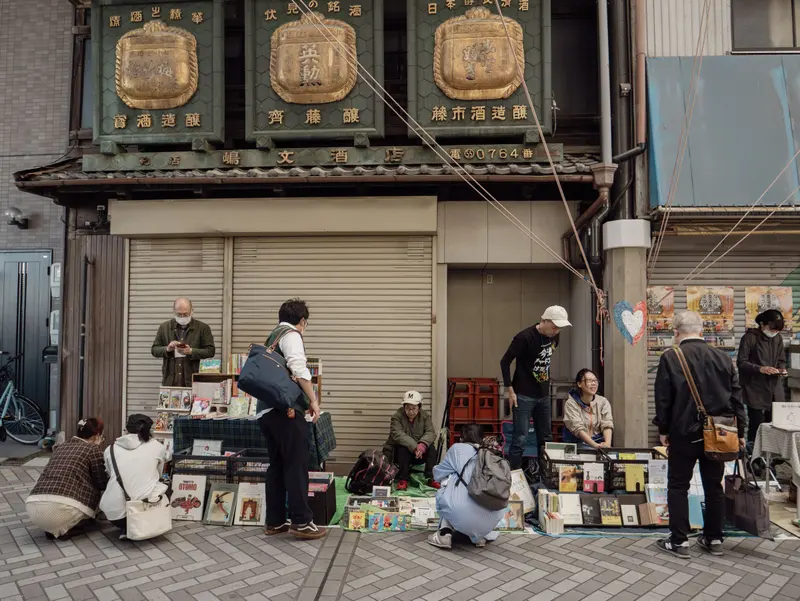
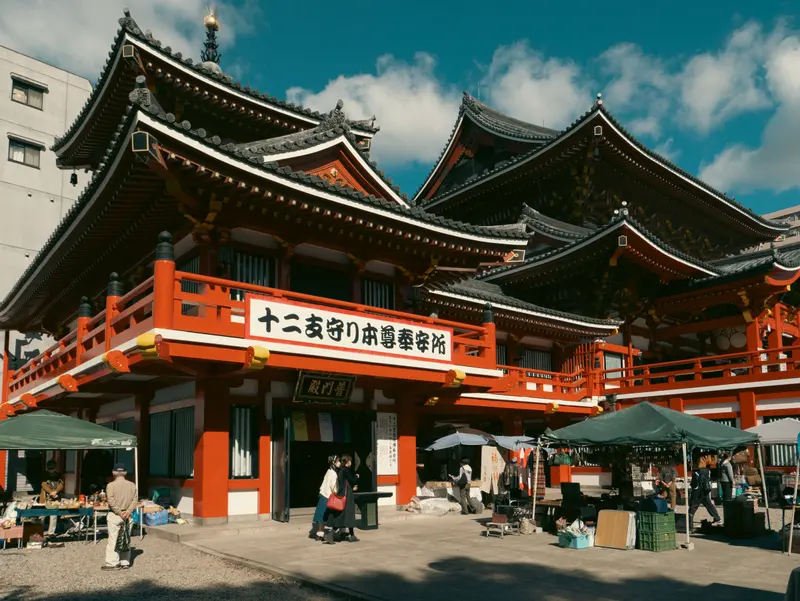
Nittai-ji's temple approach, its fair on the 21st of each month, and cafés off Suemori-dōri.
Photo: Huu Huynh, Pexels License
Kakuōzan (覚王山) is named for its temple. Nittai-ji was founded in 1904 to enshrine relics of the Buddha that King Chulalongkorn (Rama V) of Siam gave to Japan in 1900; Kakuō refers to the Buddha, and Nittai stands for Japan and Thailand.1 It belongs to no single sect: 19 sects take turns supplying the abbot, three years at a time, and the Sōtō sect runs the training hall in the grounds.1
The temple calls itself Japan's only multi-sect temple, and its gates open 05:00–16:30 with free admission. It was first named Nissen-ji, for Japan and Siam, and took its present name after Siam became Thailand in 1939; a statue of King Rama V stands in the grounds, and Thai visitors come to pray there.2 The streets below it fill with small shops and cafés, and Tokai Walker once described the whole area as decorated with art.3
Local tip: Go on the 21st for the Kōbō-san fair and arrive early: the temple gates open at 05:00 and the stalls run all day.2
Doolittle
ichirin
Nothing matches those filters here. See all cafés in Nagoya.
On the 21st of every month, a fair for Kōbō Daishi fills the temple grounds and the approach with about 100 stalls selling everyday goods and food, from morning to evening.2 The five-story pagoda, 30 m tall and modeled on Rurikō-ji in Yamaguchi, was finished in 1997.1
Kakuōzan Station is on the Higashiyama Line, one stop east of Ikeshita.4 The prefecture's tourism site puts the temple 15 minutes on foot from the station.2 Most of the cafés are closer to the station, in Sanmon-chō and along Suemori-dōri.
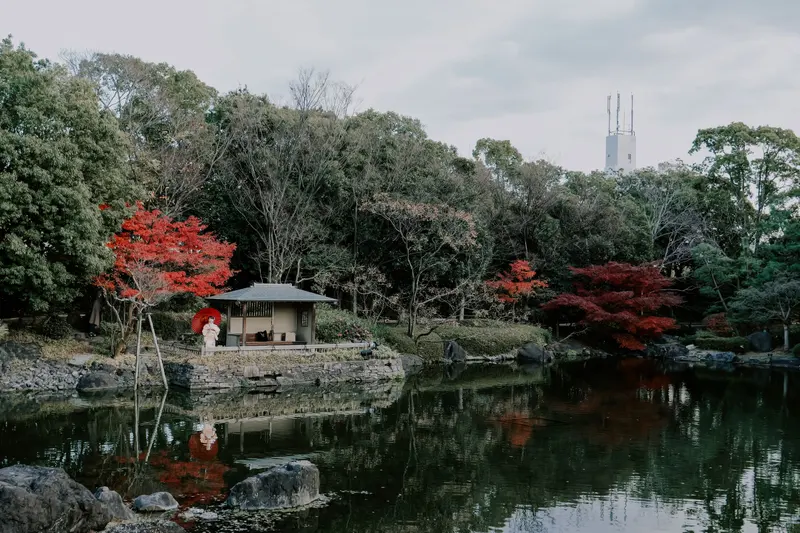
Itō Jirozaemon Suketami, first president of Itō Gofukuten, the forerunner of Matsuzakaya, began building the villa Yōkisō beside the temple in 1918. The south garden's Chōshōkaku opens 09:30–16:30 except Mondays for ¥300; the north garden is free. Five of its buildings became city cultural properties in 2008, and it is about 10 minutes from the station's Exit 1.5
The grounds covered about 35,000 m² in 1939 and about 9,200 m² today; an NPO has looked after them since 2003, and the family gave the land and buildings to the city in 2007.5
Sanmon-chō has NOTE coffee house and Yosuga Coffee at the same address, 2-50-6, a used-book café called Kanro at 1-13, and L'O-Vu, a Chinese tea room, at 1-56-1. Along Suemori-dōri, Blackbird Coffee is at 3-18, coffee Mathilda at 3-30 and Kanom Thai Cafe at 3-41-3. Okobo, a wagashi (Japanese sweets) café, is at Kangetsu-chō 1-8; Shanties is at Takami 1-20-9 and Miyata Coffee at Horiwari-chō 1-50.
Doolittle, a café and kitchen at Tashiro-hondōri 5-3, about 12 minutes from Exit 4, opens daily 09:00–18:00 with lunch from 11:00 to 15:00 and a morning menu; it makes its own corned beef.6 Pierre Précieuse, at Maruyama-chō 3-83, opens 10:00–20:00 except Mondays. West toward Ikeshita, the Furukawa Art Museum at Ikeshita-chō 2-50 has a café, Sukiya de Café, and opens 10:00–17:00.7
Nittai-ji is a Buddhist temple founded in 1904 to enshrine relics of the Buddha given to Japan by King Chulalongkorn of Siam in 1900. It belongs to no single sect; 19 sects take turns supplying the abbot. Its gates open 05:00–16:30 and admission is free.
The Kōbō Daishi fair is held on the 21st of every month. About 100 stalls selling everyday goods and food line the temple grounds and the approach from morning to evening. Kakuōzan Station on the Higashiyama Line is the stop for the temple.
Yōkisō is the villa that Itō Jirozaemon Suketami, first president of the forerunner of Matsuzakaya, began building beside Nittai-ji in 1918. The south garden opens 09:30–16:30 except Mondays for ¥300, the north garden is free, and it is about 10 minutes from Exit 1 of Kakuōzan Station.
Free listings are free for good. A featured page gives you photos, a menu and your own URL, in your café's own design, for less than a coffee a day.