217 Greek Yogurt
ニイチナナ
- Vegetarian options
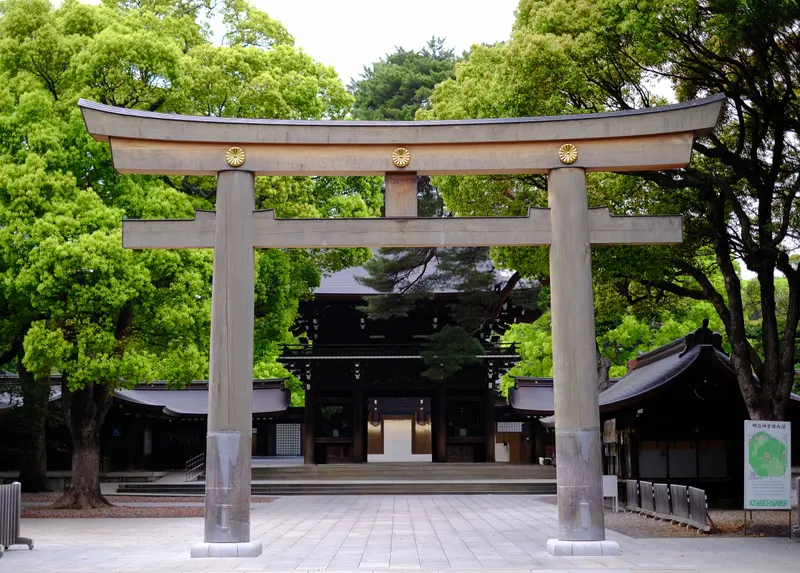
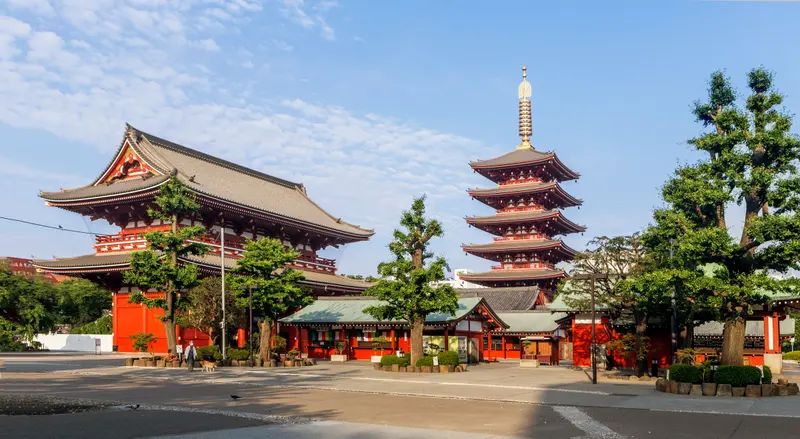
The zelkova avenue to Meiji Shrine, Cat Street over a buried river, and the museum cafés of Aoyama.
Photo: Vinny Anugraha, Pexels License
Omotesandō was built in the Taishō era (1912–1926) as the front approach to Meiji Shrine, and its zelkova-lined avenue runs from the shrine entrance to Aoyama-dōri, crossing Shibuya and Minato wards.1 It is known as one of the world's foremost streets for architecture, and Tadao Ando's Omotesandō Hills was completed on it in 2005.1 The side streets of Ura-Harajuku branch off it.1
Cafés in Harajuku and Aoyama follow three settings: shop cafés on the avenue and its side streets, coffee bars along Cat Street, and quieter tearooms and museum cafés in Minami-Aoyama. Jingūmae has the thickest spread, from Bread, Espresso & on 3-chōme to The Roastery by Nozy Coffee on 5-chōme, and NOA Coffee stays open until 23:00 every day.
Local tip: Walk Cat Street from Omotesandō south to Meiji-dōri and look for the old Miyashita Bridge railing post opposite Miyashita Park, the last visible sign of the river below.2
ニイチナナ
Bread. Espresso &
MICASADECO & CAFE 神宮前
エニウェア・ドア
Nothing matches those filters here. See all cafés in Tokyo.
Cat Street follows the course of the Shibuya River, whose upper reaches are also called the 隠田川 (Onden-gawa). The river rises at Shinjuku Gyoen, runs about 10 km to Tokyo Bay, and was covered over after the war to serve as a main sewer.2 At its southern end, Cat Street meets Meiji-dōri opposite Miyashita Park, where a railing post of the old Miyashita Bridge is the clearest trace of the river.2
The Roastery by Nozy Coffee opened on Cat Street in 2013 as the second shop of Nozy Coffee, founded in Mishuku in 2010 by Masataka Nojo and partners.3 When Nozy went bankrupt in December 2019, its partner Tysons & Company kept the Roastery running, the last shop under the Nozy name.3 It is at 5-17-13 Jingūmae, open daily 10:00–20:00.
Bread, Espresso & (パンとエスプレッソと) at 3-4-9 Jingūmae is best known for ムー (mū), a buttery shokupan (食パン, white sandwich loaf) with a taste close to Danish pastry. In December 2020 a loaf cost ¥350, an espresso ¥300 and a latte ¥500.4 It opens daily at 08:00.
Other early openers: whyte at 27-7 Jingūmae starts at 08:00 on weekdays except Tuesday, newwa (柔和) opens 08:00–17:00 every day but Thursday, and Onden Coffee opens at 08:30 and stays until 22:00. On the Aoyama side, INTERSECT BY LEXUS at 4-21-26 Minami-Aoyama is open daily 09:00–23:00.
The Nezu Museum opened in 1941 on the former residence of the businessman Nezu Kaichirō to show his collection of pre-modern Japanese and East Asian art, now about 7,600 works including seven National Treasures.5 Its present building, designed by Kuma Kengo, was completed in 2009, and NEZUCAFÉ is part of the museum.5 The café opens 10:00–16:30 and closes on Mondays.
In Minami-Aoyama, the Japanese confectioner Kashō Kikuya (菓匠 菊家) is at 5-13-2, and Gramercy Coffee at 3-7-2 opens daily 11:00–20:00.
Harajuku also has its animal and theme cafés. Owl Village and Dog Cafe RIO open at 11:00, the rabbit café Ra.a.g.f at 12:00, and Cat Cafe Mocha is nearby. Bunbougu Cafe (文房具カフェ, "stationery café") has Wi-Fi.
For sweets, Pierre Hermé Paris serves 12:00–19:30. Most of them close by 20:00.

In Harajuku & Omotesandō, also browse: Specialty coffee Open late Wi-Fi Outdoor seating Bakery cafés
Cat Street follows the course of the Shibuya River, whose upper reaches are called the Onden-gawa. The river was covered over after the Second World War and now serves as a main sewer. Where Cat Street meets Meiji-dōri opposite Miyashita Park, a railing post from the old Miyashita Bridge is the clearest trace of it.
NEZUCAFÉ opens 10:00–16:30 and closes on Mondays. It is part of the Nezu Museum, which opened in 1941 on the former Nezu family residence and holds about 7,600 works of pre-modern Japanese and East Asian art, including seven National Treasures. The present museum building, by Kuma Kengo, was completed in 2009.
Omotesandō was built in the Taishō era, between 1912 and 1926, as the front approach to Meiji Shrine. The zelkova-lined avenue runs from the shrine entrance to Aoyama-dōri, through Shibuya and Minato wards, and is known for its architecture; Tadao Ando's Omotesandō Hills on the avenue was completed in 2005.
Free listings are free for good. A featured page gives you photos, a menu and your own URL, in your café's own design, for less than a coffee a day.