MAGENTA COFFEE AND ART HOUSE
- Wi-Fi
- Outdoor seating
- Takeaway
- Smoke-free indoors
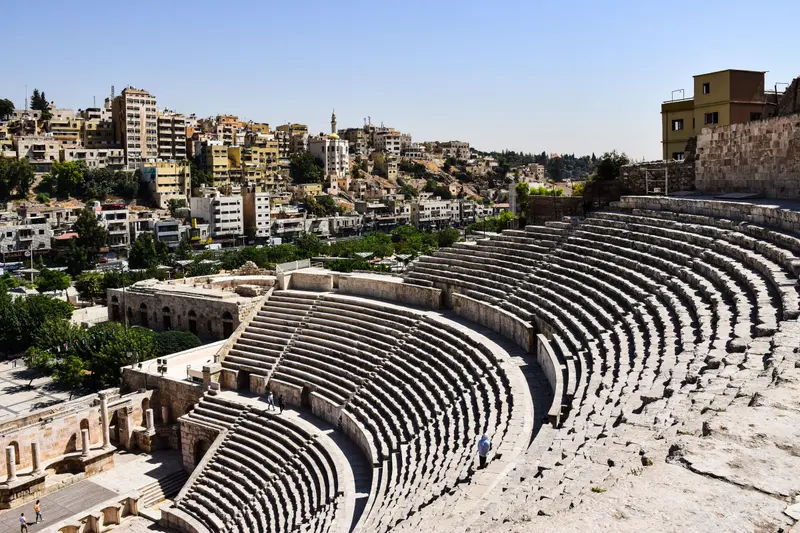
Al-Balad's valley: King Faisal Street, the Roman Theatre and the Kalha stairs.
Photo: AXP Photography, Pexels License
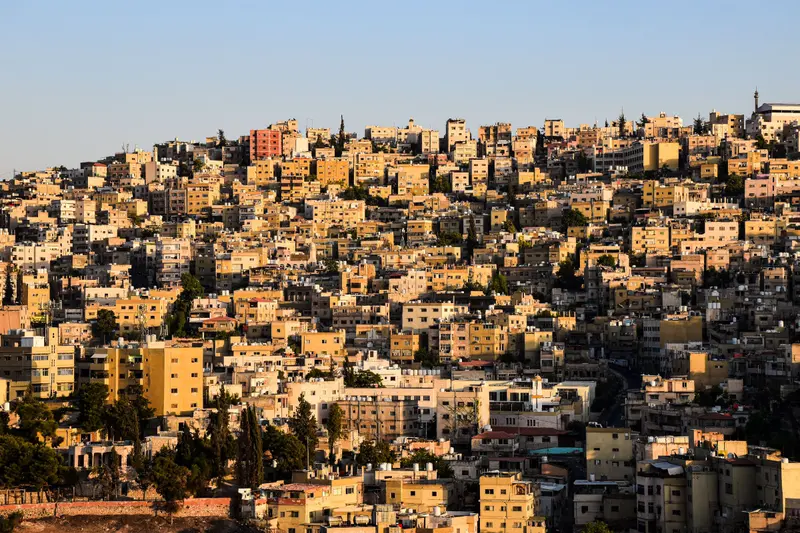
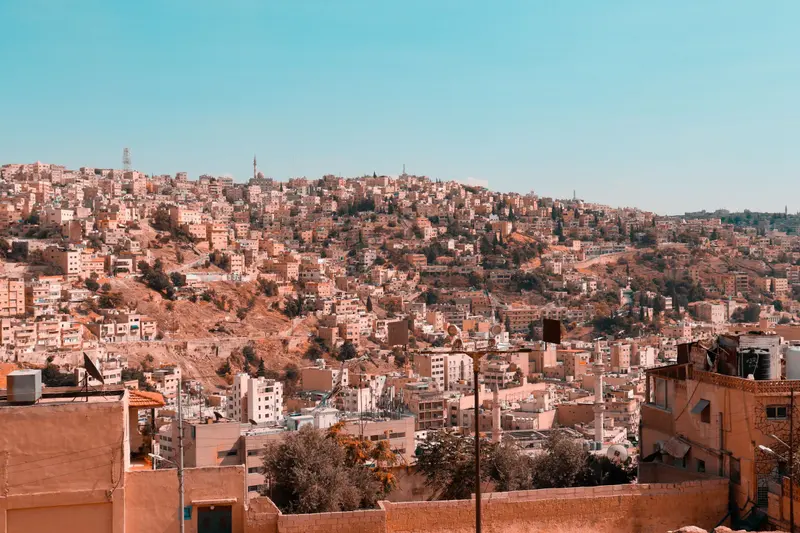
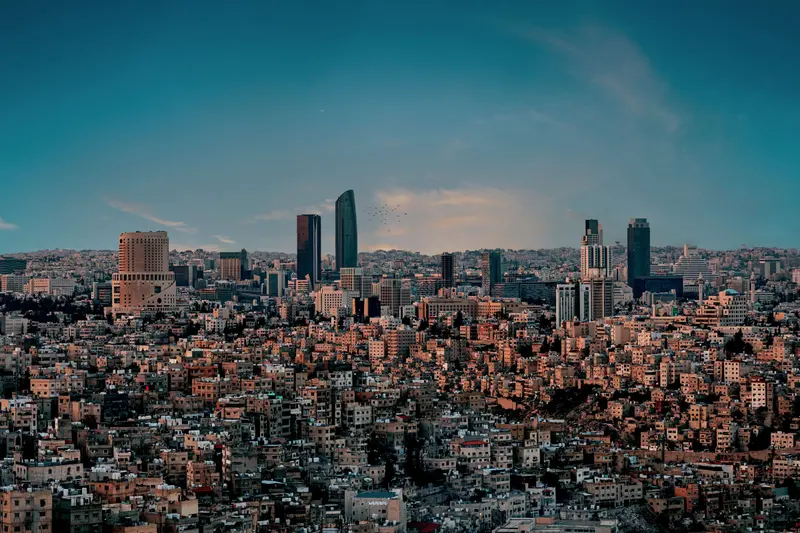
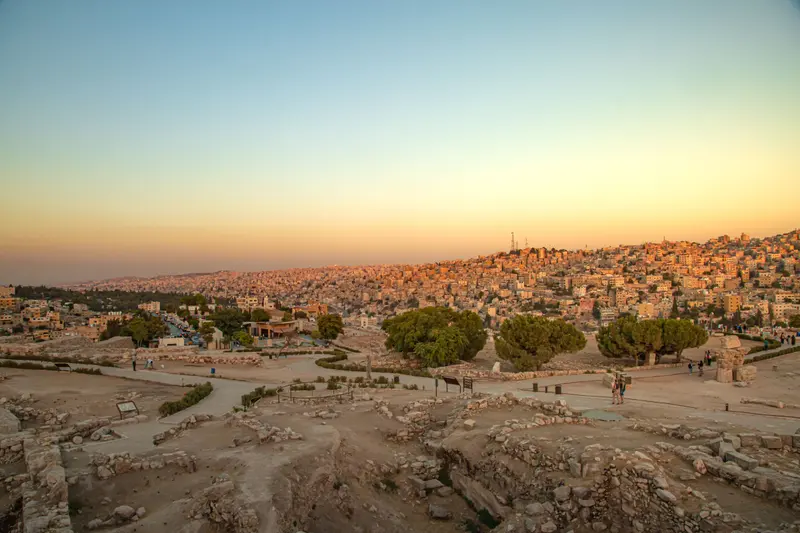
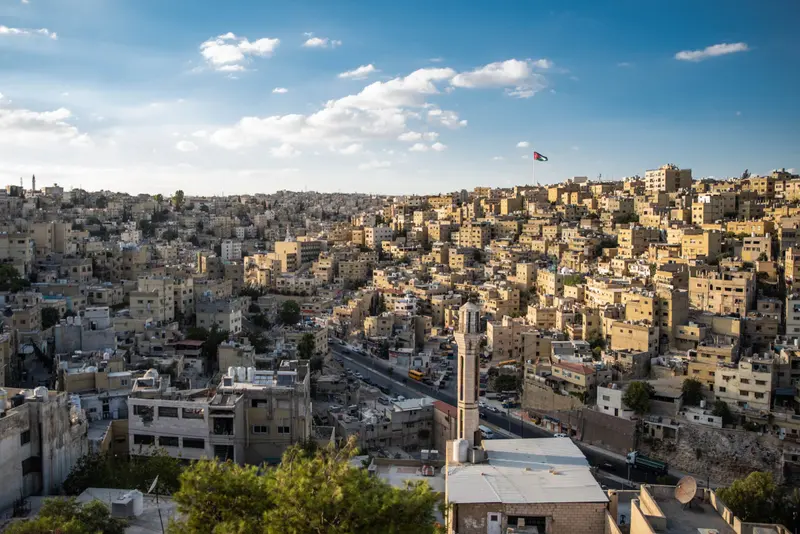
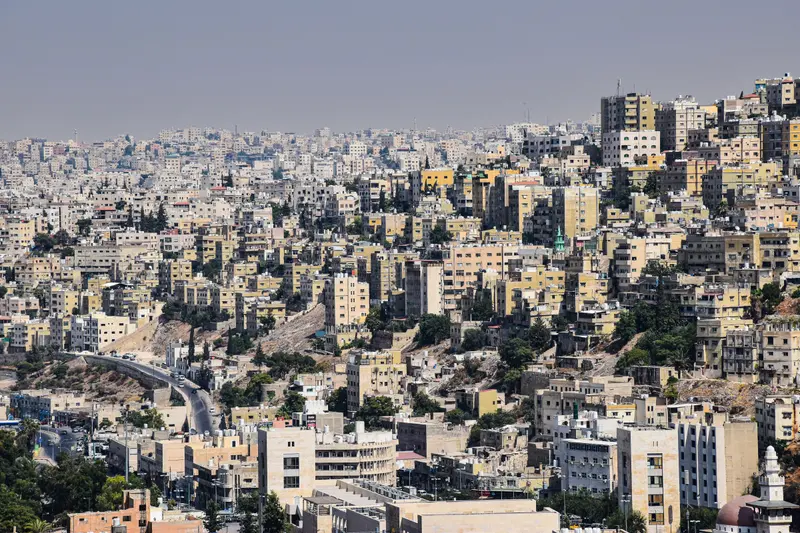
Downtown, called Wasat al-Balad or simply Al-Balad (البلد), is Amman's old town, set in the narrow valley of Wadi Amman about 700 m above sea level.1 It covers 3.1 km² and had 42,955 residents in 2024, and its souks and Roman ruins make it the city's main draw for visitors.1 The Roman Theatre seats about 6,000, and the Grand Husseini Mosque was built in 1924 on the site of an older Umayyad mosque.1
The valley keeps Amman's oldest coffeehouse. Balat al-Rasheed on King Faisal Street, founded in 1924, is usually described as the first café in the city.2 Around it are coffeehouses known by Arabic names only, such as مقهى عفرا (Afra Café), مقهى سبيل الحوريات (Sabil al-Hourriyat Café) and مقهى الحي الشرقي, and a newer set of cafés along Prince Muhammad Street.
Local tip: Walk up the Kalha stairs from downtown to reach Jabal al-Weibdeh on foot; Jadal, a cultural space in a 1933 house, is on the way.4
Nothing matches those filters here. See all cafés in Amman.
King Faisal Street is short, about 250 m long and 25 m wide, and it became a main thoroughfare when Amman was made the capital of the Emirate of Transjordan in 1921.3 Hotels, cinemas, cafés and the Ottoman Bank lined it in the Emirate period, Jordan's independence was declared there in 1946, and it took its present name, after Faisal I of Iraq, in the 1950s.3
Balat al-Rasheed began as something like a diwan, a reception hall for the owners' circle and their guests. Between the 1930s and the 1950s it worked as a political salon where rival currents met.2 Its balcony over King Faisal Street is painted with the flags of many countries, a draw for the tourists who keep coming.2
As Amman climbed out of the valley, its hill neighborhoods were tied to the floor by stairways running straight down the slope, some of them hundreds of meters long.1 Al-Kalha stairs (درج الكلحة) link downtown with Jabal al-Weibdeh, and Jadal sits on them in a house from 1933 that the former civil engineer Fadi Amireh refurbished in 2012 as a cultural space.4 By 2021 it charged visitors for their time rather than for what they drank, a model it adopted in 2018.4 Central Cafe shares its address.
Prince Muhammad Street holds the newer places: Astrolabe Coffee Downtown at No. 20, with Wi-Fi, air conditioning and outdoor seats; Jafra Restaurant & Cafe in Complex 15; and Shababeek Albalad Cafe by the first stairway, which serves brunch. Astrolabe also runs branches in Khalda, Abdali, Taj Mall and on Mecca Street.5
Amman zaman and Amman Heart Restaurant & Cafe are on Al-Hashemi Street, where Roman baths were uncovered between September 2020 and January 2021, a sign that much of the ancient city lies under the modern one.1 The Hashemite Plaza, about 20,000 m² and renewed in 2014, has fountains, gardens and cafés of its own.1
Pasha Rooftop is on Al-Shabsough Street, and مطعم وكافية الطابق الرابع (the Fourth Floor restaurant and café) takes its name from its height. On Othman bin Affan Street, Magenta Coffee and Art House opens Monday to Saturday, 10:00–20:00, is smoke-free and does takeaway. Yafa Coffee House opens daily, 09:00–21:00.
BRT Route 1, opened in July 2021, runs from Sweileh along Queen Rania Street to the Jordan Museum terminal in Ras al-Ain, at the edge of downtown.6 The Jordan Museum, built in 2014, holds the Dead Sea Scrolls and the Ain Ghazal statues.1
The valley floor floods. Quraysh Street follows the course of the old Seil Amman stream, which the city roofed over between 1964 and 1971, and severe flash floods still hit downtown in 2013 and 2019.1 Rain falls mainly from November to April.7
In Downtown (Al-Balad), also browse: Wi-Fi Outdoor seating
Balat al-Rasheed (بلاط الرشيد) on King Faisal Street, founded in 1924, is usually described as the first café in Amman. Between the 1930s and the 1950s it was a political salon for the city's notables, and its balcony over King Faisal Street is painted with the flags of many countries.
Take Al-Kalha stairs (درج الكلحة), which link downtown Amman with Jabal al-Weibdeh. Jadal, a cultural space in a house from 1933, sits on the stairs, and Central Cafe shares its address.
BRT Route 1 runs from Sweileh along Queen Rania Street to the Jordan Museum terminal in Ras al-Ain, at the edge of downtown Amman. It opened in July 2021. The Jordan Museum, built in 2014, holds the Dead Sea Scrolls and the Ain Ghazal statues.
Free listings are free for good. A featured page gives you photos, a menu and your own URL, in your café's own design, for less than a coffee a day.