Donas Munchies
- Takeaway
- Bakery café
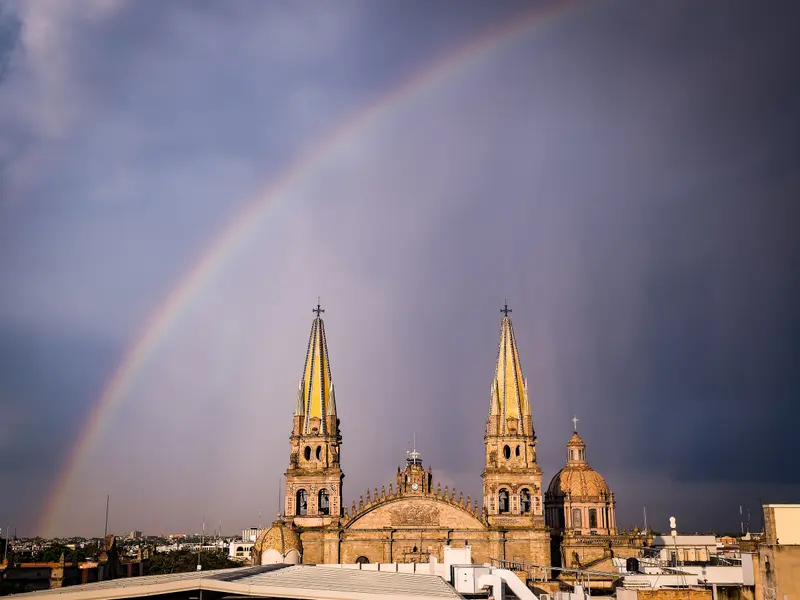
Coffee on Calle Juárez near El Parián, churros and waffles off Avenida Río Nilo, and ceramics on Independencia.
Photo: Brayan Ramirez, Pexels License
San Pedro Tlaquepaque is a municipality of its own, with 687,127 residents, inside the Guadalajara metropolitan area, and its name is usually read as "place of clay".1 It still lives off its workshops: pottery, blown glass, brass, papier-mâché and leather, sold from a center that sits at 1,570 m.2 On 11 October 2018 the center became a Pueblo Mágico (Magic Town), a title that covers only 42 blocks, where most of the craft shops, tourist services and restaurants are.1
Calle Juárez has the most cafés, with pairs on Prisciliano Sánchez and Zaragoza. North of the old center, a second cluster sits on streets named after rivers: Avenida Río Nilo, Río Ocotlán, Río Mascota and Río Zula.
Local tip: Time a visit for late October if you can: the Día de Muertos festival runs from 30 October to 4 November, and the town's fiestas from 12 June to 12 July.2
Nothing matches those filters here. See all cafés in Guadalajara.
Tlaquepaque Centro is an elevated station on Line 3 of the light rail, on Avenida Francisco Silva Romero between Zaragoza and 16 de Septiembre, the two streets that lead into the historic center; its logo is a clay vase.4 Two more Line 3 stations in the municipality, Lázaro Cárdenas and Central de Autobuses, serve the bus terminal side.1
Walking in on Zaragoza, Café Reyes is at No. 60B and Davangari Coffee House at No. 1. Waffle Station is a short detour away at Avenida Miguel Hidalgo 87.
El Parián was built in 1878 as a market and later took in the town's first cantinas; in 1941 it was a set for the Jorge Negrete film Ay Jalisco no te rajes.3 Mariachis play around its kiosk on most days, and the drink to order is a cazuela: orange, grapefruit, lime and lemon slices with grapefruit soda and a shot of tequila, served in a clay bowl.3
Calle Juárez is the coffee street. Café Xegovia is at No. 148 and Punto Café Corazón de Tlaquepaque at No. 172, with Café Providencia at No. 67. Donas Munchies, at No. 247, sells donuts to take away from Tuesday to Sunday, 10:00–21:00. On the same street, nieve de garrafa (hand-churned sorbet) comes in flavors such as jericalla, corn, tequila and tamarind.3
Andador Independencia, the pedestrian street, is lined with galleries: Rodo Padilla's rounded figures of Mexican characters at No. 139 and Sergio Bustamante's surreal sculpture at No. 238.3 Paco Padilla's ceramics workshop, at Prisciliano Sánchez 142, opens its doors on weekdays from 09:00 to 15:30 and on Saturday mornings.3
Latte que Late café is on Independencia at No. 96, and Cafenea 40 and La Contea share No. 71 on Prisciliano Sánchez. The Centro Cultural El Refugio was a hospital until 1979; the municipality bought it in 1983 and reopened it as a cultural center after a restoration in 1984.1 The town's June fair has made the Premio Nacional de la Cerámica, a national ceramics prize, its main event for more than 20 years.1
Mercado Benito Juárez, at Morelos and Álvaro Obregón, opens at 06:30 from Monday to Saturday and at 07:00 on Sundays, closing at 17:00, and its food stalls serve birria, tortas ahogadas and carne en su jugo.3 At weekends, stalls in Jardín Hidalgo sell tostadas, gelatin with eggnog and salchipulpos, hot dogs cut to look like octopuses.3
For breakfast, Cine Cafe y Desayunos Hergal on Francisco de Miranda puts desayunos (breakfasts) in its name. Luna Pachuli on Donato Guerra, El café que te conté on Avenida Niños Héroes and Café iqus on Del Ejército are smaller stops nearby.
North of the center, the cafés move to a grid of residential streets named after rivers. Cafetería Charly Ronaldo, at Avenida Río Nilo 2731, bills itself as a café for coffee, music, football and reading, with internet, and serves churros, crepes, waffles and donuts.5 Dulce Capricho Waffles is at Torrecillas 2372, Café Camilo at Río Mascota 2128 and Oneiros Café - Restaurant at Río Zula 2587, while La casa del frapuchino is on Río Independencia.
In Tlaquepaque, also browse: Bakery cafés
Calle Juárez, near El Parián, has the most, with Café Xegovia, Punto Café Corazón de Tlaquepaque and Café Providencia. Prisciliano Sánchez and Zaragoza have two each, and a second cluster lies north of the center around Avenida Río Nilo.
Take Line 3 to Tlaquepaque Centro, an elevated station on Avenida Francisco Silva Romero. From there, Zaragoza and 16 de Septiembre lead into the historic center, El Parián and Calle Juárez.
A cazuela is a drink of orange, grapefruit, lime and lemon slices with grapefruit soda and a shot of tequila, served in a clay bowl. El Parián, built in 1878 as a market, is the classic place to order one, usually with mariachis playing nearby.
Free listings are free for good. A featured page gives you photos, a menu and your own URL, in your café's own design, for less than a coffee a day.