oTTo
- Outdoor seating
- Indoor seating
- Partial wheelchair access
- Smoke-free indoors
- Open late
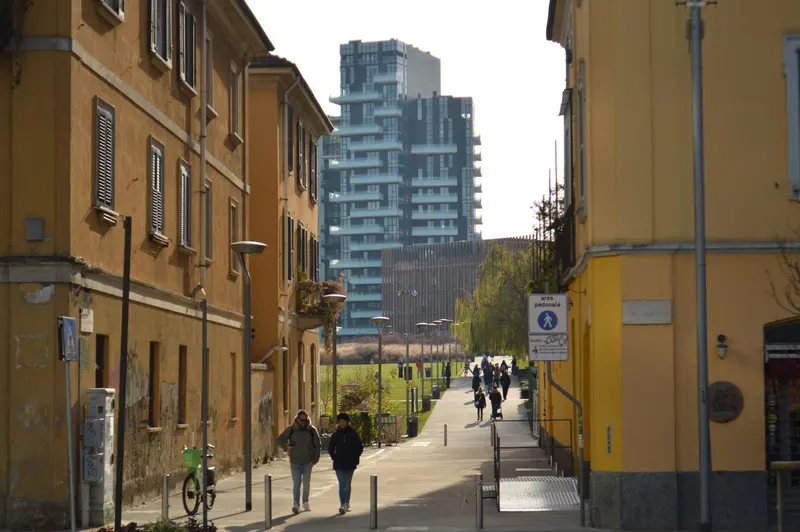
Milan's Chinatown on pedestrian Via Paolo Sarpi: bubble tea, matcha, taiyaki and a roaster nearby.
Photo: Valeria Drozdova, Pexels License
Via Paolo Sarpi is the spine of Milan's Chinatown, home to the oldest and largest Chinese community in Italy, about 21,000 people in 2011.1 Migrants began arriving in the early 1920s, most of them from Wenzhou and nearby counties of Zhejiang such as Wencheng and Qingtian.2 They settled in what was then the Borgo degli Ortolani, the market gardeners' village, and opened silk and leather workshops.3 The community began on Via Luigi Canonica, where Bar Felice is today at number 25.1
By the early 2010s most of the wholesalers had moved out, and the city remade the street as a pedestrian shopping strip.2 It now runs about 800 m with trees, flower beds and a cycle lane.4 Via Paolo Sarpi holds nearly a quarter of the neighborhood's cafés, and the area has more bubble-tea counters than any other part of Milan.
Local tip: QQTEA and Matchatelier on Via Paolo Sarpi stay open until about 22:00 every day; oTTo at number 10 serves until 02:00.
Nothing matches those filters here. See all cafés in Milan.
Monumentale, on metro line M5 since 11 October 2015, is the nearest stop to the start of the street, and trams 2, 4, 12 and 14 run on the streets around the neighborhood.54 Garibaldi FS, on lines M2 and M5, is about 15 minutes away on foot.4
The Cimitero Monumentale, an open-air museum of art and architecture, is a few minutes' walk from the street.4
QQTEA, at Via Paolo Sarpi 47, opens daily 10:00–22:00. MochiMochi at number 12, Puppy at 36, Arteasg at 41 and taiyaki honpo at 6 are all on the same street. Matchatelier, at number 50, opens daily 09:30–21:45.
Laankee (瀾記) is on Via Aristotile Fioravanti and Miss Cake on Via Giordano Bruno. Chateau Dufan, at the Via Paolo Sarpi 2 end, has air conditioning, and S'LAB at number 1 has indoor seating.
Cups Ceramica & Bar is at Via Paolo Sarpi 21, and Jolly Bar and L'incontro at numbers 12 and 16. oTTo, at number 10, opens Tuesday to Sunday 10:00–02:00 and from 18:30 on Mondays, with tables inside and out.
Torrefazione Moka Hodeidah, a roaster on Via Piero della Francesca, is the specialty address, with seats inside and outside. Casa del Caffè and Caffè Popolare are on Via Cesare Cesariano, and more bars line Via Cenisio.
Many of the first arrivals were farm workers and stonemasons; some had come to Europe as laborers recruited by Britain and France in the First World War and reached Italy through Turin.2 In 2007 a dispute over parking fines and inspections led to a street clash. Afterward the wholesalers moved to outer districts, followed by a wave of beauty, massage and fast-fashion shops and, later, fast food.2
Prices near Via Paolo Sarpi have tripled to more than €4,000 per square meter, and residents are increasingly priced out.2 The researcher Patrizia Battilani counted 175 Chinese residents in the area in 1936, which she called the first real Chinese community in Italy.2
In Paolo Sarpi & Chinatown, also browse: Outdoor seating Pasticcerie Open late Bubble tea
Chinese migrants began arriving in the early 1920s, most from Wenzhou and nearby counties of Zhejiang. They settled in the Borgo degli Ortolani, the area around today's Via Paolo Sarpi, and opened silk and leather workshops. By 2011 the community numbered about 21,000, the oldest and largest in Italy.
QQTEA at Via Paolo Sarpi 47 opens daily 10:00–22:00, and MochiMochi (number 12), Puppy (36), Arteasg (41) and taiyaki honpo (6) are on the same pedestrian street. Matchatelier at number 50 opens daily 09:30–21:45. Laankee is on nearby Via Aristotile Fioravanti, and Miss Cake on Via Giordano Bruno.
Monumentale, on metro line M5, is the nearest station to the start of Via Paolo Sarpi; it opened in October 2015. Trams 2, 4, 12 and 14 run on the streets around the neighborhood, and Garibaldi FS, on lines M2 and M5, is about 15 minutes away on foot.
Free listings are free for good. A featured page gives you photos, a menu and your own URL, in your café's own design, for less than a coffee a day.