ハミングバードカフェ
Hamingubādo Cafe
French pastry at Poivrière by the Funairi-minami tram stop, a ukulele café in Funairi, and Eba's old weather station.
Photo: Mauricio Ortiz, Pexels License
Funairi (舟入) and Eba (江波) run south from the city center down the Eba tram line to Hiroshima Bay.2 Eba was once an island, Ebajima, with records of people living there about 700 years ago; silt and land reclamation pushed the shore south, and by the Meiji era it was joined to Funairi.2 Its name is said to come from 餌場 (eba, "feeding ground"), because bait was plentiful and the fishing good.2
Funairi has the most cafés, on Funairi-saiwai-chō and Funairi-minami near the tram. Others sit across the Tenma River in Kan-on, in Nishi Ward, and across the old Ōta River in Yoshijima, with single cafés in Eba, Takanobashi and Dejima.2
Local tip: Ride route 6 or 8 to Funairi-minami for Poivrière, then stay on to Eba for the Ebayama Weather Museum, which closes on Mondays (unless a holiday), the day after holidays and over New Year.3
Hamingubādo Cafe
Coffee House Fuu
Hirata
Bubure Yoshijima Cafe
Powaburiēru Main Shop
Yurari
Rittenpurasu
Rodan
Funa Cafe
Nothing matches those filters here. See all cafés in Hiroshima.
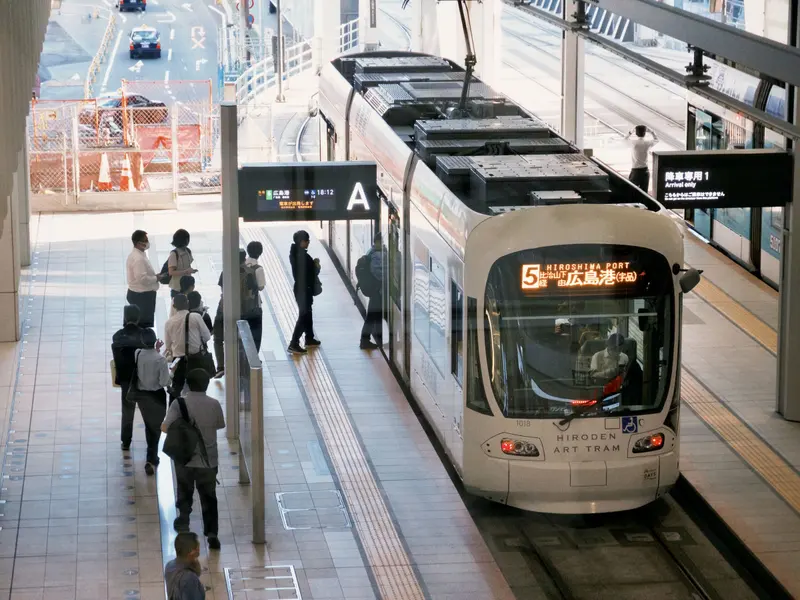
The Eba line runs 2.6 km and seven stops from Dobashi to Eba.1 The army asked for it to carry workers to the Mitsubishi shipyard that opened in 1943 on reclaimed land south of Eba; the first section opened that December, and the line reached the site of today's Eba stop in 1954, still 1.3 km short of the plant.1 Route 6 from Hiroshima Station and route 8 from Yokogawa alternate along it.1
Students use the line widely. Eba Junior High is the only public junior high school in the city that lets pupils ride to class, and only those living around the Funairi-machi stop.1 コーヒーハウスふう (Coffee House Fuu) is on Funairi-naka-machi, which gave that stop its name until 1952.1 from is at Funairi-kawaguchi-chō 2-1.
ハミングバードカフェ (HummingBird Cafe), at Funairi-saiwai-chō 11-2, runs ukulele lessons, workshops, live events and a small gallery alongside the café.4 Its owner produced a walking map of Funairi's shops, now in its second edition and handed out at the counter.4 In April 2026 the café gave the city ¥36,200 raised by a peace concert and an exhibition of paintings of A-bombed trees.4
cafe fragrant is in the same district, at Funairi-saiwai-chō 20-17, and リッテンプラス (Litten Plus) is at Funairi-minami 1-4-26.
ポワブリエール本店 (Poivrière main shop), at Funairi-minami 3-12-24, is an ivy-covered French pâtisserie where you can also sit down, right by the Funairi-minami tram stop; it uses French liqueurs and chocolate.6 In 2024 cakes started at ¥432, coffee cost ¥528 and a dessert plate with a drink ¥1,375.6
Its roots are in Bōshū, a kissaten near Hiroshima University's old city campus, whose founder opened it as a bakery in 1935. His son trained as a pâtissier in France, married a Frenchwoman, Jocelyne, and the couple fitted an oven into a corner of Bōshū to start what one longtime customer calls Hiroshima's first French pastry shop.7 Bōshū, the Takanobashi branch, closed in June 2024, leaving Funairi as the main shop.7
In the Edo period Eba was Hiroshima's outer port and a village of farmer-fishers who grew nori and oysters, drying the seaweed in the fields in winter. Ujina port took over in 1889, wartime reclamation from 1940 wiped out most of the nori beds, and the Eba shopping street association disbanded in 2023.2 Eba-nihonmatsu, where ロダン (Rodan) sits at 2-10-39, is named for two small hills in the old fish ponds that each carried a single pine.2
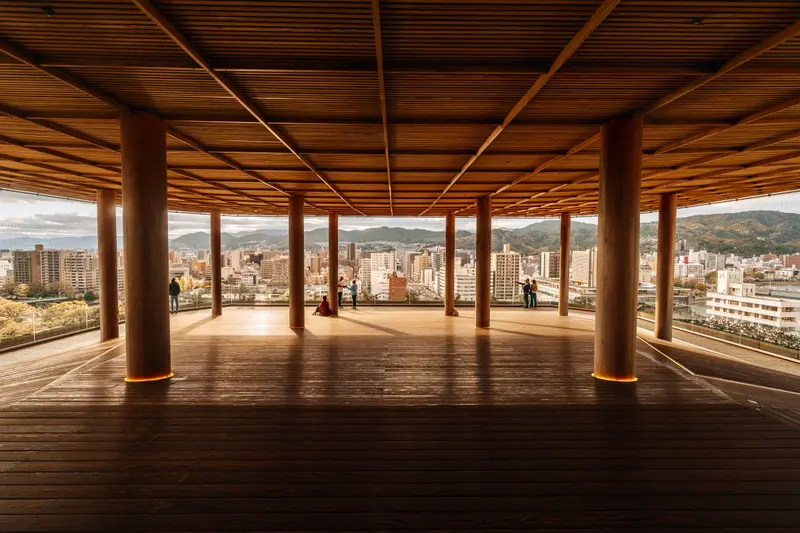
The Ebayama Weather Museum occupies the 1934 Hiroshima weather observatory, which survived the atomic bomb 3,630 m from the hypocenter with bent window frames and glass still lodged in its walls; it opened in 1992 as Japan's first weather museum, and adult entry is ¥100.3 It is a 15-minute walk from the Eba tram stop.3
ゆらり (Yurari), at Ōtemachi 5-10-19 on the Takanobashi shopping street, is a natural-food café and bar that uses ingredients grown without chemical pesticides or fertilizers, adds no additives and ferments its own koji.5 In Yoshijima, 福々庵cafe 吉島店 belongs to Fukufukuan, the maker of Fuku manjū buns and Shari-mochi kuzu bars.8 クッキー屋サリー (Cookie-ya Sally) is at Yoshijima-higashi 1-5-7, and ブブレ よしじまカフェ (Bubure Yoshijima Cafe) at 1-20-21.
The Hiroden Eba line, 2.6 km from Dobashi to Eba, serves both. Route 6 runs from Hiroshima Station and route 8 from Yokogawa; Poivrière is right by the Funairi-minami stop.
Poivrière's main shop, at Funairi-minami 3-12-24, is an ivy-covered French pâtisserie, with seating, that uses French liqueurs and chocolate. It began as a pastry oven in Bōshū, a 1935 bakery and kissaten, and is described as Hiroshima's first French pastry shop.
The Ebayama Weather Museum, in the 1934 observatory building that survived the atomic bomb, opened in 1992 as Japan's first weather museum and charges adults ¥100. Eba itself was an island and an Edo-period nori and oyster village.
Free listings are free for good. A featured page gives you photos, a menu and your own URL, in your café's own design, for less than a coffee a day.