カフェラ 大丸神戸店
CAFFERA
The 1868 settlement grid: an 1880 consulate turned tea salon, a 1929 bank in Daimaru, and Luminarie in winter.
Photo: Chen Te, Pexels License
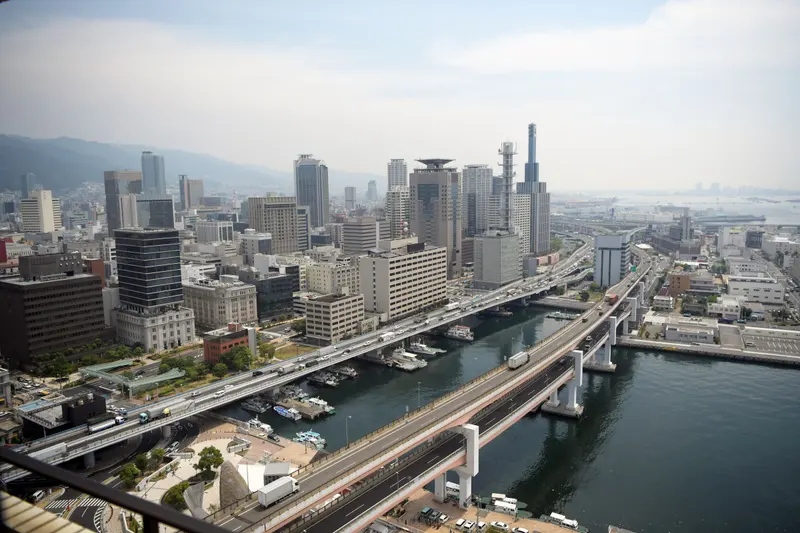
Kyū-kyoryūchi (旧居留地, the former foreign settlement) was planned by the British engineer J. W. Hart with grid streets, street trees, parks, streetlights and sewers, in 126 lots that still shape the district. Land was auctioned four times between 1868 and 1873, and the settlement council ran roads, lighting and its own police until the district was handed back to Japan on 17 July 1899.1
Air raids on 5 June 1945 destroyed about 70% of its buildings, and head offices drifted to Tokyo during the boom decades. Around 1980 the old Western buildings found new value, and boutiques, cafés and restaurants moved in; Kobe made it a townscape formation area in 1983.1
Local tip: Salon15's upstairs salon takes its last food orders at 19:00 and drinks at 19:30, so arrive by late afternoon for its afternoon tea.5
CAFFERA
Nothing matches those filters here. See all cafés in Kobe.
The settlement covered about 25.8 ha between the old Ikuta River, now Flower Road, on the east and the Koikawa, now Koikawa-suji, on the west, with the sea to the south. Eight streets ran north to south and five east to west, with carriageways separated from sidewalks.2 Kyūkyoryūchi-Daimarumae Station on the Kaigan subway line opened on 7 July 2001; of its four exits, exit 1 leads straight into Daimaru Kobe.3
Building No. 15 (旧居留地十五番館), completed around 1880, is the only building left from the settlement era. It was designated an Important Cultural Property in 1989, collapsed in the 1995 earthquake and was rebuilt by April 1998.1 The timber-framed brick house reused about 70% of its salvaged materials and now stands on a seismic isolation base; the building-materials firm Nozawa, which bought it in 1966, had its head office here until 1990.4
It served as the United States consulate for about ten years from 1891. Today Salon15 Tooth Tooth runs a patisserie and tea shop downstairs and a salon upstairs, with afternoon tea paired with black tea, 11:00–20:00.5
The 1995 earthquake damaged 106 buildings in the district and 22 were demolished, among them the Daikō Building of 1919 and the Meikai Building of 1921. By 2002, 20 of those sites had been rebuilt, many with shops and restaurants on the first two floors.1
Building 38 (旧居留地38番館) was designed by William Merrell Vories for Citibank's Kobe branch and completed in 1929; Daimaru owns it and uses it as part of the Daimaru Kobe store.6 Pâtisserie Tooth Tooth's Salon de Terrace is on its fourth floor.
Inside Daimaru, Caffera opens 09:45–21:00, and Eikokuya, Rankan and the Kyoto sweets house Bunnosuke Chaya have tea rooms. Around the store, Ch Tea Room and Yurt are on Edomachi, Carta in the OTC building on Kyōmachi, and Rough Rare at Akashimachi 18-2.
Kobe Luminarie began as a prayer for the victims of the Great Hanshin-Awaji Earthquake and for the city's recovery. Its 31st edition ran from 30 January to 8 February 2026 in Higashi Yūenchi, the former settlement and Meriken Park, lit from dusk to 21:30. The settlement venue was free; part of Meriken Park cost ¥500–1,500.7
In Kyū-kyoryūchi, also browse: Bakery cafés
Building No. 15 is a timber-framed brick house completed around 1880, the only building left from the settlement era and the United States consulate for about ten years from 1891. It collapsed in the 1995 earthquake and was rebuilt by April 1998. Salon15 Tooth Tooth now runs a patisserie and tea salon inside.
Take the Kaigan subway line to Kyūkyoryūchi-Daimarumae Station, which opened on 7 July 2001. It has four exits, and exit 1 leads straight into Daimaru Kobe, whose annex is the 1929 Building 38. The settlement grid lies between Flower Road and Koikawa-suji.
The 31st Kobe Luminarie ran from 30 January to 8 February 2026, lit from dusk to 21:30, in Higashi Yūenchi, the former foreign settlement and Meriken Park. The settlement venue is free. The festival began as a prayer for the victims of the 1995 earthquake.
Free listings are free for good. A featured page gives you photos, a menu and your own URL, in your café's own design, for less than a coffee a day.