Mahisa
- Cash only
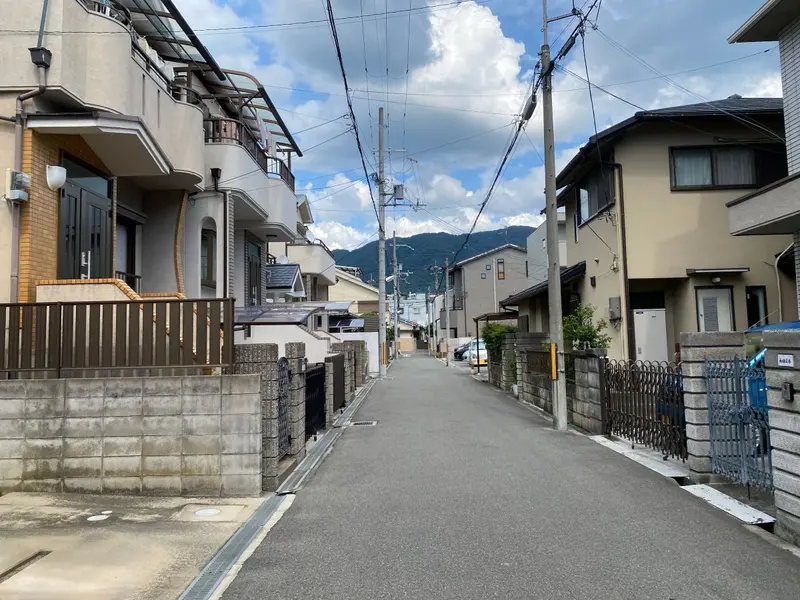
Stone-paved slopes between Hankyu Okamoto and JR Settsu-Motoyama, patisseries and Konan students' kissaten.
Photo: kazuyoshi sakamoto, Pexels License
Okamoto (岡本) in Higashinada Ward was known for plums: its groves appear in the 1798 Settsu Meisho Zue, a local saying ranks Okamoto first for plums, and in the Meiji era trains stopped for plum viewing. Floods in 1938 and wartime air raids destroyed most of the trees, and Okamoto Plum Grove Park opened in 1981. In 2014 it had the highest residential land prices in Kobe.1
The shopping district grew around two stations. Hankyu Okamoto opened in 1920, when the area drew mostly plum viewers and Osaka merchants' villas; after JR Settsu-Motoyama opened in 1935, shops spread about 400 m east to west along the tracks. The merchants' association, formed in 1985, counted 177 member shops on 1 December 2021, from supermarkets and restaurants to clinics and fashion.2
Local tip: Come in late winter for Okamoto Plum Grove Park, laid out in 1981 on the hillside the old groves made famous, then walk down to the stone-paved streets for coffee.1
Nothing matches those filters here. See all cafés in Kobe.
Okamoto has no arcade, and its streets carried cars on asphalt until the 1995 earthquake; afterward the main streets were paved in pink sakura-mikage granite, now the district's emblem.2 Locals name the slopes: Okamoto-zaka runs south from Hankyu Okamoto, Gate-zaka climbs from JR Settsu-Motoyama to the Yamate trunk road, and Campus-dōri heads west to Konan University's Okamoto campus.2
Settsu-Motoyama's wooden station, one of the few left between Osaka and Kobe, was replaced by a new building in autumn 2013, with lifts and escalators; the square in front was finished in 2015.2
In 2019 the Kobe Shimbun counted at least 36 sweets shops within about five minutes' walk of Hankyu Okamoto. Konan University's Nishimura Junji traced them to the tea-time habits that came in with the port in 1868 and to the wealthy Osaka families who built homes here; three universities nearby add a student trade.3
Nihoncha Café Ichinichi, which opened in 2005, pairs Japanese tea with sweets and seasonal shaved ice.3 Belleville Pancake Café is in the Hankyu building at Okamoto 5-1-1, and haru sakura and La Caka are on Okamoto 1- and 2-chōme.
Tsukue no Heya (机の部屋, "the desk room") in Okamoto 2-chōme, on the walk from Hankyu Okamoto to Konan University, opened in 1970 as Buranko and took its present name in 1978. Jazz plays under a green-shaded lamp over a big central table, and a pink rotary telephone survives from the old fittings.4
Café de Ferro in Okamoto 1-chōme is known for waffles; in autumn 2016 its fruit waffle came with grapes, persimmon and chestnuts.5 Kōhī Shunjū opens 07:00–23:00 every day, and Cafe tuoli and Tatsumi Sabō share Okamoto 1-14-18.
Motoyama-kitamachi has Book Cafe ULM at 3-4-9, Mahisa at 3-6-9 (11:30–19:00, cash only) and Hitsuji Sabō on the second floor of a building in 3-chōme. Tanaka-chō has Matsuya Coffee at 4-2-2, the book café Hokoto at 3-19-16 and Coffee and Bar Nami at 3-10-25, and Kobe Riders Café is at Motoyama-nakamachi 3-1-10.
In Okamoto & Motoyama, also browse: Bakery cafés
In 2019 at least 36 sweets shops stood within about five minutes of Hankyu Okamoto Station. A Konan University professor linked them to the Western tea-time habits that arrived with the port in 1868 and the wealthy Osaka families who settled here; three nearby universities add students.
Okamoto's main shopping streets were asphalt until the 1995 Great Hanshin earthquake. In the rebuilding they were paved in pink sakura-mikage granite, which has since become the district's emblem. The shopping area has no arcade and runs about 400 m east to west between Hankyu Okamoto and JR Settsu-Motoyama.
Tsukue no Heya is a coffee shop and pub in Okamoto 2-chōme, on the walk from Hankyu Okamoto Station to Konan University. It opened in 1970 as Buranko and was renamed in 1978. Jazz plays over a large central table, and a pink rotary telephone remains from its early fittings.
Free listings are free for good. A featured page gives you photos, a menu and your own URL, in your café's own design, for less than a coffee a day.