Tanzania
Cafés in Dar es Salaam from Kisutu to Masaki
Kahawa poured from street kettles into small cups, cappuccinos on Haile Selassie Road in Masaki, and a late table at Café Aroma on Obama Road.
- Map and “near me”
- “Open now” filter
- Paid placements always labeled
Photo: Alex Levis, Pexels License
38Cafés listed
1Open by 6am
8Open past 10pm
0Specialty & roasters
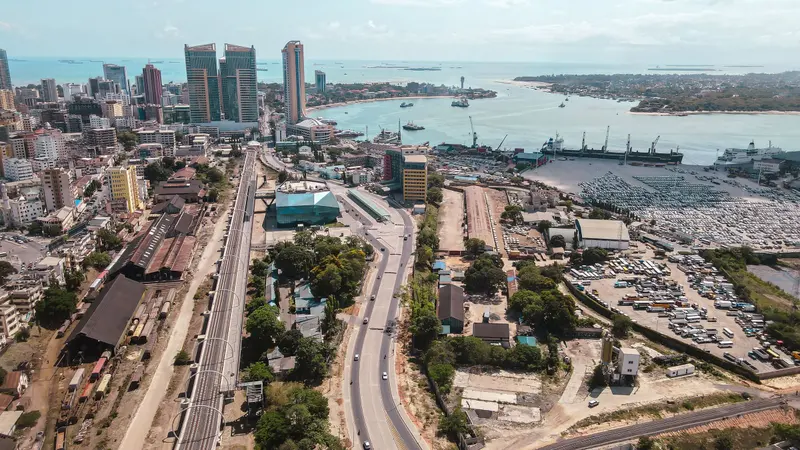
Dar es Salaam's name is usually translated from Arabic as "abode of peace". Sultan Majid bin Said of Zanzibar began building the town in 1865 or 1866 close to the village of Mzizima, and the 2022 census counted 5,383,728 residents.1 The decision to move the capital to Dodoma came in 1974, and the move was completed in 1996.1
The everyday coffee here is poured outdoors. Under shade trees at spots such as Biafra in Kinondoni, drivers, carpenters and tailors meet over small cups to argue about politics, the economy and sport, and one regular told Xinhua he drinks up to ten a day, spaced out.2 A 20-year-old seller earned TSh 15,000 for each 10-litre kettle he emptied in 2022 and bought his coffee in Kariakoo at TSh 8,000 a kilo.2
Drinking coffee at a table is a smaller habit. In January 2024 the Tanzania Coffee Board put home consumption at about 7% and aimed for 15% by 2025/26, noting that hotels and restaurants in Dar es Salaam had taken up its push.3 Baristas are catching up: in February 2026 Tanzania entered the barista competition at the African Fine Coffees Association show in Addis Ababa for the first time, and two of its entrants reached the top eight.5
Peninsula or city centre
Dar es Salaam by area
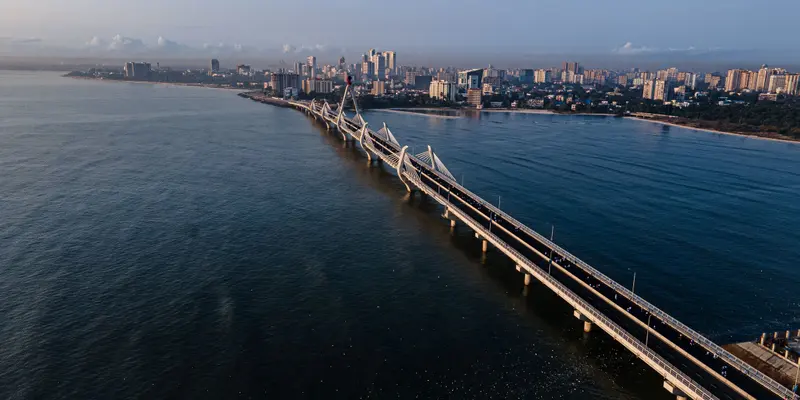
Masaki is one of the neighborhoods of Msasani ward, a peninsula with the Indian Ocean on its north and east sides.11 Since 1 February 2022 the Tanzanite Bridge has carried traffic over the water from Oyster Bay to Barack Obama Drive near the Aga Khan Hospital, on the city-centre side.12
Or start with what you need
Browse by mood and hour
Outdoor seating
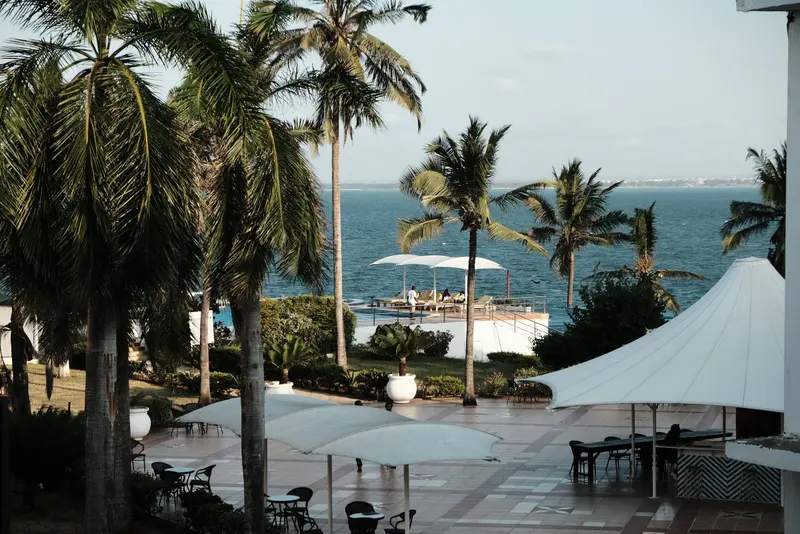
Terraces on Haile Selassie Road, Chole Road and Mahando Street, plus Fraîche in Mbezi Beach.
13 cafés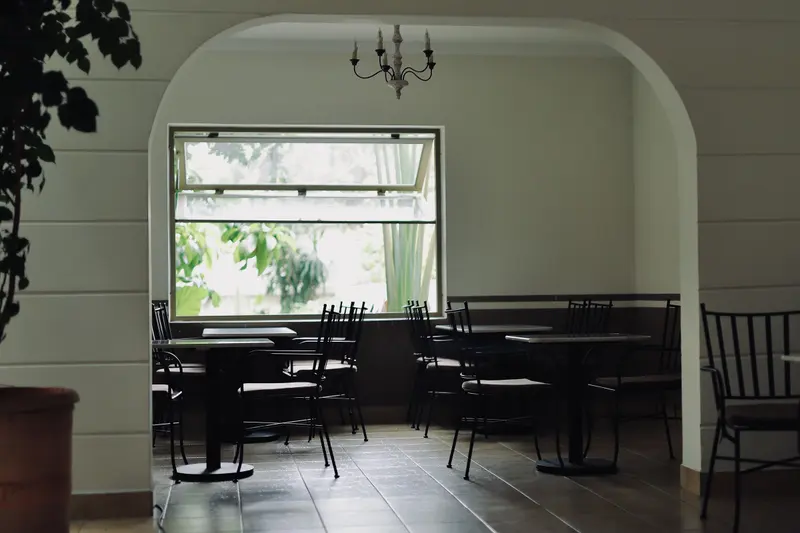
Air-conditioned cafés
Cool rooms on Haile Selassie Road and Chole Road, Café Aroma on Obama Road and Fraîche in Mbezi Beach.
9 cafés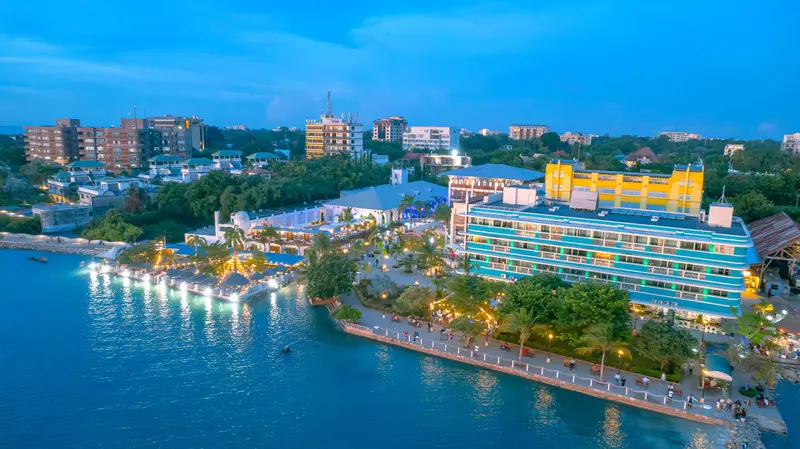
Open late
Masaki cafés serving until 22:00 and 23:00, Café Aroma on Obama Road and Fraîche in Mbezi Beach.
8 cafésMasaki 18 cafés
Café Blanc
- Outdoor seating
- Air-con
- Indoor seating
- Card payment
- Vegetarian options
- Smoke-free indoors
- Open late
Kaffé Koffee Pink
- Outdoor seating
- Indoor seating
- 24 hours
- Open by 6am
Hug a Mug
- Outdoor seating
- Air-con
- Indoor seating
- Card payment
- Vegetarian options
- Smoke-free indoors
- Open late
Luma Whale
- Outdoor seating
- Air-con
- Indoor seating
- Smoke-free indoors
Aroma Coffee House
Gesibora
Kahawa Cafe
- Outdoor seating
- Indoor seating
Karambezi Cafe
The Lemon Tree Café
- Outdoor seating
- Indoor seating
The Ridge Cafe
Wild Flour Artisan Bakery
- Outdoor seating
- Air-con
- Indoor seating
- Card payment
- Vegetarian options
- Partial wheelchair access
- Smoke-free indoors
- Bakery café
- Open late
Oyster Bay 3 cafés
The Spot Coffee & Juice Bar
Cozy Café
Orchid Café
- Outdoor seating
- Air-con
- Indoor seating
- Card payment
- Smoke-free indoors
City Centre & Upanga 9 cafés
More about cafés in City Centre & Upanga
Café Aroma
Amboni Cafe
Central Park Cafe
Green Bean Café & Bakery
- Bakery café
Impresso Espresso
Tsavorite Cafe
Alifrida Coffee
Magnolia Cafe
Mokka City Cafe & Lounge
Mikocheni & Msasani 2 cafés
Afrigahwa
atom.
- Wi-Fi
Mwenge & Sinza 3 cafés
Hannah's Kitchen
- Wi-Fi
- Bakery café
Grano Coffee
Zanzibar Coffee House
Mbezi Beach & Kawe 3 cafés
Fraîche
- Outdoor seating
- Air-con
- Indoor seating
- Card payment
- Vegetarian options
- Smoke-free indoors
- Open late
Kahawa Café and Bistro
Njiani Restaurant & Coffee Shop
No café matches all of those filters. Try removing one, or tell us about a café we're missing.
Before you sit down
How kahawa and café coffee work in Dar es Salaam
Kahawa, Swahili for coffee, is borrowed from the Arabic qahwa,6 and a mkahawa (plural mikahawa) can mean a café or a restaurant.7 Street sellers pour both arabica and robusta, sometimes with ginger, and the snack of choice is a coconut and peanut brittle.2 Kashata, a no-bake sweet of sugar syrup with coconut or peanuts, is eaten with chai (tea) and kahawa in Tanzania and Kenya.8
Café menus follow the espresso pattern. Kaffé Koffee in Masaki lists an Africano, its dark black coffee, beside cappuccino, Spanish latte and milk tea, and sells Tanzanian AA arabica beans named Mbinga, Kilimanjaro and Zanzibar.9 Arabica makes up about 70% of the national crop, grown from North Kilimanjaro and the Usambara Mountains to Mbeya and Mbinga; the robusta comes mainly from Kyerwa and Karagwe in Kagera Region.4
Cafés and small shops quote prices in Tanzanian shillings, and cash is the safe choice in local places. Visa and Mastercard work in established restaurants, though some businesses add a 3–5% card surcharge. M-Pesa, Airtel Money and Tigo Pesa are everywhere, but a visitor can't count on registering without a local number and ID.10 Check the bill for a service charge before tipping; without one, TSh 5,000–15,000 for restaurant staff is the guideline.10
Plan around the weather. February is the hottest month at the airport, with an average high of 32.8 °C, and relative humidity runs between 75% and 84% all year. The long rains fall in April and May, with about 264 mm in April alone, and the short rains in November and December.1 In those months, pick a café with air conditioning or a covered terrace.
What coffee costs in Dar es Salaam
| Drink | Typical price |
|---|---|
| Espresso Single shot | TSh 5,000 Kaffé Koffee, Masaki, December 2025 |
| Africano Dark black coffee, 16 oz | TSh 6,000 Kaffé Koffee, Masaki, December 2025 |
| Cappuccino 16 oz | TSh 8,000 Kaffé Koffee, Masaki, December 2025 |
| Chai ya maziwa Milk tea | TSh 8,000 Kaffé Koffee, Masaki, December 2025 |
| Kahawa Ground coffee for street kettles, 1 kg | TSh 8,000 Kariakoo supplier, 2022 |
Café prices are from Kaffé Koffee's menu, posted in December 2025 and still online in October 2026; the ground-coffee price is what a street vendor paid in Kariakoo in 2022.92
Sources
- Dar es Salaam, Wikipedia, accessed October 2026
- Feature: Street coffee culture is flourishing business in Tanzania, Xinhua via The Star (May 11, 2022), accessed October 2026
- TCB outlines ways to promote coffee consumption, The Citizen (January 30, 2024), accessed October 2026
- Coffee production in Tanzania, Wikipedia, accessed October 2026
- Tanzania coffee tops Africa, ranks fourth globally, The Citizen (Janeth Joseph, February 13, 2026), accessed October 2026
- kahawa, Wiktionary, accessed October 2026
- mkahawa, Wiktionary, accessed October 2026
- Kashata, We Eat At Last (Kate Hahnel, October 19, 2022), accessed October 2026
- Menu, Kaffé Koffee (PDF, posted December 2025), accessed October 2026
- Tanzania Currency & Money Guide: Exchange, Cards, and Tips, Hello Travel (May 2, 2026), accessed October 2026
- Msasani, Wikipedia, accessed October 2026
- Tanzanite Bridge, Wikipedia, accessed October 2026
FAQ
Cafés in Dar es Salaam: common questions
What is street kahawa in Dar es Salaam?
Kahawa is the Swahili word for coffee. In Dar es Salaam vendors sell it from 10-litre kettles under shade trees, in small cups, and regulars may drink several a day while talking politics and sport. Both arabica and robusta are used, sometimes with ginger, and a coconut and peanut brittle such as kashata is the usual snack.
Which neighborhood of Dar es Salaam has the most cafés?
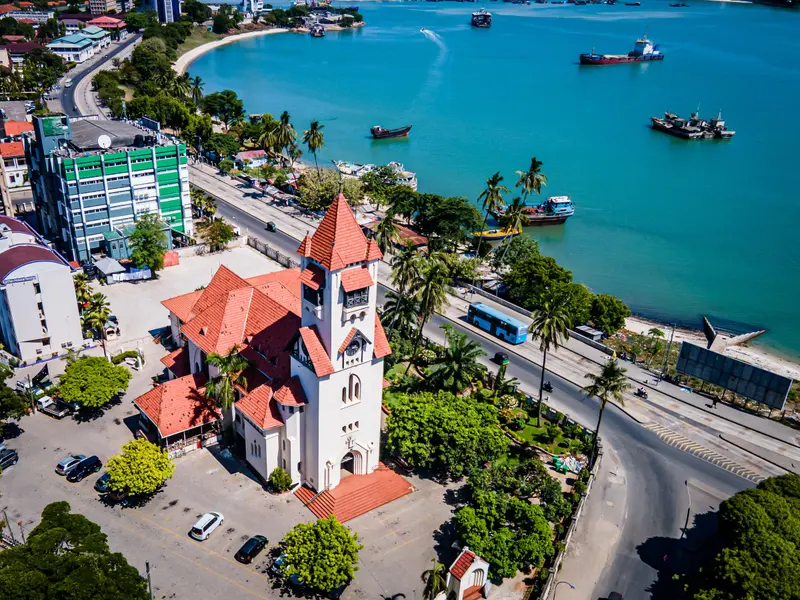
Masaki and City Centre & Upanga have the most cafés, followed by Oyster Bay. Masaki has the widest choice, on Haile Selassie Road, Chole Road and Mahando Street; the city centre and Upanga come second, along Obama Road and in Kisutu.
How much does a cappuccino cost in Dar es Salaam?
On the menu Kaffé Koffee in Masaki posted in December 2025, a 16 oz cappuccino cost TSh 8,000, a single espresso TSh 5,000 and an Africano, its dark black coffee, TSh 6,000. Milk tea was TSh 8,000. Street kahawa costs far less: in 2022 one vendor took TSh 15,000 for a whole 10-litre kettle.
How do you pay and tip at cafés in Dar es Salaam?
Carry Tanzanian shillings: cafés and small shops quote prices in them, and cash is safest in local places. Visa and Mastercard work in established restaurants, sometimes with a 3–5% surcharge. Mobile money such as M-Pesa is hard for visitors to register. Without a service charge on the bill, TSh 5,000–15,000 for restaurant staff is the guideline.
When is the rainy season in Dar es Salaam?
Dar es Salaam has two rainy seasons: the long rains in April and May, with April the wettest month at about 264 mm, and the short rains in November and December. February is the hottest month, with an average high of 32.8 °C, and relative humidity stays between 75% and 84% all year.
For café owners
Run a café in Dar es Salaam?
Your free listing is probably already on this page. Claim it in two minutes, or turn it into a featured page in your own design, with photos, a menu and your own link.