Santitham
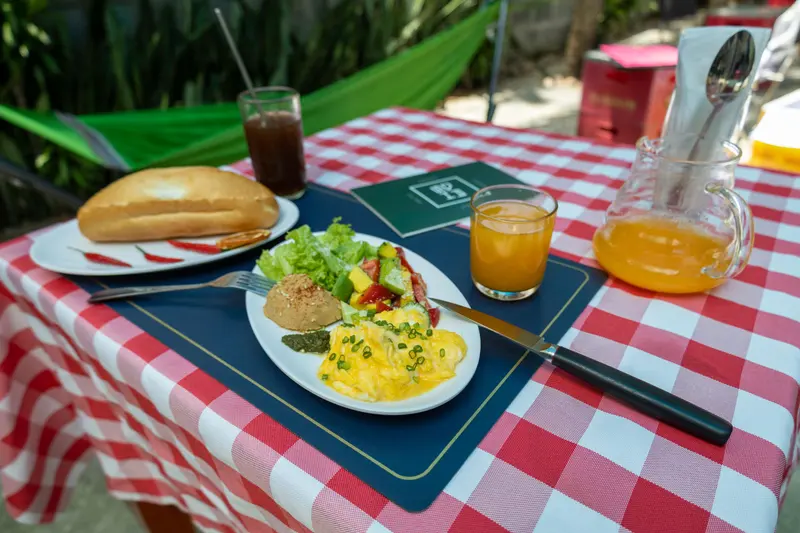
Akha Ama
- Wi-Fi
- Smoke-free indoors
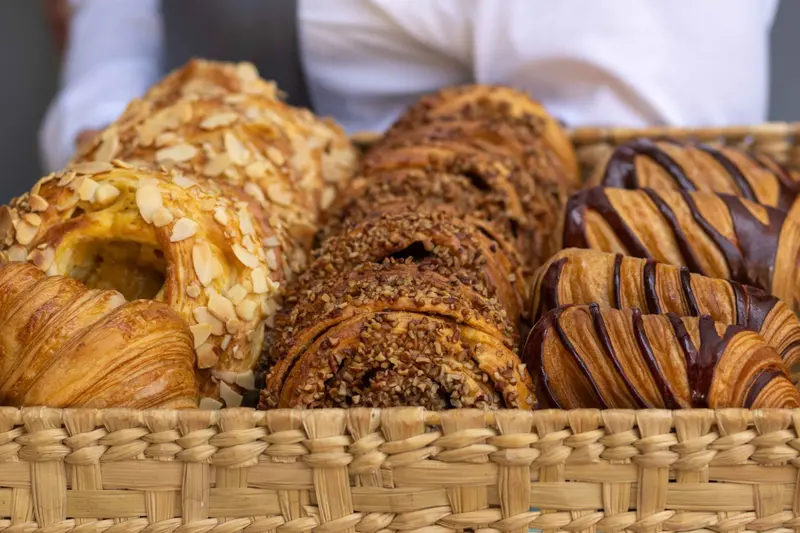
- Bakery café
- Specialty
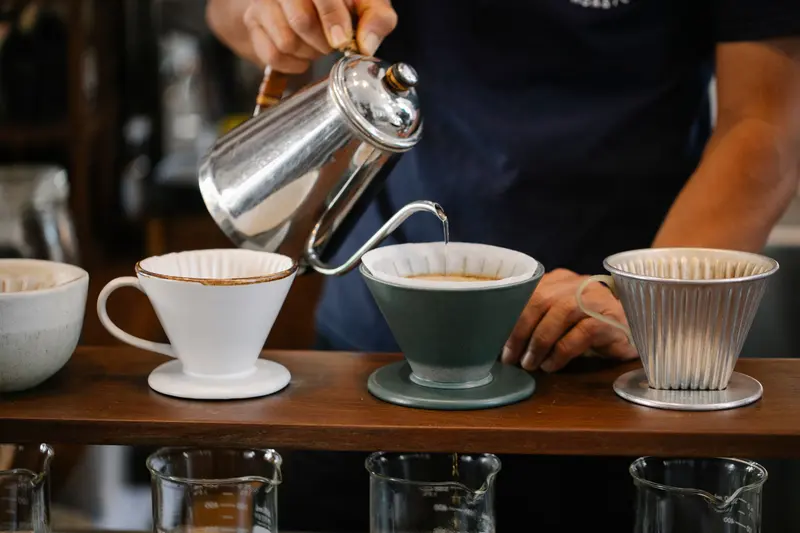
Roasters pouring northern Thai arabica, often from farms an hour away.
Photo: Michael Burrows, Pexels License
Specialty coffee, กาแฟพิเศษ (kafae phiset) in Thai, has a short supply line in Chiang Mai. Thai arabica grows mainly in the north, above roughly 800–1,000 m, and Chiang Rai and Chiang Mai are the country's two biggest coffee provinces: in the year to September 2024 they produced 4,736 and 3,430 tonnes.15
Riverside & Wat Ket has more specialty cafés than any other area, followed by Nimman and the Old City, with the strip between the moat and the river close behind and Santitham next; the south, Suthep and the north have only a few each.
Local tip: Several of the specialty cafés here close at 16:00, among them Bella Goose, First Officer and Pimm's Cup, so plan pour-over for the morning and keep the afternoon for the shops that stay open later.
Where these cafés are: Riverside & Wat Ket (15), Nimman (11), Old City (9), Tha Phae & Night Bazaar (8), Santitham (7), South Chiang Mai (4), Suthep & CMU (3), Chang Phueak & north (1).
Nothing matches those filters here. See all cafés in Chiang Mai.
In 1969, King Bhumibol Adulyadej began a royal initiative to give coffee varieties to highland ethnic minorities, to replace opium, slow deforestation and raise incomes.1 The Royal Project, begun the same year, now runs 38 development centers across five northern provinces, 27 of them in Chiang Mai, from a headquarters at Mae Hia on the city's edge.2
From 1973, international programs run through the Department of Public Welfare also promoted arabica among hill-tribe farmers, but success was slow.1 In 1983, 40 families on Doi Chang in Chiang Rai received arabica through the Thai-German Highland Development Project, but middlemen kept prices low and only about 10 kept farming it; the village formed its own coffee company in 2003.1
Doi Saket, in Chiang Mai province, is one of Thailand's oldest growing regions, planted mostly with Typica; the Indoi family farm there reaches 1,500 m. In Chiang Rai, about 300 Akha families farm Pangkhon at 1,250–1,600 m and have done so for more than 40 years. In Doi Saket, rain falls even in the dry season, which often leaves washed processing as the only option.4
Akha Ama, founded in 2010 by Lee Ayu Chuepa, the first person from his village to graduate from university, buys straight from farmers and roasts in town; Lee says one bad frost can cost 40% of a harvest.3 The company now works with more than 300 families in four provinces.6
Thailand's import tariffs on coffee are the second highest in the world, so foreign beans are expensive for cafés, and a Brazil, Colombia or Ethiopia is more likely to appear blended with Thai coffee than as a single origin.4
As of 2026, Off Path Thailand puts a cup at a specialty café at about 60–120฿, against 30–50฿ for a basic iced coffee.7 Pour-over costs more: a 2026 budget guide prices a single-origin pour-over at a Nimman roaster at 80–120฿, and Feel Chiang Mai's roaster guide gives 100–180฿ for filter coffee.89
Specialty cafés here keep morning hours, and few stay open past 18:00. Bella Goose Coffee on Sridonchai Road, First Officer Coffee Roasters in Nimman and Pimm's Cup: Roastary Lab on Sam Lan Road all open at 07:00 and close at 16:00.
For a later cup, Akha Ama's Santitham café on Hussadhisewee Soi 3 runs until 20:00 (closed Wednesdays), and its Phrasingh branch until 20:00 on Sundays. Between the moat and the river, Around 18 Grams and Refine Coffee Roaster both close at 17:00.

By area: Old City Nimman Santitham Tha Phae & Night Bazaar Riverside & Wat Ket Suthep & CMU Chang Phueak & north South Chiang Mai
Mostly from northern Thailand, where arabica grows above roughly 800–1,000 m. Chiang Rai and Chiang Mai are the country's two biggest coffee provinces, producing 4,736 and 3,430 tonnes in the year to September 2024. Named origins include Doi Saket in Chiang Mai province and Pangkhon and Doi Chang in Chiang Rai. High import tariffs keep foreign beans scarce.
From 1969, King Bhumibol's royal initiative gave coffee varieties to highland ethnic minorities to replace opium and reduce deforestation. The Royal Project now runs 38 development centers in five northern provinces, 27 in Chiang Mai. Progress was slow: on Doi Chang, only about 10 of 40 families given arabica in 1983 kept farming it.
Early. Most Chiang Mai specialty cafés close by 18:00, and Bella Goose Coffee, First Officer Coffee Roasters and Pimm's Cup: Roastary Lab close at 16:00. Akha Ama on Hussadhisewee Soi 3 stays open until 20:00 except on Wednesdays, and Akha Ama Phrasingh until 20:00 on Sundays.
Free listings are free for good. A featured page gives you photos, a menu and your own URL, in your café's own design, for less than a coffee a day.