 By Yannick Schroth
City guides · 4 min read · October 2026
Coffee in Mexico is still mostly instant. In 2025 Kantar found soluble coffee in 90% of Mexican households, while only 29% of Mexican consumers bought roasted or ground coffee for the home; the average household bought about 1.7 kg a year, over 11 shopping trips.1
Drinking out is growing anyway. Kantar's 2023 panel found more coffee bought away from home even though its price had risen 21% in a year, with cafés and restaurants gaining ground and customers usually arriving in groups of three or four.2 In Mexico City that out-of-home cup ranges from shops that have roasted their own beans since the 1930s to small bars in residential colonias (neighborhoods) far from the usual visitor circuit.
When the city drinks coffee
Coffee in Mexico belongs to two meals. Kantar counts 83% of in-home coffee occasions at breakfast and at the cena, the evening meal.1 In its 2023 figures breakfast alone took 50% and the cena 31%, while coffee as a snack between meals rose from 14.7% to 16.4%.2
The meal clock runs late. Animal Gourmet puts the Mexican desayuno (breakfast) between 07:00 and 10:00, the comida, the main meal of the day with soup and a main course, between 13:00 and 17:00, and the cena between 20:00 and 23:00.3 A coffee at 11:00 therefore falls between breakfast and the main meal, and one at 17:00 may well come at the end of it.
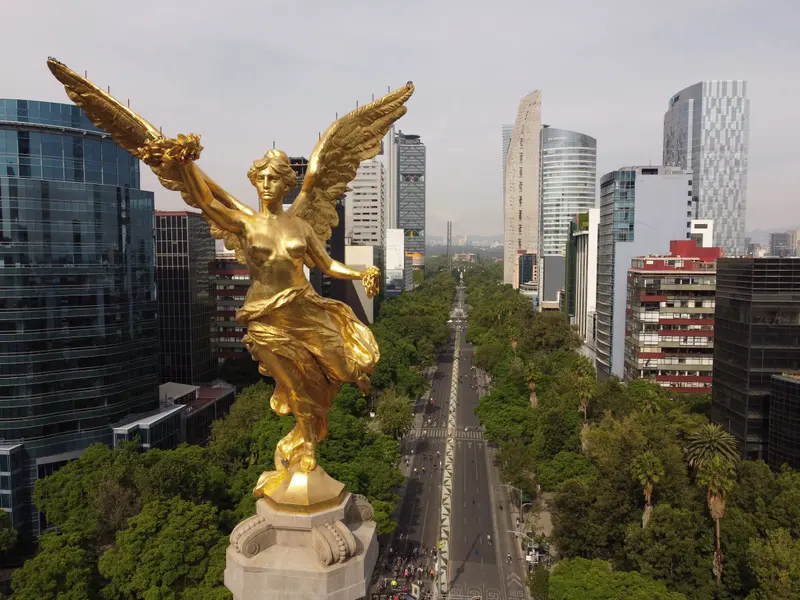
Sunday mornings have their own rhythm. The Muévete en Bici ride runs from 08:00 to 14:00, and on 3 May 2026 it closed about 61 km of streets to cars, among them Paseo de la Reforma, with stretches through Condesa and the Centro Histórico.17
The carajillo and other house orders
The carajillo began in Spain as coffee with liquor, usually brandy. In Mexico City it is mostly espresso and Licor 43, a Spanish liqueur, shaken over ice in a cocktail shaker, often by the waiter in front of you.4 Chilango calls it the emblem of the sobremesa, the long, unhurried talk after a meal, and the drink that signals the afternoon will carry on.4
Older cafés keep orders of their own. At Café Gran Premio in San Rafael, open since 1965 at Antonio Caso 72, the house drink is the café mayo, an espresso cortado topped with cream, and capuchinos come with cajeta (goat's-milk caramel) or honey; the Veracruz beans are roasted and ground on the premises.5
In the Centro, Café Villarías's house special in 2014 was the san toña, a cappuccino with cajeta or chocolate.7 Its counter also listed cortados, americanos and espressos, all made with its own roast.7
Roasters in the Centro
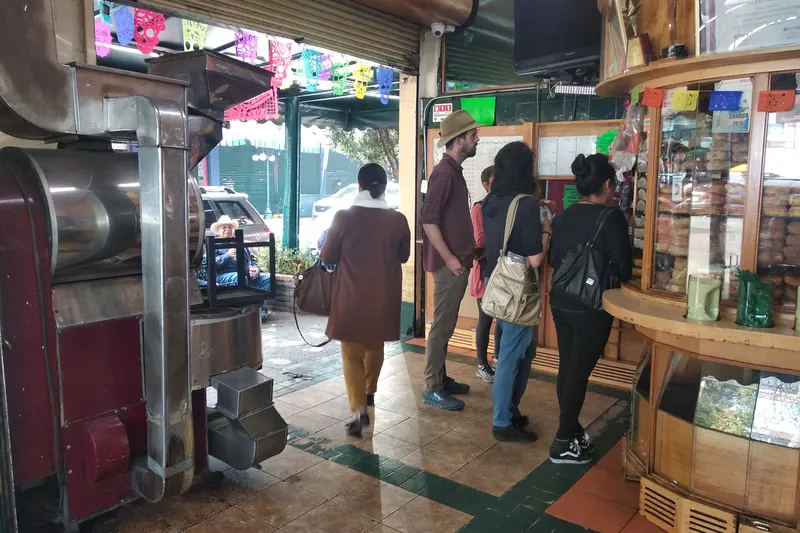
The Centro still has coffee shops that roast. El Cordobés, on Calle Ayuntamiento, opened around 1937 as El Gato Negro, owned by a Chinese family. A group of Mexicans and Spaniards took it over in 1939 as Café Cantón and began roasting and grinding on site, and in 1985 it bought land in Veracruz to grow its own coffee.6
Café Villarías dates from 1942, when Leoncio Villarías arrived from Spain after the Civil War; his descendants still ran it in 2014.6 Time Out found it at López 68, near Metro San Juan de Letrán, selling Chiapas beans grown above 1,200 m in two grades, caracolillo (peaberry) and planchuela (flat bean), and four roasts named americano, mediano, italiano and cubano.7
A few blocks away, Do Brasil La Balsa was founded on Calle Bolívar in 1949 by Alberto Peniche Paos, who named it after a grocery in Mérida where he had worked. In 2014 its coffee came from farms in Coatepec, Veracruz, and three generations had run it.6
Roma, Condesa and the colonias beyond
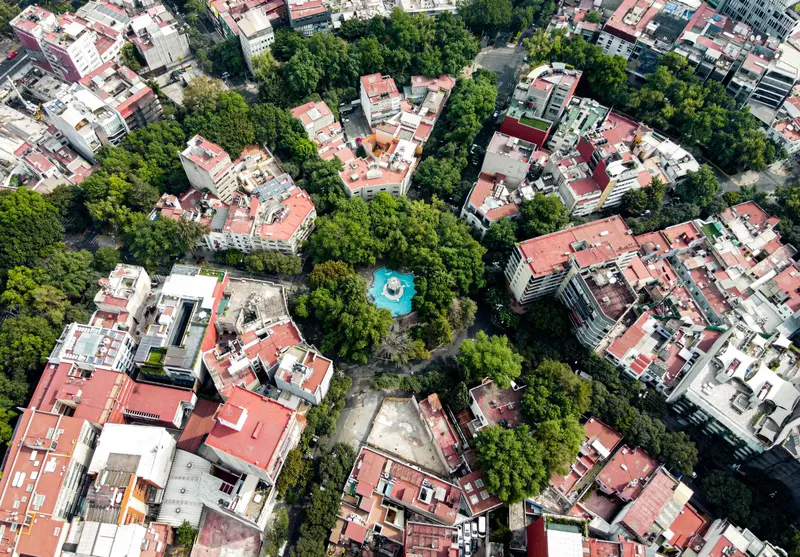
Roma and Condesa are where visitors are usually sent. Of Time Out México's ten favorite cafés of 2024, four were in Roma and two in Condesa.9 In May 2023 Helios Ocaña, tired of getting the same suggestions for those two colonias, asked his Twitter followers for alternatives and mapped 133 cafés elsewhere in the city; the map passed 170,000 views.8
Narvarte has the strongest claim to being the alternative. Chilango's January 2024 tour called it a paradise for coffee lovers and found bars brewing beans from producers in Guerrero, Veracruz and Oaxaca, a fully vegan café using Chiapas coffee, and a sourdough bakery on Avenida Universidad.10
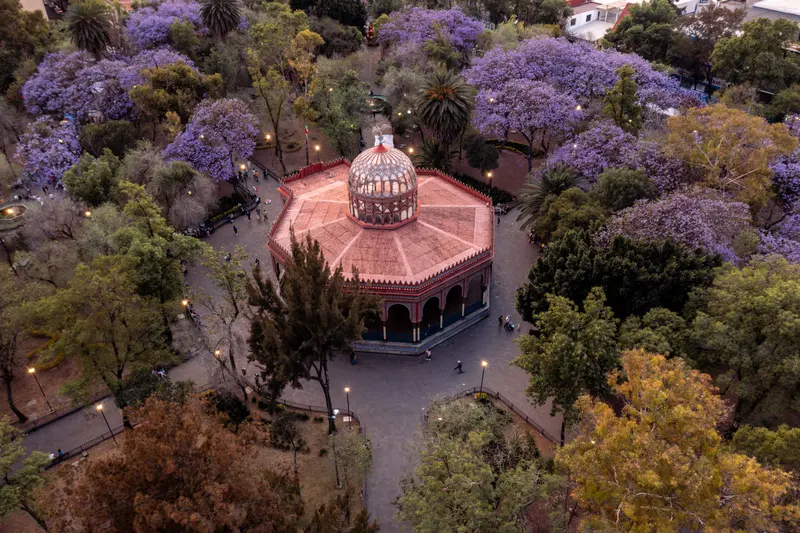
Juárez, north of Roma across Avenida Chapultepec, mixes new bars with old institutions. Time Out's 2015 round of the city's historic cafés repeated the claim that Fidel Castro and Che Guevara planned the Cuban Revolution at Café La Habana, where photos and a plaque mark the connection.18 San Rafael, west of the Centro, keeps the 1960s room of the Gran Premio, with its retro tables and a wall of souvenir cups.18
What coffee costs in pesos
A cup can still be cheap. In May 2024 the PickUp Coffee chain sold an espresso for MX$26,11 and in June 2024 Sede Café, which has a branch in Juárez, charged MX$15 for its café del día (coffee of the day).12 Starbucks moved more slowly than general inflation: between February 2024 and February 2025, an Alto latte went from MX$56 to MX$57 and a Grande americano from MX$53 to MX$54.13
Coffee for the home is getting dearer. In June 2026 INEGI, the national statistics institute, priced bulk Nescafé at an average of MX$580 a kilo in the Valle de México metropolitan area, MX$104.50 more than a year earlier. Soluble coffee was up 14.15% on the year, its 16th straight month of double-digit inflation, and roasted coffee 7.71%.14
| Order | Where and when | Price |
|---|---|---|
| Espresso | PickUp Coffee chain, Roma and Del Valle, May 2024 | MX$2611 |
| Café del día | Sede Café, June 2024 | MX$1512 |
| Americano or espresso | Café Villarías, Centro, July 2014 | MX$157 |
| Latte, Alto | Starbucks Mexico, February 2025 | MX$5713 |
| Americano, Grande | Starbucks Mexico, February 2025 | MX$5413 |
| Nescafé, bulk, per kilo | Valle de México average, June 2026 | MX$58014 |
Prices as reported on the dates shown; Starbucks prices are national, not specific to Mexico City.13
Paying and tipping
Carry pesos in small notes. In INEGI's 2024 national financial inclusion survey (ENIF), 85.2% of people preferred cash for purchases of up to MX$500, and 73.5% still preferred it above that amount.15 Banco de México's 2024 cash study found convenience was the main reason, cited by 52%, while 16% said cash was the only way they had to pay.15
The tip is the customer's call. Profeco, the federal consumer agency, says cafés, bars and restaurants may not add one to the bill without your explicit consent; check the total before paying, and if an unauthorized tip is not removed, you can file a complaint by phone or online.16
Tip. On a Sunday when Muévete en Bici runs, ride or walk the route on Paseo de la Reforma between 08:00 and 14:00, then stop for coffee in Condesa, which the route crosses.17