Yogyakarta · Kraton & Prawirotaman
Cafés in Kraton & Prawirotaman
The palace quarter and the traveler streets south of it: Taman Sari, Prawirotaman espresso bars, late cafés.
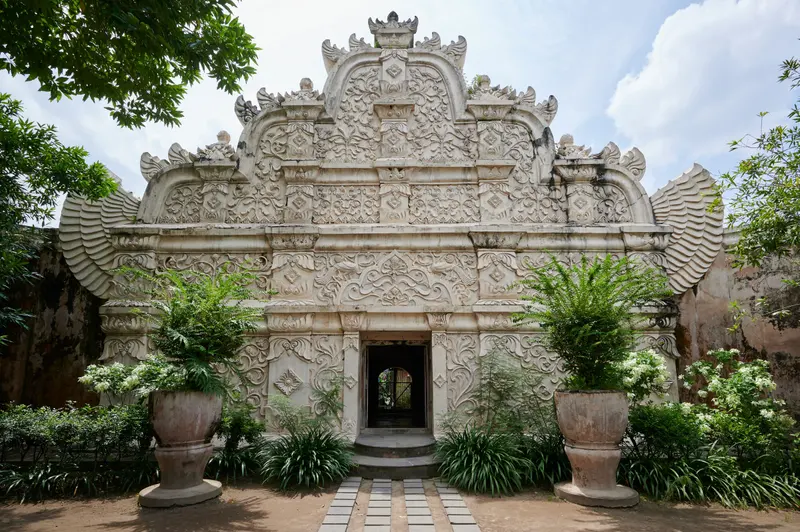
Photo: Han Sen, Pexels License
The Kraton (palace) is where Yogyakarta began. Sultan Hamengkubuwono I, the first sultan and also the palace's chief architect, built the 1.4-hectare compound in 1755–1756, soon after the Treaty of Giyanti recognized his sultanate.1 Taman Sari, the royal water garden, came next: construction started in 1758 and was finished around 1765, and the complex stayed in use until 1812.2
South of the center, Prawirotaman and Tirtodipuran are the streets international travelers have long favored, with guesthouses, galleries and cafés.67 Coffee across the palace quarter and those streets runs from an angkringan and a kopi Aceh counter near the Kraton to specialty roasters such as Maige Coffee Roastery and Ketemu Kopi & Roastery.
Local tip: See the Kedhaton in the morning, any day but Monday, since it shuts at 14:30; Dropshot Espresso Bar in Prawirotaman is open until 23:30 for the coffee afterwards.3
At a glance
72Cafés listed
6With opening hours
08:00Earliest opening
00:00Latest closing
- Opens earliest: Dropshot Espresso Bar, from 08:00 (Daily 08:00–23:30).
- Closes latest: Tirana art house & kitchen, until 00:00 (Daily 09:00–00:00).
- Most common features: wi-fi (8%), open late (6%), specialty (6%).
Ruang Jaka Coffee & Free Wifi
- Wi-Fi
- Outdoor seating
- Air-con
- Card payment
- Smoke-free indoors
- Open late
Ruang Seduh
Tirana art house & kitchen
Adam's Coffee & Pastry
- Bakery café
Aman Kuba Coffee
Arka Coffee and Space
Avocado media corner
B Coffee Yogyakarta
Bale Kopi and Foto Ngadinegaran
Bless Coffee and Kitchen
Cold'n Brew
Cup of Java (luwak kopi)
De Ngokow Coffee Roastery and Tea Club
- Specialty
Djoeragan Susu
Eyang Kakung Coffee Shop & Eatery
Gandhok Coffee Kadipaten
Icipono
- Wi-Fi
- Bakery café
Jawir Creative Communal Space
Jokteng
Kedai Kerjasama
Kedai Serunih
Ketemu Kopi & Roastery
- Specialty
Kopine Eyang
Koping Cafe
Langkid 8
Link Kopi
Lokabana
Made Cafe and Restaurant
Maige Coffee Roastery
- Specialty
Mari Ngopi
Mbok lemu
Nglaras Coffee and Gelato
OKID CAFE
Omah Roti Sidomukti
- Wi-Fi
- Bakery café
On The Pop
Nothing matches those filters here. See all cafés in Yogyakarta.
Visiting the palace and the water garden
The Kedhaton, the palace's main visitor section, opens Tuesday to Sunday from 08:30 to 14:30 and is closed on Mondays.3 Taman Sari keeps daily hours of 09:00 to 15:00; as of December 2025, adult tickets cost Rp15,000 for Indonesians and Rp25,000 for foreign visitors.4
The 1867 earthquake destroyed several of Taman Sari's buildings and drained its pools, and squatters later settled the empty lakebeds.2 Only the central bathing complex is well preserved, after a restoration in the early 1970s; the surrounding Kampung Taman is home to about 2,700 people known for batik and traditional painting.2
From soldiers' kampung to traveler street
Prawirotaman takes its name from the Prawiratama, an elite unit of palace soldiers; the kampung (neighborhood) dates from the 19th century, when the soldiers were required to live outside the palace fortress.5 Their descendants became batik entrepreneurs, and the kampung prospered on batik and woven cloth until the 1970s, when the trade went into decline.5
Tourism filled the gap. Locals nicknamed the area kampung bule (foreigners' village), and its corners now carry murals, with acoustic and jazz sets in the cafés at night.6 ViaVia, a restaurant that also runs music, art and cultural programs, is at Jalan Prawirotaman No. 30, and Tempo Gelato is at No. 38B.7
Where the coffee is
The specialty end is in the south. Maige Coffee Roastery is at 10A Jalan Tirtodipuran, and Ketemu Kopi & Roastery is on Jalan Mangkuyudan to the west. On Jalan Prawirotaman, Dropshot Espresso Bar at No. 44 opens daily from 08:00 to 23:30, and Ruang Seduh at No. 14 keeps 09:00–21:00. For a late table, Tirana art house & kitchen at 55 Jalan Suryonodiningratan runs 09:00–00:00 and Arka Coffee and Space 12:30–23:59.
Closer to the palace, Ruang Jaka Coffee & Free Wifi at 17B Jalan Polowijan has air-conditioning and takes cards, open 10:00–23:00, and Omah Roti Sidomukti at 32 Jalan Sidomukti is a bakery with Wi-Fi. Kopi Aceh, on Jalan Alun Alun Utara, carries the name of a regional coffee: Indonesians label several by place, kopi Aceh and kopi Lampung among them.9
Kopi luwak near Taman Sari
Cup of Java, near Taman Sari, sells kopi luwak, the coffee made from cherries that palm civets have eaten and excreted; conservationists oppose it because of the cruel conditions many civets are kept in.9 A 2016 study in the journal Animal Welfare visited 16 civet-coffee plantations on Bali and found all 48 caged civets in very poor housing, on wire floors and fed mostly coffee cherries.8
The animals were most likely caught in the wild, and beans from caged and wild civets are hard to tell apart.8 The authors advise skipping any plantation or shop that keeps civets in cages; a caged civet on show, one co-author said, is a clear sign of abuse.8
Sources
- Kraton Ngayogyakarta Hadiningrat, Wikipedia, accessed October 2026
- Taman Sari (Yogyakarta), Wikipedia, accessed October 2026
- Kagungan Dalem Kedhaton, Keraton Yogyakarta (Kawedanan Radya Kartiyasa), accessed October 2026
- Ingin Liburan di Jogja tanpa Bikin Dompet Kering? Ini 10 Tempat Wisata Murah Jogja (8 December 2025), JawaPos, accessed October 2026
- Prawirotaman, Kampung Prajurit Keraton yang Jadi Kampung Turis (5 September 2023), Mojok, accessed October 2026
- Exploring Prawirotaman, an Urban Tourism Paradise in the Heart of Yogyakarta (31 December 2025), Visiting Jogja, Dinas Pariwisata DIY, accessed October 2026
- Prawirotaman, Yogyakarta: places to eat, stay and explore (27 August 2026), What's New Indonesia, accessed October 2026
- World's most expensive coffee often produced from caged, abused civets, study finds, Mongabay, accessed October 2026
- Indonesia, Wikivoyage, accessed October 2026
Keep exploring
More of Yogyakarta
Malioboro & Tugu
54 cafés
Kotabaru & Cik Di Tiro
40 cafés
UGM & Jalan Kaliurang
39 cafés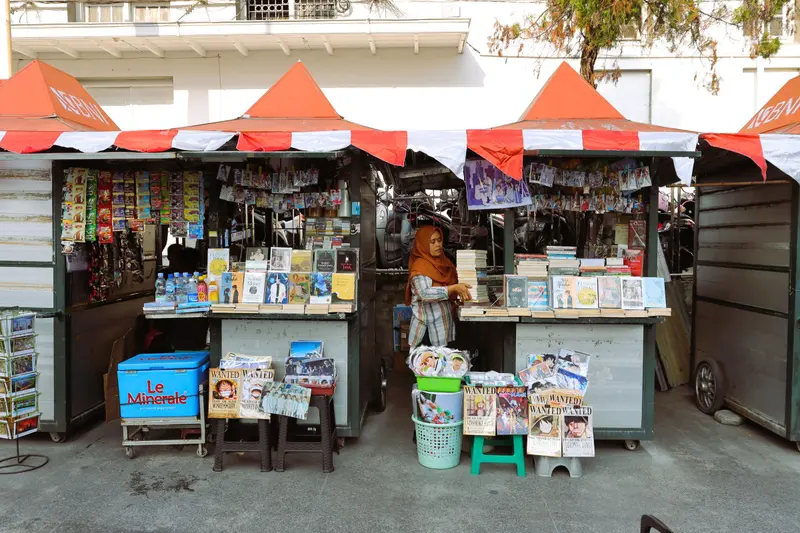
Gejayan & Demangan
71 cafés
Seturan & Babarsari
52 cafésIn Kraton & Prawirotaman, also browse: Wi-Fi Open late Outdoor seating
FAQ
Kraton & Prawirotaman cafés: questions
What are the opening hours of the Kraton and Taman Sari in Yogyakarta?
The Kedhaton, the main visitor section of Yogyakarta's Kraton, opens Tuesday to Sunday from 08:30 to 14:30 and is closed on Mondays. Taman Sari, the royal water garden, opens daily from 09:00 to 15:00. As of December 2025, adult tickets to Taman Sari cost Rp15,000 for Indonesians and Rp25,000 for foreign visitors.
Where is specialty coffee near Prawirotaman in Yogyakarta?
Ketemu Kopi & Roastery is on Jalan Mangkuyudan, west of Prawirotaman, and Maige Coffee Roastery is on Jalan Tirtodipuran. For coffee on Jalan Prawirotaman itself, Dropshot Espresso Bar opens daily 08:00–23:30. For a later coffee, Tirana art house & kitchen on Jalan Suryonodiningratan stays open until midnight.
Should you buy kopi luwak near Taman Sari in Yogyakarta?
Think twice. Kopi luwak comes from coffee cherries eaten and excreted by palm civets, and conservationists oppose it. A 2016 study of 16 civet-coffee plantations on Bali found all 48 caged civets in very poor housing. Caged and wild-sourced beans are hard to tell apart, and the study authors advise avoiding any place that keeps civets in cages.
For café owners
Own a café in Kraton & Prawirotaman?
Free listings are free for good. A featured page gives you photos, a menu and your own URL, in your café's own design, for less than a coffee a day.