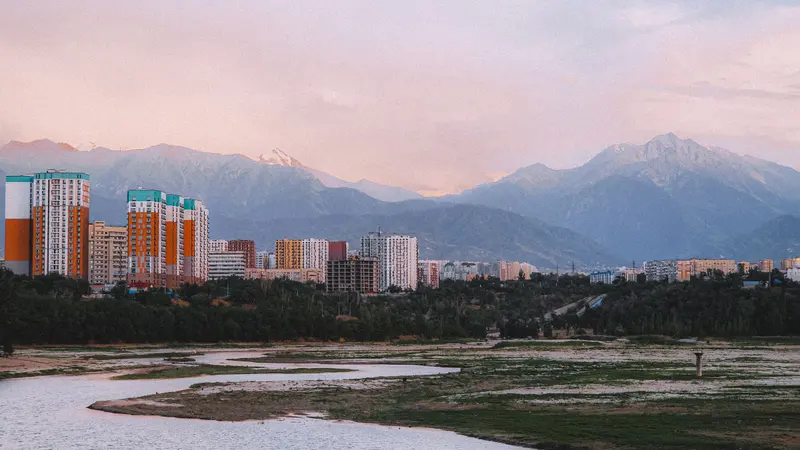
Almaty · Kok-Tobe & Medeu
Cafés in Kok-Tobe & Medeu
Coffee Art near Kasteev's house-museum, Kompot's fruit-named streets, and the six-minute cable car up Kok-Tobe hill.
Photo: White Noiise, Pexels License
Kok-Tobe (Көктөбе, "green hill" or "blue hill" in Kazakh) rises to 1,130 m in the southeast of Almaty; in the 1960s it went by Verigina Gora.1 At the foot of the hill lies Kompot, the unofficial name for a few quarters of Medeu district bounded by Satpayev Street, the Zharbulak river, Bogenbay Batyr Street and the Malaya Almatinka river.3
The cafés are scattered through the low-rise streets rather than gathered on one avenue. Coffee Art is at block 4, Bekkhozhin 15A, on the same street as the Kasteev house-museum, and Cream sets tables indoors and out at Lugansky 143. Luffy coffee & Art1 trades at Begalin 62, and Tengri, with indoor seating, is at Tattimbet 9/1.
Local tip: Take the cable car rather than the serpentine road: the ride shows Kompot's orchards from above and covers 1,727 m in six minutes.1
At a glance
7Cafés listed
0With opening hours
–Earliest opening
–Latest closing
- Most common features: indoor seating (29%), outdoor seating (14%).
Cream
- Outdoor seating
- Indoor seating
Антикафе Ваниль #1 в Алматы
Antikafe Vanil #1 V Almaty
Европолис
Yevropolis
Luffy coffee & Art1
Tengri
- Indoor seating
Медеу
Medeu
Nothing matches those filters here. See all cafés in Almaty.
Kompot: apple, cherry and pear streets
Kompot is the Russian word for a drink of stewed fruit, and the name comes from the old dacha streets here: Yablochnaya (Apple), Vishnevaya (Cherry) and Grushevaya (Pear).3 You won't find it on any map, but locals know the way.3 Many single-story houses survive from the 19th century, when the town was still called Verny, painted in bright colors with carved shutters and window frames.3
Big apple orchards once grew here, and Kompot also had more lilac gardens than any other part of the city, though building has left the lilac in only a few spots.4 Two of the fruit streets now carry people's names. Vishnevaya became Amanzholov Street, after the linguist Sarsen Amanzholov who lived on it, and Grushevaya became Zverev Street, after the zoologist Maxim Zverev, a founder of the city zoo, who lived there from 1944.3
Kasteev's house on Bekkhozhin Street
From 1958 the painter Abylkhan Kasteev lived in a house built for his large family on the orders of Dinmukhamed Kunaev, then head of the Kazakh SSR's council of ministers.3 Since 2004 it has been a museum at Bekkhozhin 6a, with the living room, three bedrooms, studio, kitchen, veranda and garden kept as they were.3 Coffee Art, further along the same street at No. 15A, is the nearest cup.
Kompot's other landmark is a tree. The largest oak in Almaty, put at 180 to 300 years old, has a trunk more than 3 m across and stands over 20 m tall at the corner of Zverev and Shevtsova streets, inside the grounds of a kindergarten.3 The sculptor Khakim Nauryzbayev, who made the Abay monument in front of the Palace of the Republic, also lived in the quarter.4
Up Kok-Tobe
The cable car opened on 4 November 1967 and climbs 1,727 m in six minutes, passing over the private houses and gardens of Kompot on the way.1 In spring 2004, after heavy rain, cracks opened on the hill and the ground began to slide toward the homes below, so the akimat (city hall) closed it.1
To hold the slope, engineers drilled 395 shafts up to 24 m deep and filled them with concrete, and illegally built structures on the summit, most of them cafés, were torn down.1 Kok Tobe Park opened in 2006; in May 2007 a group of fans put up the first monument to The Beatles in the CIS, and the park's wishing fountain is shaped like an apple.1
The tower and the general plan
On the hill's upper slopes stands the Almaty TV tower, 371.5 m of steel tubing built between 1975 and 1983, the tallest free-standing tubular steel structure in the world.2 Its observation decks at 146 m and 252 m are closed to the public, and a 20 m by 8 m mosaic of satellites and cosmonauts on its north-western side marks the launch of Soyuz T-12.2
In June 2026, residents campaigned against a general plan that would have replaced Kompot's private houses with apartment blocks.6 That September, the head of the city's architecture department said the revised plan returned Kompot and Kok-Tobe to a zone of individual houses, and state experts approved it on 21 September.5 Antikafe Vanil, Европолис (Yevropolis) and Медеу (Medeu) complete the area's coffee stops, at Zoya Kosmodemyanskaya 37, Zhamal Omarova 23A and Baikonurskaya 1/1.
Sources
- Кок-Тобе, Wikipedia (Russian), accessed November 2026
- Almaty Tower, Wikipedia, accessed November 2026
- "Компот" - воспоминания об одноэтажном Алматы, Tengrinews, 14 November 2023, accessed November 2026
- «Компот». Уникальный район Алматы, с которого начинался город, WE project, 18 May 2020, accessed November 2026
- Планы по застройке района «Компот» изменили в Алматы, Kazinform, 28 September 2026, accessed November 2026
- Снос легендарного Компота в Алматы. Жители против, а что в новом Генплане?, Tengrinews, 16 June 2026, accessed November 2026
Keep exploring
More of Almaty
Arbat & Green Bazaar
24 cafés
Golden Square
70 cafés
Samal & Dostyk
30 cafés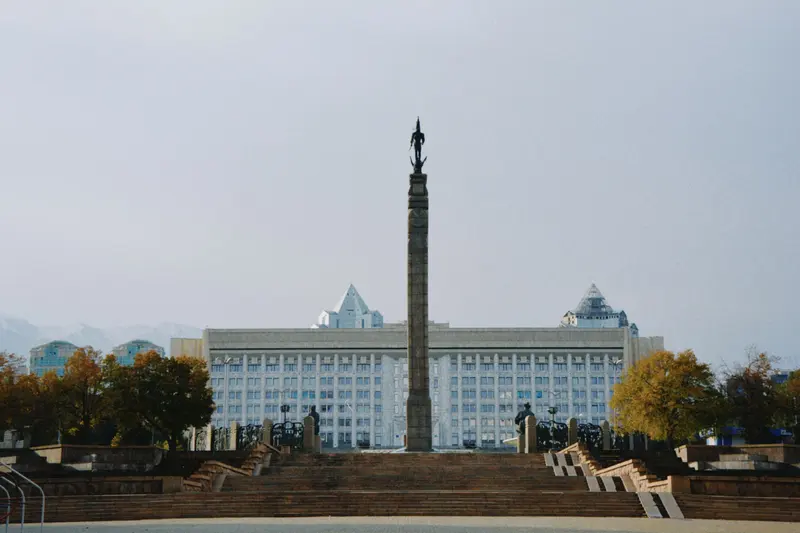
Satpayev & Republic Square
21 cafés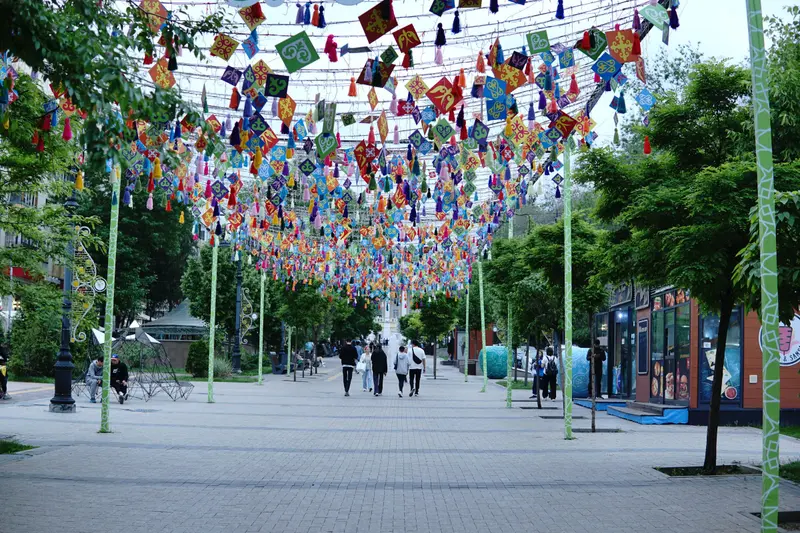
Almaly
42 cafés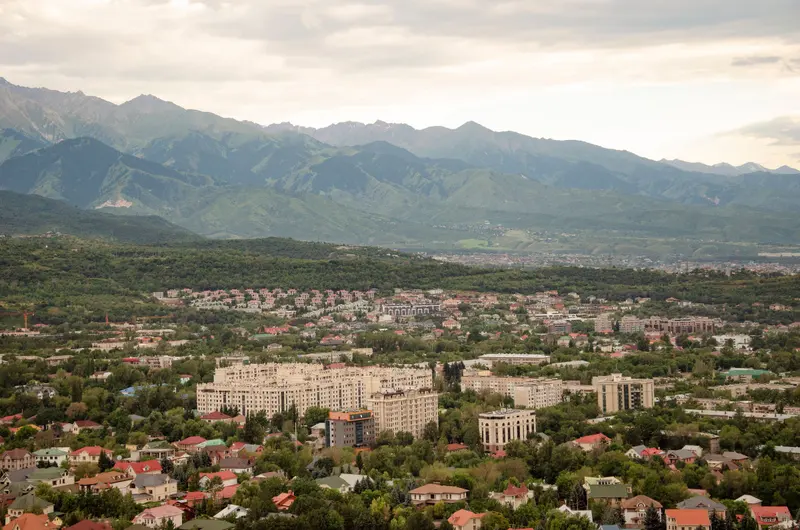
Bostandyk
59 cafésAuezov & Sairan
35 cafésRaiymbek & Almaty-2
7 cafésIn Kok-Tobe & Medeu, also browse: Outdoor seating
FAQ
Kok-Tobe & Medeu cafés: questions
What is the Kompot quarter below Kok-Tobe in Almaty?
Kompot is the unofficial name for a few quarters of Almaty's Medeu district below Kok-Tobe, named after its old fruit streets, Apple, Cherry and Pear. It keeps 19th-century single-story houses with carved shutters, and the Kasteev house-museum on Bekkhozhin Street.
Which café is near the Kasteev house-museum below Kok-Tobe in Almaty?
The Kasteev house-museum is at Bekkhozhin 6a in Kompot, at the foot of Kok-Tobe in Almaty. Coffee Art is further along the same street at Bekkhozhin 15A, and Cream is on Lugansky Street with seating indoors and out.
How long is the Kok-Tobe cable car ride in Almaty?
The Kok-Tobe cable car, opened in 1967, runs 1,727 m and takes about six minutes, passing over the gardens of the Kompot quarter to Kok Tobe Park at the top of the hill.
For café owners
Own a café in Kok-Tobe & Medeu?
Free listings are free for good. A featured page gives you photos, a menu and your own URL, in your café's own design, for less than a coffee a day.