Kathmandu · Balaju & Samakhusi
Cafés in Balaju & Samakhusi
Neighborhood cafés and café-bars near Baisdhara's 22 stone spouts, Nepal's first industrial estate and Naya Bus Park.
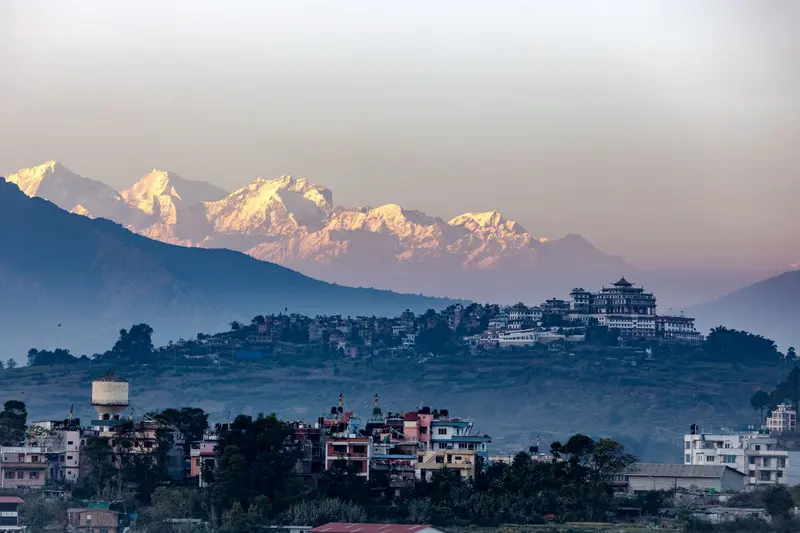
Photo: Volker Meyer, Pexels License
Samakhusi sits about 2 km from the center of Kathmandu, with Ranibari to its east, Gongabu to the north, Balaju to the west and Golkopakha, toward Thamel, to the south.1 Its road has long carried people from Tokha, Nuwakot, Jhor and Kakani into the city, and its low-lying streets are prone to flooding in the monsoon.1
The cafés here are neighborhood places rather than destinations, and several double as bars, such as Blue Mimosa cafe and Bar and North Cafe and Bar. Tets is on Shanti Milan Marga, and Coffee Buzz, Elixir Cafe, Piro Piro Cafe, Balcha cafe and Samrat Cafe & Restaurant round out the area.
Local tip: Avoid driving through Balaju during the Baisdhara fair at the April full moon: in 2024 traffic past the spouts was diverted as worshippers arrived from early morning.2
At a glance
8Cafés listed
0With opening hours
–Earliest opening
–Latest closing
Balcha cafe
Blue Mimosa cafe and Bar
Coffee Buzz
Elixir Cafe
North Cafe and Bar
Piro Piro Cafe
Samrat Cafe & Restaurant
Nothing matches those filters here. See all cafés in Kathmandu.
Baisdhara and its twenty-two spouts
Baisdhara means "22 taps" in Nepali.2 Around Nepal Sambat 875, Jaya Prakash Malla, the last Malla king of Kantipur, set up a dhungedhara (stone water spout) here, and the number of streams later grew to twenty-two.2 The spouts stand below the Nagarjun forest on the northwest side of the valley, in a park of about 162 ropani with shrines to Vishnu, Shiva and other gods.2
The hill above, Jamacho, is called Nagarjun after the Mahayana philosopher Acharya Nagarjuna, who is said to have reached siddhi (spiritual attainment) meditating in one of its caves.2 Hindus and Buddhists both hold the place sacred.2
Every year a fair is held there on a full-moon day in April.23 The local Newa community calls it Lhuti Punhi, and bathing at Baisdhara is said to bring the same blessings as bathing at Muktinath or Gosaikunda; some families also light a lamp for a dead relative.2 For the five-day fair in 2024, the organizers expected 230,000 people and let water run from all 22 taps.2
Nepal's first industrial estate
Balaju Industrial Estate was the country's first, set up with American assistance in 1959 as part of the first elected government's plan to industrialize; ten more estates followed over the next 30 years.4 Another Kathmandu Post report dates its opening to 1960, with the support of the US government.5
In 2022 it covered 670 ropanis, with 97 factories operating, 26 under construction and eight closed, and it employed 3,506 people.4 Medium-scale industry dominates in Balaju, unlike the cottage industries of the Patan and Bhaktapur estates.4 When it opened, there were no dense settlements around it; today it is surrounded by houses.4
Naya Bus Park in Gongabu
Gongabu Bus Park, better known as Naya Bus Park (नयाँ बसपार्क, "new bus park"), opened on the Ring Road in 1999, built in collaboration with JICA.6 Kathmandu Metropolitan City owns it, and Lohtse Multi-Cooperatives runs it.6 Since 2023, long-distance buses from Kathmandu to places outside the valley have had to depart from here.6
Upgrades from 2015 to 2017 raised parking from 450 to 800 spaces, and 56 ticket stalls were added in 2023 to its 47 counters.6 About 1,500 vehicles use it on a busy day, making it the country's biggest and busiest bus station; Sajha Yatayat and smaller private companies run the local services.6
Sources
- Samakhushi, Wikipedia, accessed November 2026
- Balaju Baisdhara Mela: Historical heritage of the Malla period, centre of religious faith (23 April 2024), Onlinekhabar English, accessed November 2026
- Crowd of people filling the Balaju Baisdhara fair (12 April 2025), Kantipur, accessed November 2026
- Blast at oxygen plant prompts calls to shift hazardous industries (25 April 2022), The Kathmandu Post, accessed November 2026
- Govt initiates process of building industrial area (26 February 2017), The Kathmandu Post, accessed November 2026
- Gongabu Bus Park, Wikipedia, accessed November 2026
FAQ
Balaju & Samakhusi cafés: questions
What is Baisdhara in Balaju, Kathmandu?
Baisdhara means 22 taps: a set of stone water spouts below the Nagarjun forest that dates from the Malla period, in a park of about 162 ropani with shrines to Vishnu and Shiva. A five-day fair, Lhuti Punhi to the Newa community, is held there at the April full moon.
Where do long-distance buses leave from near Balaju and Samakhusi, Kathmandu?
From Gongabu Bus Park, known as Naya Bus Park, on the Ring Road north of Samakhusi. Since 2023, long-distance buses from Kathmandu to places outside the valley have had to depart from there; it opened in 1999 and is the country's busiest bus station.
What kind of cafés are in Balaju and Samakhusi, Kathmandu?
Small neighborhood cafés, several of which double as bars, such as Blue Mimosa cafe and Bar and North Cafe and Bar. Tets is on Shanti Milan Marga, and Coffee Buzz, Elixir Cafe, Piro Piro Cafe and Samrat Cafe & Restaurant are in the same area.
For café owners
Own a café in Balaju & Samakhusi?
Free listings are free for good. A featured page gives you photos, a menu and your own URL, in your café's own design, for less than a coffee a day.