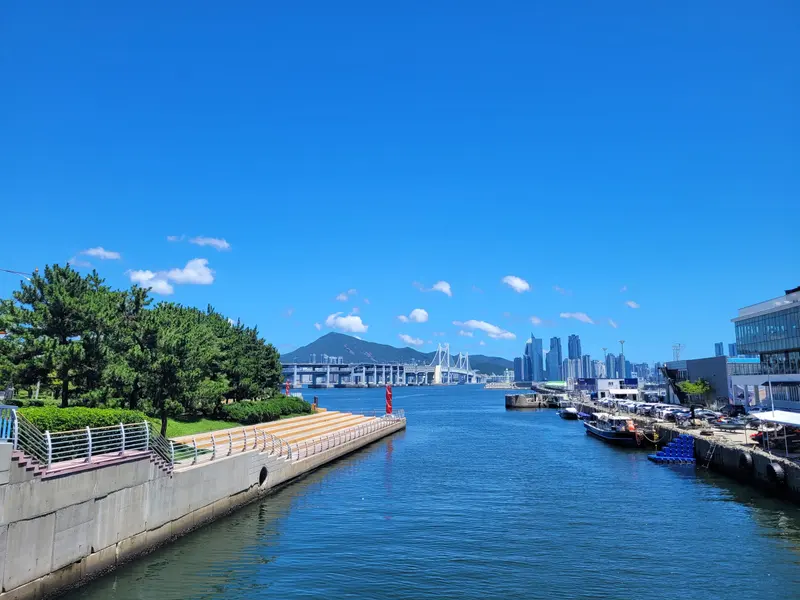
Busan · Suyeong & Mangmi-dong
Cafés in Suyeong & Mangmi-dong
Terarosa in the F1963 wire factory, a roaster on Gwajeong-ro and small cafés along Mangmibeonyeong-ro and Yeonsu-ro.
Photo: Laura Lee Van Herck, Pexels License
Suyeong-gu is named after Gyeongsang Jwasuyeong (경상좌수영), the Joseon navy command for the left half of Gyeongsang province, and became a district of its own in 1995, when it separated from Nam-gu.1 The command's fortress in Suyeong-dong was about 2,784 m around and 4 m high, with four gates, and the headquarters stayed there until the naval forces were disbanded in 1895.2
Mangmi-dong is the district's industrial side. The steel-wire maker Kiswire opened its first factory here in 1963 and ran it for 45 years; after it closed in 2008, the company kept the building's shape and frame and turned it into F1963, a cultural complex with a café, a bookstore, galleries and gardens.3
At a glance
25Cafés listed
0With opening hours
–Earliest opening
–Latest closing
- Most listed streets: Suyeong-dong (2), Gwangan-dong (2).
- Most common features: wi-fi (4%), specialty (4%), bakery café (4%).
Dumbcoffeebar
Feivor Coffee
Hio Coffee
J.ake
Owooker
Pause
Tata Espresso Bar
Terarosa
고래커피로스터스
그앞
꽃피는 4월 밀익는 5월
레이블커피
마이더치커피
메이시스
상현달 커피
샐아웃
우사기카페
커피이십센치
플레인에떼
헤이채즈
Hej.chez
헬로커피하이허니
그린노마드
망미제과
프루토프루타
Nothing matches those filters here. See all cafés in Busan.
Coffee chains in Suyeong & Mangmi-dong
Chain
Mega MGC Coffee
Show 4 locations
Chain
Starbucks
Chain
Ediya Coffee
Chain
A Twosome Place
Chain
Hollys Coffee
Chain
Compose Coffee
Chain
Hasamdong Coffee
Chain
The Venti
F1963 and its Terarosa café
The F stands for factory and 1963 for the year the plant opened. After closing it served as a warehouse, then as an exhibition hall for the Busan Biennale in 2016.4 The Terarosa café at Gurak-ro 123beon-gil 20 is fitted out with pieces of the old plant, including wire-winding drums and iron-plate bars.4 The same complex holds Praha 993, a Czech beer restaurant.4
Yes24 runs its largest flagship bookstore in Korea here, selling used books, and the F1963 Library is a members-only art library of about 13,000 volumes.3 Kukje Gallery uses part of the building for larger exhibitions, the Moonlight Garden occupies a former shipping yard, and the Bamboo Sori Trail runs through a green strip outside.3
Getting to Mangmi-dong
F1963 is about five minutes by maeul bus (마을버스, neighborhood minibus) from Mangmi station on Line 3.5 Line 3 begins at Suyeong station, which is also on Line 2, the line that crosses Suyeong-gu from Millak to Namcheon.1 The Suyeonggang river forms the district's northeastern edge.1
Studios and galleries around Mangmi station
Artists' studios and small exhibition spaces have opened around Mangmi station.5 Kukje Gallery's Busan branch opened at F1963 in 2018, and Gallery May moved here from Seoul in 2019.5 The office of Art Busan, the international art fair, is a five-minute walk from F1963; the fair's previous edition had drawn more than 63,000 visitors when Weekly Kyunghyang reported on the area in February 2020.5 B-Con Ground (비콘그라운드), a complex built from containers under the Suyeong overpass, is run by the Busan Urban Regeneration Support Center.5
Cafés on Mangmibeonyeong-ro, Gwajeong-ro and Yeonsu-ro
The specialty roaster here is 고래커피로스터스 at Gwajeong-ro 16beon-gil 20, and Tata Espresso Bar is in Gwangan-dong. Gwajeong-ro also has 마이더치커피 on a second floor at no. 18-1, and 샐아웃 is on Gwajeong-ro 30beon-gil. Along the lanes of Mangmibeonyeong-ro sit Pause on 52beon-gil, the bakery café 꽃피는 4월 밀익는 5월 on 70beon-gil and 헬로커피하이허니 on 85beon-gil.
Hej.chez (헤이채즈) and 그앞 share Yeonsu-ro 357beon-gil, Deepsleepcoffee and Hio Coffee are on Suyeong-ro at nos. 663 and 675, and Owooker on Suyeong-ro 660beon-gil has Wi-Fi.
What remains of the Joseon fortress
The command post had moved twice before it came to Suyeong-dong just before the Imjin War, and after a spell at Gammanipo it returned here for good in 1652.2 Most of the fortress fell into ruin during the Japanese colonial period; parts of the wall, the arched south gate and the drainage outlets survive.2
Sources
- Suyeong District, Wikipedia, accessed October 2026
- Fortress site of Gyeongsang Jwasuyeong, Wikipedia, accessed October 2026
- A Factory of the Arts: How Did an Old Wire Factory Become One of Busan's Cultural Landmarks?, Korean Culture and Information Service, Korea webzine (October 2022), accessed October 2026
- F1963 TERAROSA Suyong Branch, Busan Navi (updated September 25, 2022), accessed October 2026
- 부산의 '망미동'과 도시재생 과제, Weekly Kyunghyang (Jeong Pil-ju, February 18, 2020), accessed October 2026
Keep exploring
More of Busan
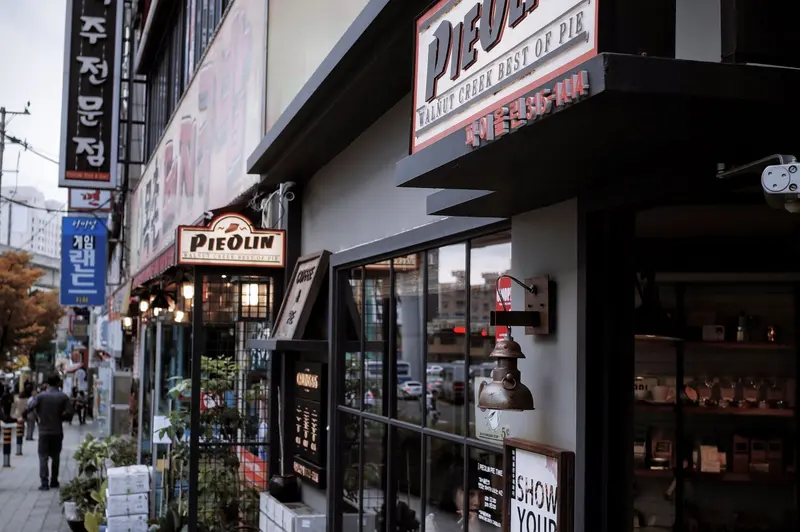
Jeonpo Café Street
95 cafés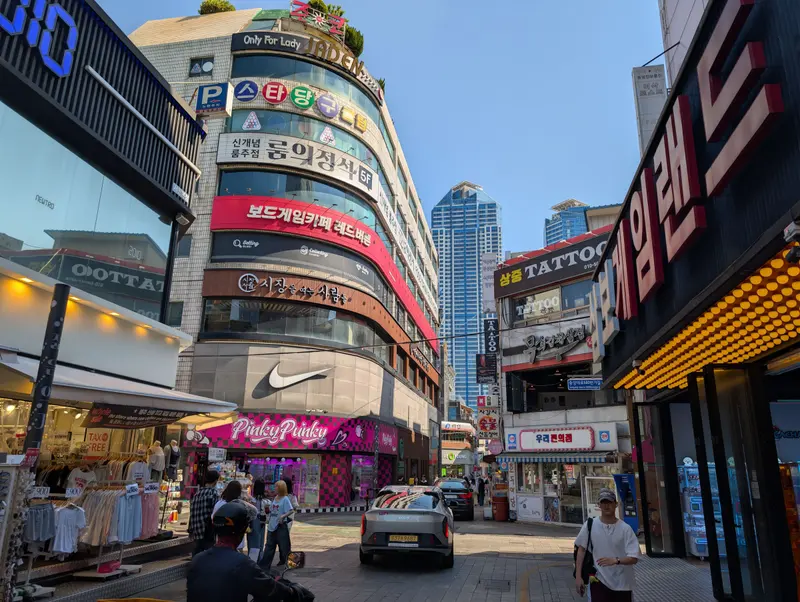
Seomyeon
39 cafés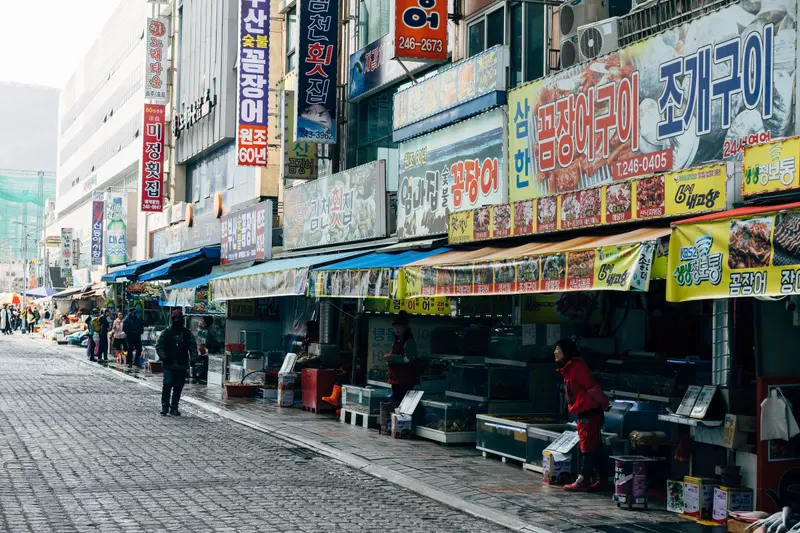
Nampo-dong & Jungang-dong
49 cafés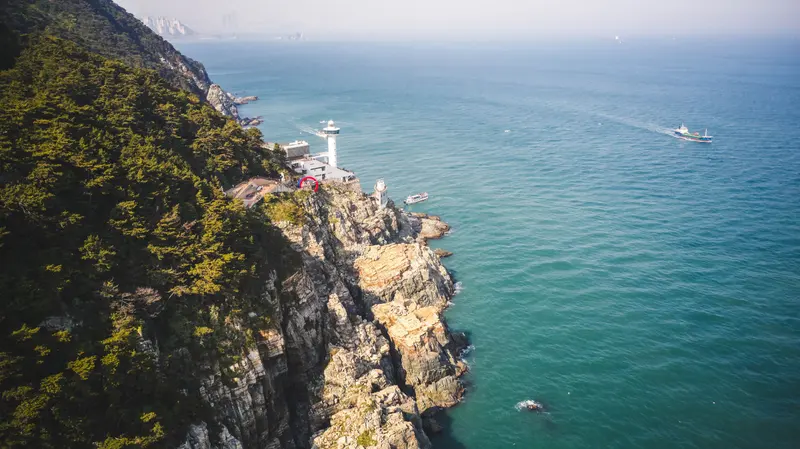
Yeongdo
27 cafés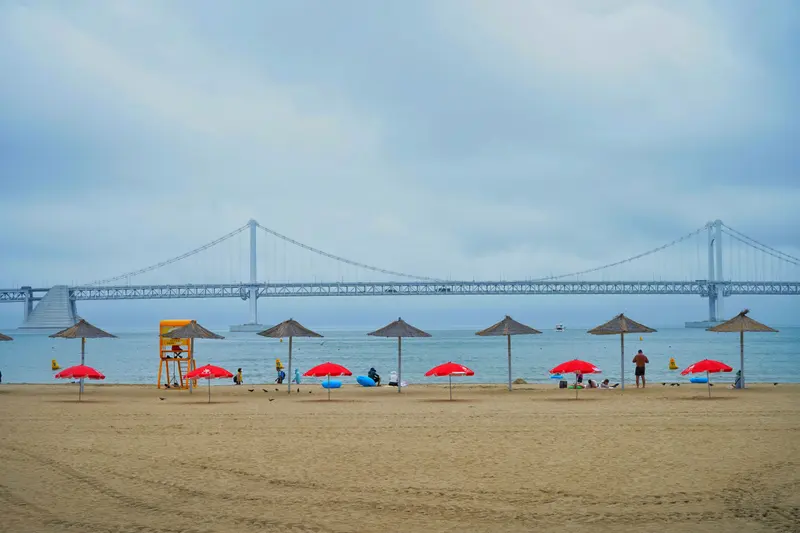
Gwangalli & Namcheon-dong
58 cafés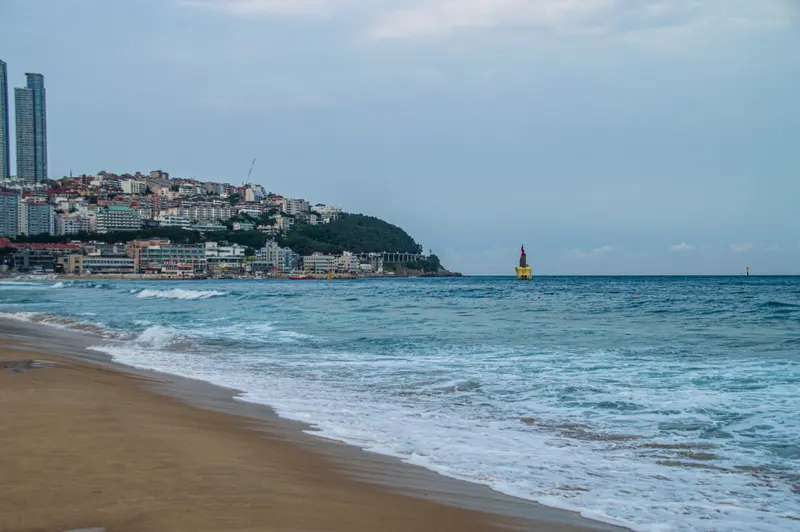
Haeundae Beach & Haeridan-gil
30 cafés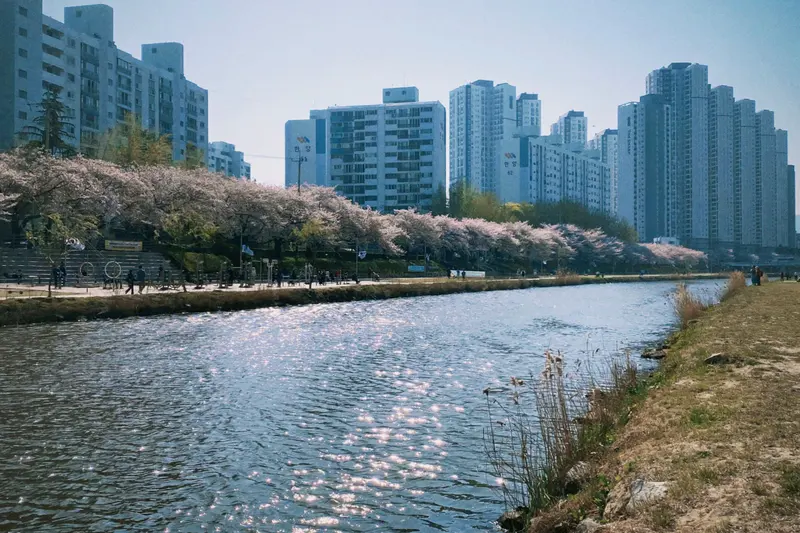
Oncheoncheon Café Street
18 cafésIn Suyeong & Mangmi-dong, also browse: Specialty coffee Wi-Fi Bakery cafés
FAQ
Suyeong & Mangmi-dong cafés: questions
What is F1963 in Busan's Mangmi-dong?
F1963 is a cultural complex in Mangmi-dong, Suyeong-gu, built in the first factory of the steel-wire maker Kiswire, which opened in 1963 and closed in 2008. It holds a Terarosa café fitted out with old factory parts, Yes24's largest used-book flagship in Korea, a members-only art library, Kukje Gallery and Praha 993, a Czech beer restaurant.
How do you get to F1963 and Terarosa in Busan?
Take Busan Metro Line 3 to Mangmi station; F1963 is about five minutes from there by maeul bus, the neighborhood minibus. Line 3 starts at Suyeong station, where it connects with Line 2. The Terarosa café is inside the complex at Gurak-ro 123beon-gil 20, Suyeong-gu.
Where does the name Suyeong in Busan come from?
Suyeong comes from Gyeongsang Jwasuyeong, the Joseon-era navy command for the left half of Gyeongsang province, whose fortress stood in Suyeong-dong until the naval forces were disbanded in 1895. Parts of its wall, the arched south gate and drainage outlets survive. Suyeong-gu became a separate district in 1995, split from Nam-gu.
For café owners
Own a café in Suyeong & Mangmi-dong?
Free listings are free for good. A featured page gives you photos, a menu and your own URL, in your café's own design, for less than a coffee a day.