Acıbadem & Koşuyolu
Pastaneler · Istanbul
Bakery cafés in Istanbul
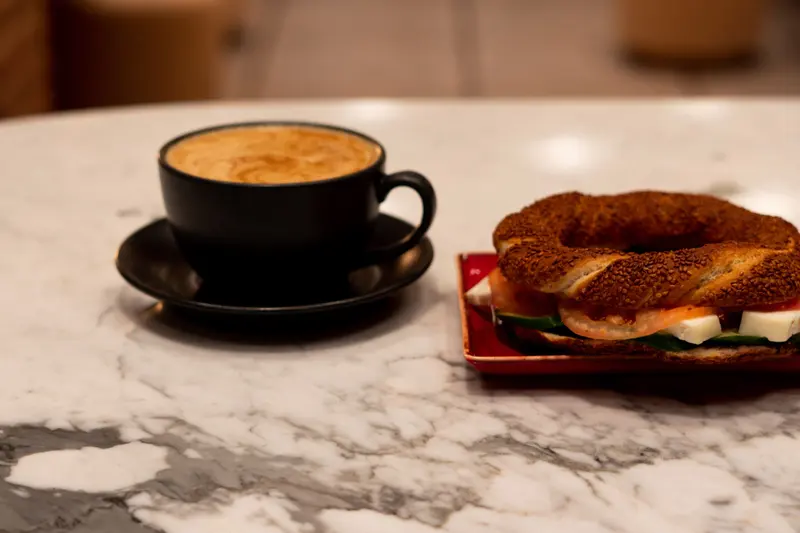
Pastaneler and fırın cafés: cakes, poğaça and simit with a glass of çay.
Photo: Sami Abdullah, Pexels License
A pastane is a patisserie with tables, and a fırın is a bakery. Istanbul's pastane tradition grew up in Pera, today's Beyoğlu. Lebon traded in the Passage Oriental until the 1940s, Markiz reopened in 2003 and closed for good in 2016, and İnci, opened in 1944 by Luka Zigoridis, became known for its profiteroles.1
Sweet shops are a separate trade. Hafız Mustafa, founded in 1864 at a shop on what is now Hamidiye Caddesi, began by making rock candy and today sells lokum, baklava and puddings.2 Among bakery cafés, Üsküdar and Şişli have the most, with Fatih and Kadıköy next and a few each in Beşiktaş, Kurtuluş, Balat and Karaköy.
Local tip: In Şişli, Çaykovski on Büyükdere Caddesi opens at 06:30 and Balkaya Pastanesi Erol Usta closes at 01:00, so a pastry and a glass of tea are possible at almost any hour.
Where these cafés are: Üsküdar (12), Şişli & Mecidiyeköy (12), Fatih & Grand Bazaar (8), Kadıköy Çarşı & Bahariye (7), Kurtuluş & Feriköy (7), Beşiktaş (6), Acıbadem & Koşuyolu (5), Balat & Fener (4), Sultanahmet (4), Karaköy (3), Galata & Şişhane (3), Cihangir & Çukurcuma (3), Moda (2), Beyoğlu, İstiklal & Taksim (2), Nişantaşı (1), Kasımpaşa & Hasköy (1).
At a glance
80Cafés listed
10With opening hours
06:30Earliest opening
01:00Latest closing
- Opens earliest: Çaykovski, from 06:30 (Daily 06:30–23:30).
- Closes latest: Aşiyan Books And Coffee, until 01:00 (Daily 10:00–01:00).
- Most common features: open late (10%), brunch (9%), wi-fi (6%).
Üsküdar
Aşiyan Books And Coffee
Şişli & Mecidiyeköy
Balkaya Pastanesi Erol Usta
Şişli & Mecidiyeköy
Çaykovski
Balat & Fener
Forno Fırın İşletmeciliği
Forno
Kadıköy Çarşı & Bahariye
Montag Coffee & Roasters
Fatih & Grand Bazaar
Türkistan Kültür Evi - Kitap & Kahve
- Outdoor seating
- Card payment
- Smoke-free indoors
- Bakery café
Kadıköy Çarşı & Bahariye
26A
Collective 26A
Sultanahmet
Frida Coffee
Moda
180 Coffee Bakery
Beşiktaş
A De Lauren Bakery
Beşiktaş
Asya Fırın Cafe
Karaköy
 La Lune Patisserie - Karaköy (Kruvasan & Kahve)
Üsküdar
 La Lune Patisserie - Üsküdar (Kruvasan & Kahve)
Beşiktaş
B BLOK Akaretler
Beyoğlu, İstiklal & Taksim
Barcelona Cafe & Patisserie
Sultanahmet
BARK Coffee & Bakery
Fatih & Grand Bazaar
Bedesten Cafe & Patisserie
Üsküdar
Bera Patisserie
Üsküdar
Cappadocia Coffee & Bakery
Şişli & Mecidiyeköy
Çevre Pastanesi
Karaköy
Coffe'n Bakery
Kadıköy Çarşı & Bahariye
Coffee Pots
Üsküdar
Değirmen Pastanesi
Üsküdar
Değirmen Pastanesi
Üsküdar
Dokuz Patisserie & Coffee (DOQUZ)
Sultanahmet
Dudu Bakery Coffee
Beşiktaş
Ekinciler Firini
Balat & Fener
Faro Caffe and Patisserie
Balat & Fener
Ferm Coffee & Bakery
Kadıköy Çarşı & Bahariye
Firinci Pasta&cafe
Üsküdar
Fıstıkağacı Cafe Pastane
Galata & Şişhane
Freddo Galata Cafe & Patisserie
Acıbadem & Koşuyolu
Görgülü Kafe Pastane
Cihangir & Çukurcuma
Grandma Artisan Bakery
Şişli & Mecidiyeköy
Hanzade Kafe Patisserie
Nothing matches those filters here. See all cafés in Istanbul.
Baylan and the old patisseries
Baylan opened in Beyoğlu in the early years of the Republic, in 1923, and its Kadıköy branch followed in 1961; kup griye, its sundae, was born there.1 The Kadıköy shop is at 19 Muvakkithane Caddesi, with limited wheelchair access.
A few other old names survive. Savoy, a Beyoğlu patisserie from 1950, is on Sıraselviler Caddesi in Cihangir; Day Day has been in the Grand Bazaar since 1969; and Üstün Palmie has been in Şişli, on the Kurtuluş–Feriköy line, since 1970.1 Beyaz Fırın, dated to 1836, started in Balat and later moved to Kadıköy.1
Neighborhood pastaneler in Fatih, Şişli and Kurtuluş
In Fatih, the pastaneler include Dilek Pastanesi on Dolap Caddesi, Merhaba Pastaneleri on Macar Kardeşler Caddesi, Uğur Pastanesi on Yavuz Selim Caddesi and Zuhal Pastanesi on Mıhçılar Caddesi.
Şişli's keep long hours. Balkaya Pastanesi Erol Usta, on Şehit Er Cihan Namlı Caddesi, is open 07:00–01:00, Çaykovski at 3 Büyükdere Caddesi 06:30–23:30 with Wi-Fi, and Gül Pastanesi 07:00–21:00 with breakfast. In Kurtuluş, Akat Pastanesi is at 2 Sıra Cevizler Caddesi.
Üsküdar, Balat and the newer bakeries
Üsküdar has Değirmen Pastanesi on Sırmaperde Sokağı and Fıstıkağacı Cafe Pastane, plus two book cafés with pastries: Aşiyan Books And Coffee on Selman Ağa Çeşme Sokağı, open 10:00–01:00, and Nevmekan Kuzguncuk, a municipal library café on Çifteçınar Sokağı.
In Balat, Forno on Fener Kireçhane Sokağı serves 09:00–22:00, and Panvino Balat at 110 Vodina Caddesi does breakfast. Le Petit Pera, on Ali Paşa Değirmeni Sokağı in Karaköy, is known for its coffee, croissants and pastries.3 Tarhun Fırın is on Jandarma Mektebi Sokak in Beşiktaş, homevibe on Şimşirci Sokağı in Cihangir, and 26A, also called Collective 26A, on Sakız Sokak in Kadıköy, open 10:00–22:00.
Simit, poğaça and a glass of çay
The savory staples are simit and poğaça. Simit, a bread ring usually coated in sesame, has a long Istanbul record: its weight and price were fixed in Üsküdar in 1593, and Evliya Çelebi counted 70 simit bakeries in the city in the 1630s.4 Sellers carry it on trays or push it on carts, calling "Taze simit!" (fresh simit), and it is traditionally eaten with tea.4
Poğaça is a small bread, usually made with yeast, egg and butter and often filled with white cheese, olives, potato or minced meat.5 In Istanbul a simit went from 25 to 30 TL on 26 September 2026, after bakers pointed to higher costs for flour, sesame and yeast.6
Sources
- Istanbul's Historical Patisseries and Dessert Stops, İGA Istanbul Airport, accessed October 2026
- Hafiz Mustafa 1864, Wikipedia, accessed October 2026
- Karaköy'de Kahve İçebileceğiniz En Güzel 12 Mekan (June 11, 2026), Yemek.com, accessed October 2026
- Simit, Wikipedia, accessed October 2026
- Poğaça, Wikipedia, accessed October 2026
- İstanbul'da simide zam: 30 liraya çıktı (September 26, 2026), Evrensel, accessed October 2026
Keep exploring
Other ways to browse Istanbul
Nitelikli kahve
Specialty coffee
37 cafés
Açık hava
Outdoor seating
137 cafés
Wi-Fi
Wi-Fi
114 cafés
Geç saate kadar açık
Open late
130 cafés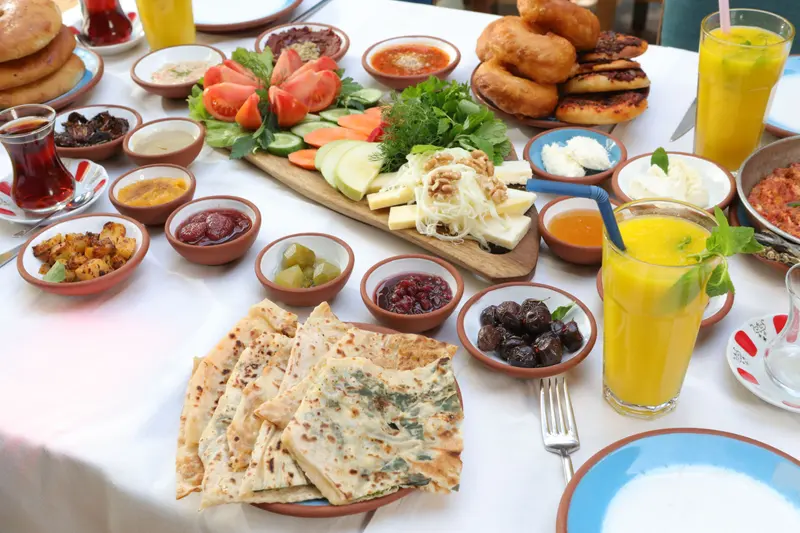
Kahvaltı
Breakfast & brunch
28 cafésBy area: Balat & Fener Sultanahmet Karaköy Galata & Şişhane Cihangir & Çukurcuma Beyoğlu, İstiklal & Taksim Moda Kadıköy Çarşı & Bahariye
FAQ
Bakery cafés in Istanbul: questions
When did Baylan and Istanbul's other old pastaneler open?
Baylan opened in Beyoğlu in 1923 and in Kadıköy in 1961, where its kup griye sundae was created. İnci opened in Beyoğlu in 1944 and became known for profiteroles, Savoy on Sıraselviler Caddesi dates from 1950, Day Day in the Grand Bazaar from 1969, and Üstün Palmie in Şişli from 1970.
What should you order at a bakery café in Istanbul?
With tea, try a simit, the sesame-coated bread ring, or a poğaça, a soft bread often filled with white cheese, olives, potato or minced meat. A simit cost 30 TL in Istanbul from 26 September 2026. For something sweet, Baylan in Kadıköy is the home of kup griye.
Which bakery cafés in Istanbul open early or close late?
Şişli has the longest hours: Çaykovski at 3 Büyükdere Caddesi is open 06:30–23:30, Balkaya Pastanesi Erol Usta on Şehit Er Cihan Namlı Caddesi 07:00–01:00, and Gül Pastanesi 07:00–21:00. In Üsküdar, Aşiyan Books And Coffee serves 10:00–01:00, and Forno on Fener Kireçhane Sokağı in Balat 09:00–22:00.
For café owners
Your café deserves better than a pin someone else dropped
Free listings are free for good. A featured page gives you photos, a menu and your own URL, in your café's own design, for less than a coffee a day.