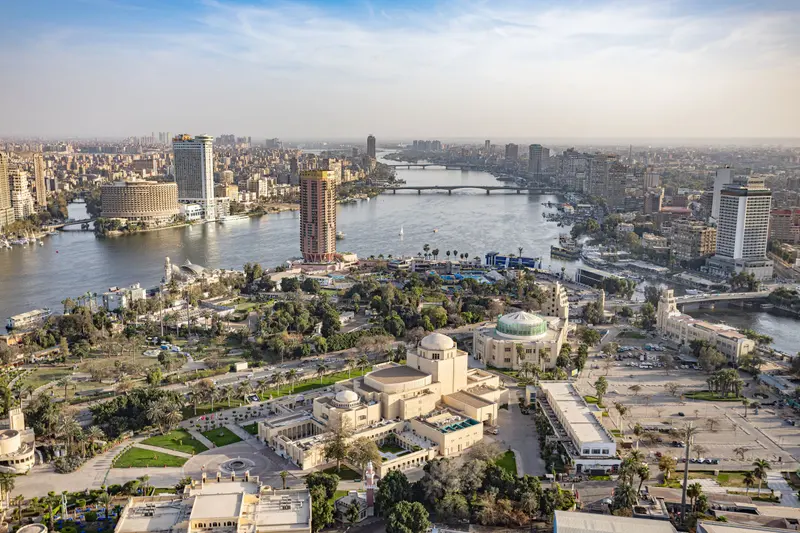
Cairo · Abbasiya & Hadayek el-Kobba
Cafés in Abbasiya & Hadayek el-Kobba
Ahwas on El-Khalig El-Masry and El-Geish streets, Mahfouz's Coffeehouse district and tables facing Koubbeh Palace.
Photo: PhotoByMau PhotoByMau, Pexels License
Abbasiya lies between the old city and Heliopolis, and Hadayek el-Kobba (حدائق القبة, the Qubba gardens) spreads north of it toward Koubbeh Palace. Before any coffee was poured here, the Mamluks and the Ottomans fought a battle on this ground in 1517, and the area was called Ridaniya after it.1 Abbas I, who ruled Egypt from 1848 to 1854, wanted somewhere quiet and built himself a palace in the desert here.1 The modern district is named after him.7
This is a residential, working side of Cairo, home to Ain Shams University, and the cafés follow long through-streets rather than one square.1 Abbasiya itself is made up of five shiakhas (census blocks) of al-Wayli district, which is why Soltana cafe's address, 185 Sikkat al-Wayli, carries the district's name.7
Local tip: Come by Line 1 to Saray El-Qobba for the palace side and Mounir Nights, or by Line 3 to Abbassiya for the cathedral and the university; Line 3 has run to Abbassiya since February 2012.8
At a glance
32Cafés listed
0With opening hours
–Earliest opening
–Latest closing
Black Horse Restaurant and Cafe
Dino Cafe
Ezzy Cafe
Mounir Nights - ليالي منير
Regancy cafe
Soltana cafe
Villa 90
Zada
المعلم
سفاري كافيه
كافية النخيل
كافيه لندن
Africano Cafe
Bubbles Cafe and Restaurant
Cafe La Rose
Cavo
Cloud coffe
Ezz Café
Hekaya cafe
KOKO Oriental Restaurant & Cafe
Lina cafe
Piccadilly Cafe
Plus90
Rokna Cafe - ركنه كافيه
الزعبليطى كافيه
بالون دور
Ballon Dor
كافي شوب الخال
كافيه أفندينا
كـافـيه بـلازا - Blaza Café
كافيه بيت جدي
مكانى
Nothing matches those filters here. See all cafés in Cairo.
Qushtumur, Mahfouz's Abbasiya café
Naguib Mahfouz's last novel, Qushtumur, published in English as The Coffeehouse, opens on a school playground in what its publisher calls the stylish Cairo suburb of Abbasiya, where five boys become friends for life.2 They meet there in 1915, find a café named Qushtumur in their early teens and keep meeting at it, an ahwa (قهوة, coffeehouse) of coffee, water pipes and dominoes, for seven decades.3
Al-Ahram was serializing the book in 1988 when his Nobel Prize in Literature was announced.3 In the novel, east and west Abbasiya begin like opposite sides of the tracks, the green villas give way to towers, and the coffeehouse stays put.2 The district's present-day cafés keep the same neighborly names: كافي شوب الخال (Coffee Shop al-Khal, "the uncle's"), كافيه بيت جدي (Beit Gedy, "grandfather's house") and كافيه أفندينا (Afandina).
Koubbeh Palace and the Line 1 stations
Khedive Ismail built Koubbeh Palace between 1867 and 1872 on the site of a house belonging to his father, Ibrahim Pasha, and opened it in January 1873 with the wedding of his heir, Tawfiq.4 King Fouad I made it his residence from 1925, and King Farouk married Queen Farida there in January 1938.4 Fouad also added a railway station so guests could arrive by royal train, and Farouk gave the first recorded Egyptian Radio speech from the palace on May 8, 1936.5
The grounds hold a royal vehicles museum and a palace museum, and visitors tour the gardens by open-top bus.4 Mounir Nights (ليالي منير) sits opposite the palace at 121 Taqsim al-Raqaba al-Idariya, and Zada is at 88 Sheikh Ghorab Street, off Qasr al-Gomhouri Street. Line 1 of the metro, running to El Marg since 1989, stops at Kobri El-Qobba, Hammamat El-Qobba and Saray El-Qobba on this side of the district.6
Abbasiya Square, the barracks and Line 3
Ismail tied central Cairo to Abbasiya with a railway line in 1865 and filled the district with schools and the Military Academy; a racetrack, a shooting range and Greek, Italian, Jewish and Coptic hospitals followed, and the psychiatric hospital of that era still stands.1 After 1952 the British barracks became the Defense Ministry, and Nasser chose to live in the neighborhood.1 Saint Mark's Coptic Orthodox Cathedral, the Karaite synagogue of Moussa Dar'i and the Zaafaranah Palace are all here as well.7
Line 3 reached Abbassiya station on February 21, 2012, with Abdou Pasha and El-Geish stations on the run in from Attaba.8 سفاري كافيه (Safari Café) is at 52 El-Geish Street, Villa 90 at 90 Masr wal-Sudan Street, and Black Horse Restaurant and Cafe at 4 Al Qaaed. In 1950 the district's longest street, once named after Grenville, was renamed after Fakhry Abdel Nour.1
El-Khalig El-Masry and the side streets
On the Hadayek el-Kobba side, El-Khalig El-Masry Street carries two cafés a few blocks apart: كافيه لندن (Café London) at No. 19 and كافية النخيل (al-Nakhil, "the palms") at No. 70. Smaller places sit in residential lanes: Ahlawya at 72–74 Bani Faheem, Ezzy Cafe at 9 El-Fardous, Regancy cafe at 136 Haret Al Hati and Dino Cafe at 5 Mos'ad bin Youssef Street.
Farther north, المعلم (al-Moallem, "the boss") is in Block 1 of the Masaken housing blocks in Zawiya al-Hamra, on al-Nuqta Street. Abbasiya's history also includes 1879, when about 600 officers and students marched to the Finance Ministry and held Prime Minister Nubar Pasha captive, and the Cabinet fell the next day.1
Sources
- Two famous Cairo neighborhoods: A look back through history, Egypt Independent (Al-Masry Al-Youm, December 15, 2015), accessed November 2026
- The Coffeehouse (Naguib Mahfouz, trans. Raymond Stock), American University in Cairo Press, accessed November 2026
- The Coffeehouse by Naguib Mahfouz (review), The Complete Review, accessed November 2026
- Photos: Take a trip through Qubba Palace, a place of Egyptian history, Egypt Independent (November 15, 2021), accessed November 2026
- Video/Photos: Qubba Palace prepares to open its first concert to the public, Egypt Independent (February 10, 2021), accessed November 2026
- Cairo Metro Line 1, Wikipedia, accessed November 2026
- Abbassia, Wikipedia, accessed November 2026
- Cairo Metro Line 3, Wikipedia, accessed November 2026
Keep exploring
More of Cairo
Zamalek
46 cafésGarden City
10 cafés
Islamic Cairo & Khan el-Khalili
21 cafés
Downtown (Wust el-Balad)
68 cafésSayeda Zeinab
7 cafésManial & Old Cairo
16 cafés
Mohandessin & Dokki
111 cafésGiza
28 cafés
Maadi
112 cafésMokattam
29 cafés
Heliopolis (Masr El Gedida)
110 cafés
Nasr City
110 cafésShubra
30 cafésImbaba & Kit Kat
18 cafés
FAQ
Abbasiya & Hadayek el-Kobba cafés: questions
Which metro stations serve Abbasiya and Hadayek el-Kobba in Cairo?
Line 3 stops at Abbassiya, Abdou Pasha and El-Geish, and has reached Abbassiya since February 2012. On the Hadayek el-Kobba side, Line 1 stops at Kobri El-Qobba, Hammamat El-Qobba and Saray El-Qobba.
Which Naguib Mahfouz novel is set around a café in Abbasiya, Cairo?
Qushtumur, published in English as The Coffeehouse, was Mahfouz's last novel. It follows five boys who become friends on a school playground in Abbasiya in 1915 and keep meeting at the Qushtumur café for seven decades.
Which cafés are near Koubbeh Palace in Hadayek el-Kobba, Cairo?
Mounir Nights (ليالي منير) faces the palace at 121 Taqsim al-Raqaba al-Idariya, and Zada is at 88 Sheikh Ghorab Street, off Qasr al-Gomhouri Street. Saray El-Qobba on Metro Line 1 is the nearest station.
For café owners
Own a café in Abbasiya & Hadayek el-Kobba?
Free listings are free for good. A featured page gives you photos, a menu and your own URL, in your café's own design, for less than a coffee a day.