Cairo · Imbaba & Kit Kat
Cafés in Imbaba & Kit Kat
ahwas on Imbaba's own Talaat Harb Street, Kit Kat Square at the Line 3 junction, and lanes up to Warraq al-Arab.
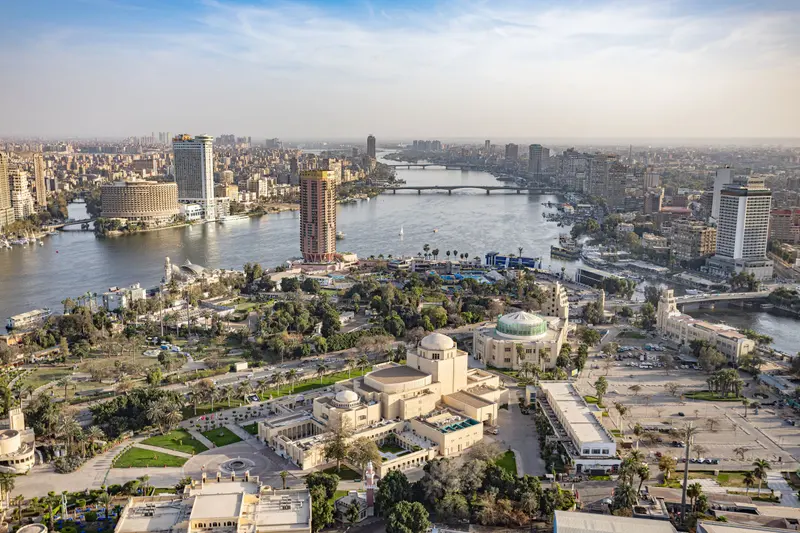
Photo: PhotoByMau PhotoByMau, Pexels License
Imbaba (إمبابة) fills the west bank of the Nile in northern Giza, and Kit Kat (الكيت كات), the square at its southern end, is the way in. The census of November 2006 counted 625,271 people in urban Imbaba, and a 2022 decree split the old North Giza district into Imbaba and West Manira.1 Until 1940 the area was run by an omda (village headman) with local sheikhs; that year a ministerial decree gave it its own police precinct.1
Coffee here is the ahwa (coffeehouse) and the small neighborhood lounge, not the espresso bar. The cafés follow the working streets: Talaat Harb Street, which shares its name with downtown's main road but is a separate street on this bank, Omar Ibn al-Khattab and Abu Bakr al-Siddiq streets, the road by the Imbaba sports club, and the lanes of Warraq al-Arab on the northern edge.
Local tip: Line 3 trains from downtown split at Kit Kat, so check the destination: for Sudan and Imbaba stations you need a train for Rod El Farag Corridor, which has run the branch since 1 January 2024.2
At a glance
18Cafés listed
0With opening hours
–Earliest opening
–Latest closing
العزوة كافيه
الوالي
خان العجوز
كوفى شوب سفينتى
Free time
قهوة العمده
alamda cofe
قهوة النمر
Alnemr Cafe
Cafeiin cafe
Dyastee Cafe
Eljizira Cafe _ كافيه الجزيره
Haboos Cafe
Ronaldinho Cafe
سلطانه كافيه
كافي بهلول
كافية قعدة مزيكا
كافيه سفينتى vip
كافيه وبن اليماني
Nothing matches those filters here. See all cafés in Cairo.
Kit Kat Square and the metro junction
Kit Kat is the western end of Metro Line 3's tunnel under both branches of the Nile from Gamal Abdel Nasser station, and the line divides here. One branch heads toward Tawfikia and Cairo University; the other, open since 1 January 2024, runs 6.6 km through six stations: Sudan, Imbaba, El-Bohy, El-Qawmia, Ring Road and Rod El Farag Corridor.2
Residents tell a story, recorded by El Watan, that the square takes its name from a nightclub owned by a dancer called Kitty, and that the club was pulled down to make way for the Khaled Ibn al-Walid Mosque.3 Murad Street runs behind the mosque with shops and cafés, and Al-Salam Street crosses it toward the Torret al-Sawahel canal. The square also keeps the Nasser Sports Club and the shell of the Kit Kat cinema, which fruit and vegetable sellers now use to store their stock.3
Talaat Harb Street and the side streets
Imbaba's Talaat Harb Street has two of the area's cafés: خان العجوز (Khan al-Agouz, the old man's inn) gives its address as No. 70, and العزوة كافيه (al-Ezwa Café, named for the support of kin) as No. 165. Ali cafe is at 2 Omar Ibn al-Khattab Street and Free time at 20 Abu Bakr al-Siddiq Street. Near the club grounds, الوالي (al-Wali) is at 2A Nadi Imbaba al-Riyadi Street.
Deeper in, قهوة العمده (Ahwet al-Omda, the headman's café) is at 1 Mahmoud Ali Abdel Hamid Street and قهوة النمر (Ahwet al-Nemr, the tiger's café) at 41 Adly Ahmed Street. The district's name may come from an Amharic word for the doum palm, used by the camel traders who met here; the older form was Nababa.1 Part of it is still called Imbaba Island, because the land once lay between two arms of the river.1
Tea at the Friday camel market
For centuries Imbaba was the last stop for camels driven from Sudan and the Horn of Africa along the Darb al-Arbaeen (the Forty Days Road), and they were sold at a market held every Friday.1 When AramcoWorld visited in 1989, Somali camels came about 2,750 km by truck and Sudanese ones walked about 1,500 km across the desert; a camel cost between US$500 and US$2,000.4
The same report found makeshift tea houses scattered around the market, where cameleers sat on worn wooden benches, smoked water pipes and swapped travel stories over strong tea.4 Donkeys, carts, sheep, goats and army-surplus clothing changed hands too. A middleman closed each camel sale by holding the hands of both buyer and seller, and a deal took 30 to 60 minutes.4
The café that was stolen: Kit Kat in fiction
Ibrahim Aslan's novel Malik al-Hazin (The Heron), first published in Arabic in 1983, follows the people of Kit Kat through one winter night on the eve of the January 1977 bread riots, as they watch their local café being taken from them.5 In the German edition the café is Café Awadallah, for years the main meeting place for the men of Imbaba, and its likely closure threatens the neighborhood's central place of social contact.6 The book became the film Al-Kit Kat, starring Mahmoud Abdel Aziz.35
Today's lounges carry gentler names. كافية قعدة مزيكا (Qa'det Mazzika, a music session) and كافيه وبن اليماني (a café selling Yemeni coffee) are both in the district, as is كافي بهلول (Café Bahloul). On the northern edge, in Warraq al-Arab, كوفى شوب سفينتى (Coffee Shop Safinti, my ship) gives its address as 32 Fawzi Abdel Hamid Street; Aslan, born near Tanta in the Nile Delta, worked for years as a postal clerk before his novels made Kit Kat known.6
Sources
- إمبابة (Imbaba), Wikipedia (Arabic), accessed November 2026
- Line 3 (Cairo Metro), Wikipedia, accessed November 2026
- أصل تسمية منطقة «الكيت كات»: «راقصة وقطة وكازينو» (The origin of the name Kit Kat), El Watan News (Alwan), accessed November 2026
- Imbaba, Saudi Aramco World (Akram Khater, November/December 1989), accessed November 2026
- The Heron, by Ibrahim Aslan, AUC Press, accessed November 2026
- Der Ibis, by Ibrahim Aslan (Lenos Verlag), Schweitzer Fachinformationen, accessed November 2026
Keep exploring
More of Cairo
Zamalek
46 cafésGarden City
10 cafés
Islamic Cairo & Khan el-Khalili
21 cafés
Downtown (Wust el-Balad)
68 cafésSayeda Zeinab
7 cafésManial & Old Cairo
16 cafés
Mohandessin & Dokki
111 cafésGiza
28 cafés
Maadi
112 cafésMokattam
29 cafés
Heliopolis (Masr El Gedida)
110 cafés
Nasr City
110 cafésShubra
30 cafésAbbasiya & Hadayek el-Kobba
32 cafés
FAQ
Imbaba & Kit Kat cafés: questions
Which metro stations serve Imbaba and Kit Kat in Cairo?
Kit Kat station on Metro Line 3 is the junction. Since 1 January 2024 a branch has continued through Sudan, Imbaba, El-Bohy, El-Qawmia and Ring Road stations to Rod El Farag Corridor; the other branch heads toward Cairo University.
Where does the name Kit Kat in Imbaba, Cairo, come from?
A story told by residents traces it to a nightclub owned by a dancer called Kitty. The club was demolished, and the Khaled Ibn al-Walid Mosque stands on the square now.
Which novel about a café is set in Kit Kat, Imbaba, in Cairo?
Ibrahim Aslan's Malik al-Hazin (The Heron), first published in Arabic in 1983, takes place over one winter night in Kit Kat as the neighbors watch their local café being taken from them. It was filmed as Al-Kit Kat, starring Mahmoud Abdel Aziz.
For café owners
Own a café in Imbaba & Kit Kat?
Free listings are free for good. A featured page gives you photos, a menu and your own URL, in your café's own design, for less than a coffee a day.