 By Yannick Schroth
Coffee travel · 4 min read · October 2026
Both countries are known for tea, and both grow coffee. Sri Lanka, as Ceylon, was once among the three largest coffee producers in the world, alongside Brazil and Indonesia.1 Nepal's crop is young and small: green bean output was 501.3 tonnes in the latest year reported in November 2024, from 4,309 hectares.9
For a traveler, the history is easier to find than the coffee. Sri Lanka's tea industry grew after its coffee estates failed,3 and its coffee now comes mostly from smallholdings.5 In Nepal, coffee farms in the middle hills take visitors, and Kathmandu's cafés fill with office workers and students.12
Ceylon's coffee century
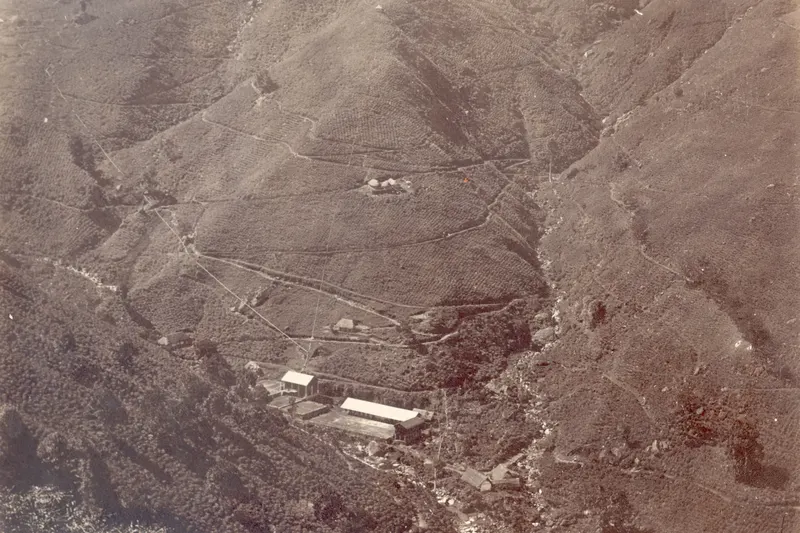
The Dutch made the first systematic attempt to grow coffee on the island in 1740, with trials at Highwalton Estate in Matale, but output stayed small.1 Large-scale planting began under the British after the Colebrooke–Cameron reforms of 1833, and around 100,000 ha of rain forest was cleared for estates.1 One Sri Lankan account dates the arrival of the planter R.B. Butler to 1837.6
Planted area peaked at 275,000 acres in 1870, according to the Export Development Board.4 At its height, Ceylon supplied nearly one-third of Europe's coffee imports.5
Leaf rust and the turn to tea
Coffee leaf rust, the fungus Hemileia vastatrix, was first reported in Ceylon's main coffee districts in 1867;2 other accounts date the outbreak to 18693 or 1870.6 The disease reached India in 1870, and by 1890 the island's coffee industry was nearly destroyed.2 Planted area fell to 11,392 acres by the 1900s.4
Tea filled the gap. James Taylor, a British planter who had arrived in 1852, introduced tea planting in 1867, and the industry grew rapidly after the rust.3 Historians suggest the collapse of Ceylon coffee is one reason Britons came to prefer tea.2 Sri Lanka is now the world's fourth-largest tea producer.3
| Year | Sri Lanka | Nepal |
|---|---|---|
| 1740 | Dutch coffee trials in Matale1 | |
| 1867 | Leaf rust first reported; tea planting begins23 | |
| 1870 | Coffee area peaks at 275,000 acres4 | |
| 1938 | Hira Giri plants coffee in Aapchaur, Gulmi8 | |
| 1993 | National Tea and Coffee Development Board set up10 | |
| 2022 to 2024 | 2,537 tonnes produced in 20226 | 501.3 tonnes of green beans9 |
Accounts differ on the first rust year in Ceylon; 1867, 1869 and 1870 all appear.
Sri Lankan coffee today
Coffee was rekindled in the mid-1990s.4 By the Department of Export Agriculture's figures, it covered 4,787 ha in 2023 and produced 2,537 tonnes in 2022, mostly as an intercrop with tea and coconut.6 Smallholders account for about 80% of production.5 Arabica grows above 400 m in Nuwara Eliya, Kandy, Matale and Badulla; robusta below 600 m in Kegalle, Kurunegala, Kandy and Matale.6 The department promotes an arabica variety called Lak Parakum.6
Two highland names come up on bags. The Export Development Board describes Bandarawela coffee as tending toward honey and fruit, and Kotmale coffee toward citrus and floral notes.4 Quality beans fetched Rs 1,200 to 1,300 a kilo at home in 2023, against about Rs 400 five years earlier.6 Sri Lankans drank about 7,000 tonnes of coffee in 2023, which ranked the country 86th in the world.5
Drinking coffee in Colombo and the hill country
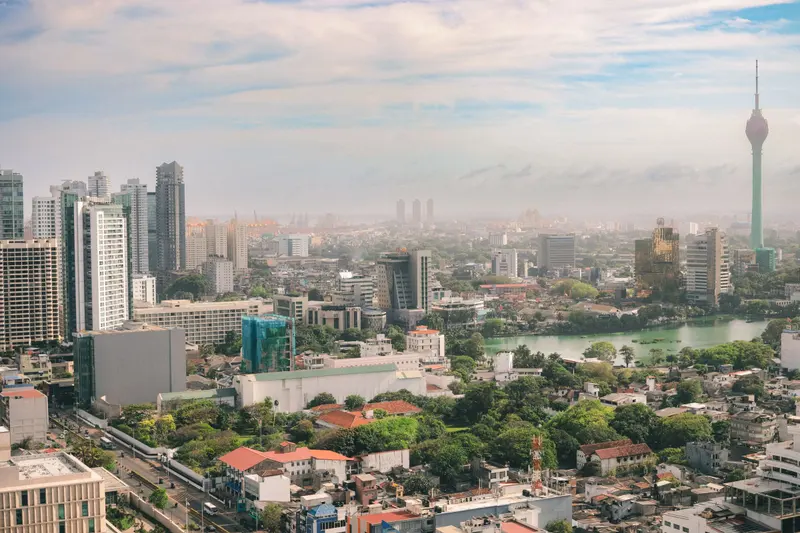
Since 2014, more cafés and restaurants in Colombo and other cities have bought local beans instead of imported ones.1 A pandemic-era ban on green coffee imports pushed cafés further toward local producers, and Sri Lankan roasters such as Natural Coffee (2012) and Helanta Coffee (2018) date from the recent revival.7 In 2023, rising franchise costs for imported coffee were moving coffee houses in Colombo and its suburbs to local blends.6
Up-country, tea still rules. A late-2025 report from Ella found tea shops far outnumbering coffee shops and instant coffee at guesthouse breakfasts; the same trip covered the train from Kandy to Ella and a tea plantation tour near Ella.7 The same report named the central highlands around Kandy, Kotmale and Ella as good coffee country and Colombo as the island's café hub.7
Nepal: Gulmi seeds and hill-district farms
According to the National Tea and Coffee Development Board, a hermit named Hira Giri brought coffee seeds from Burma in 1938 and planted them in Aapchaur, in Gulmi district.8 That is 1995 BS in the Bikram Sambat calendar, and growing stayed small and household-based for decades.9 The government set up the board in 1993 to promote tea and coffee.10
In early 2019, coffee grew in 42 districts, led by Gulmi, Arghakhanchi, Pyuthan, Palpa and Syangja.11 Kavrepalanchowk produced the most that year, from 943 farms on 104.3 ha, and a commercial estate in Nuwakot has farmed coffee since 1990.8 Production is still tiny next to tea: about 400 tonnes of coffee in 2021/22 against 26,000 tonnes of tea. New plantations are also appearing in the mountains of eastern Nepal, the country's tea region.12
Most of the crop stays home. In fiscal 2023/24 Nepal exported 89 tonnes and imported 443, while consumption topped 2,200 tonnes a year, about 1,200 of them through unofficial channels.9 Local production covers only about a month of domestic demand, and Nepali beans that are exported earned an average of US$16 a kilo in 2024.9
Kathmandu cafés and coffee farm visits
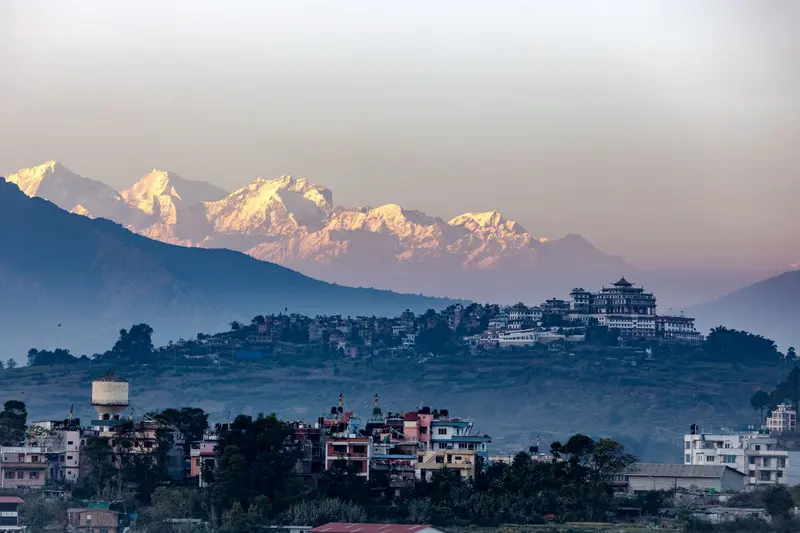
Kathmandu's café habit is recent. A 2016 report placed one of the city's expanding local chains in Thamel, the tourist district, and noted that most Nepalis drank instant coffee or big European brands, with import taxes of more than 250% on café equipment.13 In January 2019, a coffee shop in Thapathali charged Rs 120 a cup and sold about 350 cups on a normal day.11
By 2025, the chain Himalayan Java had grown from a single café in an alley to 84 locations, and its owner estimated about 7,000 cafés nationwide.12 A cup there cost about as much as a meal at a local Kathmandu café, or five cups of tea; tea shops generally sell only black tea or milk tea, while a café menu lists 10 to 15 hot and 10 to 15 cold drinks.12
Outside the valley, coffee tourism is growing in the middle hills. Visitors can walk farms and meet cooperative growers in Palpa and Arghakhanchi, stay among the coffee terraces of Waling in Syangja, or take guided tours and tastings in Sindhupalchok.14 The harvest, from November to February, is the best time for a farm visit.14
Tip. Plan a Nepal farm visit for November to February, when the harvest is on, and ask in Palpa, Arghakhanchi or Waling for cooperative growers who take visitors.14