 By Yannick Schroth
Coffee travel · 5 min read · October 2026
Three neighbors run three different coffee systems. Kenya grows arabica on volcanic soils at roughly 1,400 to 2,100 m in the central highlands and the Rift Valley, and licensed brokers sell much of it at weekly auctions in Nairobi.3 Rwanda's crop is mainly Bourbon-type arabica grown below 1,900 m.14 Uganda is the second-largest coffee producer in Africa,21 and for 2025/26 the US Department of Agriculture forecast 5.82 million 60 kg bags of robusta against 1.06 million of arabica.17
For a traveler, that means estates within a day trip of Nairobi, washing stations on hillsides and lakeshores in Rwanda, and smallholder plots on the slopes of Mount Elgon in eastern Uganda. In the capitals, a café coffee is a fairly recent habit in countries that have long preferred tea.
Kenya's highlands, Kiambu and the SL varieties
The classic coffee counties ring Mount Kenya and the Aberdares: Nyeri, Kirinyaga, Murang'a, Kiambu, Embu and Meru, with more in the west and the Rift.3 Two varieties made Kenya's name. SL28 was selected in 1935 at the Scott Agricultural Laboratories from a single tree in a population called Tanganyika Drought Resistant; the labs still work at Kabete, now as the National Agricultural Laboratories.1 SL34 came from a single tree on the Loresho Estate in Kabete in the late 1930s.2
Both pay for their flavor in the field. World Coffee Research lists SL28 as susceptible to coffee berry disease, nematodes and leaf rust, and describes SL34 as having exceptional cup quality but high susceptibility to coffee berry disease.12
Kiambu, just north of Nairobi, is where most visitors see a Kenyan farm. In 2018 Fairview Estate grew coffee on 150 acres and ran two-hour tours through the fields and the factory, ending in the coffee lab with a tasting of several grades; visitors could also pick cherries.7 The estate then harvested 80 tonnes a year and employed more than 400 people at peak season.7
Harvest months and the Tuesday auction in Nairobi
Kenya picks its main crop between October and December and sends it to the Nairobi Coffee Exchange from January to April; a smaller fly crop comes in from June to August and sells from August to October.4 At a sale reported on 3 December 2025, the average price was US$396.79 per 50 kg bag, about KSh 51,285, and the best AA lots reached US$485.4
The auctions run on Tuesdays on the exchange's trading floor at Wakulima House, 1st and 2nd floors, Haile Selassie Avenue.56 The 2026/27 calendar lists 24 sessions between 3 November 2026 and 11 May 2027, most at 09:00 and the first at 08:00.5 Public holidays can move a session, and the exchange asks people to confirm the date on the session page before attending.5
| Country and crop | Picking | Notes |
|---|---|---|
| Kenya, main crop | October to December | Auctioned January to April4 |
| Kenya, fly crop | June to August | Auctioned August to October4 |
| Rwanda, arabica | From late February by Lake Kivu, early March elsewhere | Parts of the Northern Province pick until August14 |
| Uganda, arabica | January to April south of the equator; September to October north of it | Main and fly crops swap across the equator18 |
| Uganda, robusta | May to August in the southwest and west; November to January north of the equator | The May to August crop is the larger one in the west18 |
Harvest windows shift with altitude and rainfall from year to year.
Rwanda: Huye and the first washing stations
One of Rwanda's first specialty projects started in the south. In 1999, 220 growers formed an association in Maraba, about 12 km from Butare; its name, Abahuzamugambi, is a Kinyarwanda word for people who work together to achieve a goal.10 The PEARL partnership began working with them in February 2001, and the first washing station opened in July 2001 in Cyarumbo; in early 2003 Union Coffee Roasters sold their coffee through Sainsbury's.10 Butare has been known as Huye since January 2006.11
Huye Mountain Coffee runs a hiking trail through its plantation and over Nyirankoko hill. As The New Times described it in 2016, the walk starts from a reception center at Gako trading center and takes under three hours.12 Visitors roast coffee the traditional way under an acacia tree at about 1,870 m, reach a summit at 1,986 m, and finish with a pulping tour at the washing station downhill; 5% of tour earnings go to community projects.12
Lake Kivu by boat and bicycle
The western shore holds the most visited stations. Kinunu overlooks the lake about 20 km south of Gisenyi and can be reached by boat or bicycle, often combined with a stretch of the Congo Nile Trail.13 The Ingoboka collective near Kayove farms on Nyamirundi Island, a short paddle from the mainland, while KZ Noir runs Cyebumba, Nkora and Rugamba on the northern shore and Shangi, Cyivugiza and Cyiya south of Karongi.13
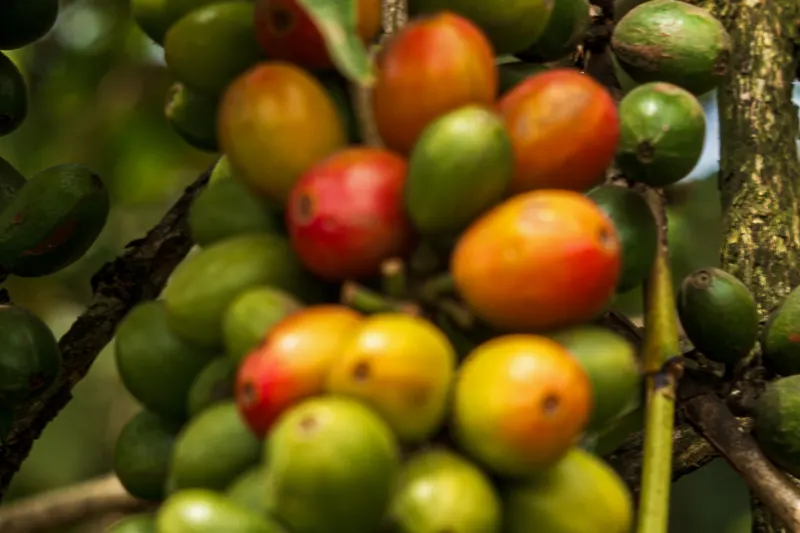
Plantations do not deal with tourists directly, so visits go through a tour operator or the Rwanda Development Board, and KZ Noir's stations take some planning.13 Cherries usually ripen to a deep cranberry red between February and May.13 Milling happens mostly in Kigali, so the stations on the lake are where the process can be seen.13
Uganda: Mount Elgon and the Rwenzoris
Bugisu arabica grows around Sipi Falls on the northwestern slopes of Mount Elgon, 273.6 km northeast of Kampala; the main fall drops 95 m.19 Mbale, about 235 km east of Kampala, is the gateway, with shared taxis to Sipi from the main taxi rank. Coffee tours are offered all over Sipi, and their prices are very negotiable.20 Lodges and cooperatives there sell Mount Elgon arabica.20
In the west, the Rwenzori Mountains give arabica the altitude it needs, and the green-coffee trader Sucafina does most of its Ugandan buying there.18 The USDA describes the Rwenzori region, with Kasese and Bushenyi, as a mix of arabica and robusta with rising specialty output, and Elgon arabica as often shade-grown.17 Two labels come up on the farms: DRUGAR, dry Ugandan arabica whose unsorted cherry is dried on the ground, and WUGAR, the washed version under which western washed arabicas are sold.18
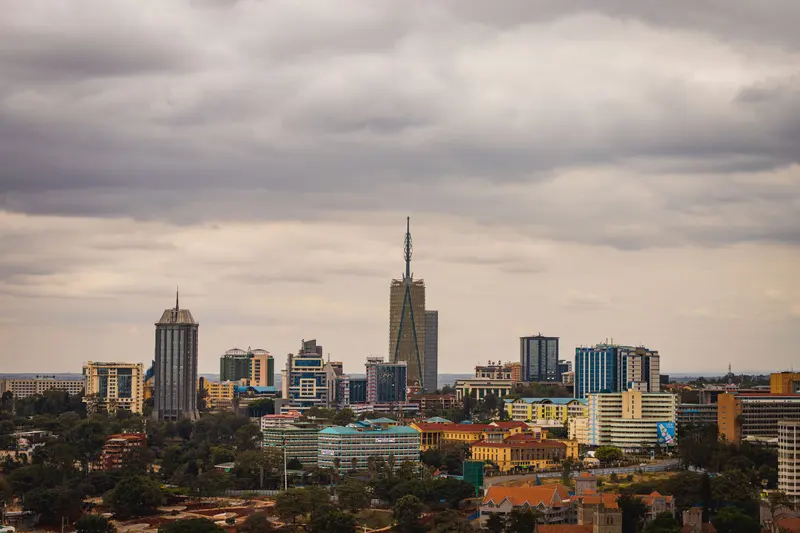
Coffee in Nairobi, Kigali and Kampala
Nairobi's café chains are young. Java House opened its first café at Adam's Arcade on Ngong Road in 1999 and had 73 locations across East Africa by June 2024.9 Kenya's coffee shops grew from 231 in 2019 to 791 in 2023, and home consumption reached 2,051 tonnes in the year to June 2023.8 Tea still leads, at about 38,400 tonnes in 2021; in 2024 a supermarket charged about KSh 239 for 500 g of loose tea and KSh 375 for 50 g of instant coffee.8
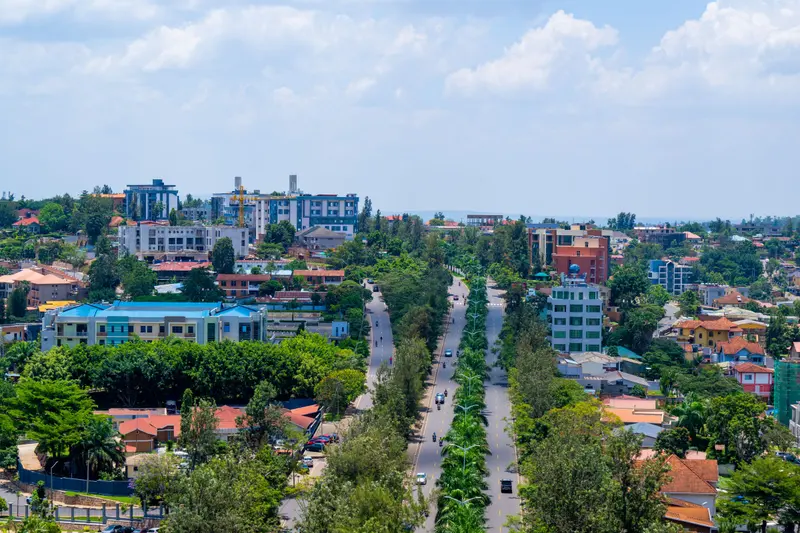
Rwandans drank about 5% of their own crop in 2024/25, and in 2025 the head of the export board put a café cup in Kigali at about Rwf 2,000.16 Kigali's baristas work around the importance of cow's milk and a taste for tea and sweet drinks, and menus run from V60 pour-overs to milky spiced African coffee.15
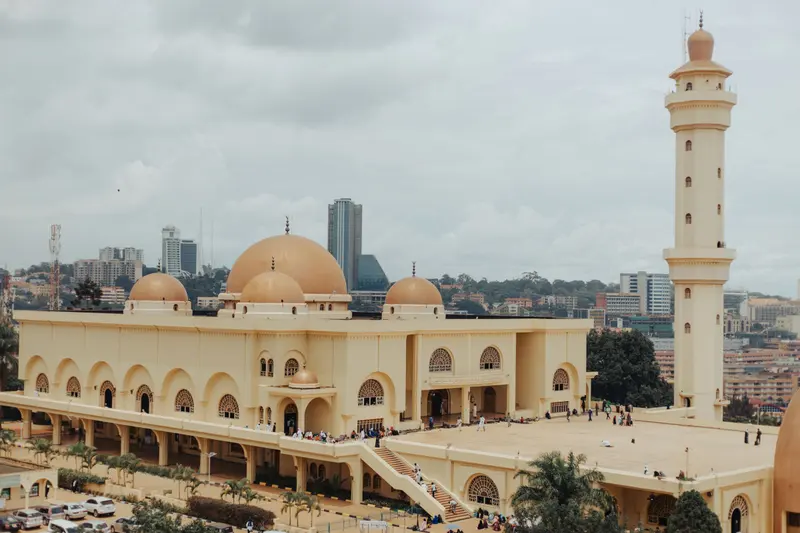
Ugandans have traditionally preferred tea, and Kampala's newer coffee bars fill with younger customers.21 The USDA expected Ugandans to drink 330,000 bags in 2025/26, out of a forecast crop of 6.88 million.17