 By Yannick Schroth
Coffee cultures · 5 min read · October 2026
For most Filipinos, coffee comes in a sachet. A Kantar Worldpanel study in 2015 found that almost every household in the country bought coffee, mostly as 3-in-1 mixes, and that 93% of homes bought those mixes at least once a week.9 The US Department of Agriculture expects the Philippines to remain the world's biggest buyer of soluble (instant) coffee in the July 2025 to June 2026 marketing year, with 28.85% of global imports.8
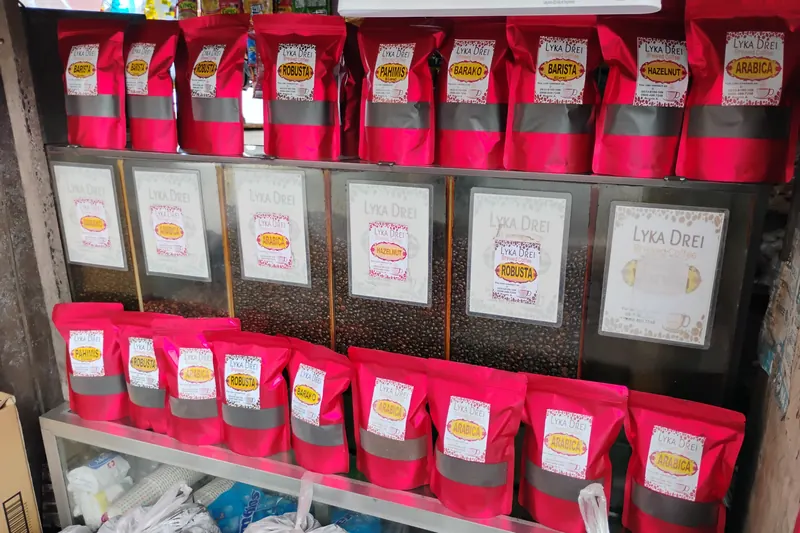
The country is also one of the few that grows four commercial coffees: Arabica, Robusta, Liberica and Excelsa.1 The best known at home is kapeng barako, the Liberica of Batangas and Cavite. Farms cannot keep up with demand, though. The same USDA forecast puts Philippine production flat at 27,000 metric tons against consumption of 405,000 tons.8
Kapeng barako: the Liberica of Batangas and Cavite
Barako is Tagalog for manly or robust, and the dictionary's own example uses it for coffee: "Mas barako kaysa yaong kay Juan ang kape ko" (my coffee is stronger than John's).17 Kapeng barako is the Philippine name for Liberica, a species with bigger cherries and beans than Arabica that the Philippine Coffee Board says makes a distinctively robust cup. It grows mainly in Batangas and Cavite, south of Manila.1
Liberica is rare worldwide. A scientist interviewed by the Los Baños Times in 2022 put it at one or two percent of global coffee production. Lipa farmers describe its flavor notes as langka (jackfruit), ripe saba banana and mango, and the city's growers' group, the Samahan ng Magkakape sa Lipa, had about 255 members that year.2
Batangas calls itself the Kapeng Barako Capital. In May 2024 the province said the Covid-19 pandemic and the eruption of Taal Volcano had set its farms back, and announced plans to rehabilitate old trees and seek a collective mark for barako.3 In April 2026 the Intellectual Property Office of the Philippines named Kapeng Barako among about 30 products that could be registered as geographical indications; only four Philippine products held one at the time.4
Four species, from the Cordillera to Mindanao
Arabica grows in the Cordillera Administrative Region of northern Luzon, at 1,000 to 1,800 meters, in provinces that include Benguet and Mountain Province.1 Sagada's Arabica growers are among them, in Mountain Province.6 Robusta is the volume crop, and most of it comes from Mindanao: of the 21,384.80 metric tons of green Robusta the Philippine Statistics Authority recorded for 2022, 83.6% was grown there.5 Liberica and Excelsa grow lower, at 300 to 500 meters in Calabarzon, the region south of Manila that takes in Batangas and Cavite.1
Cordillera Arabica now does well in cupping contests. At the North Luzon Coffee Quality Competition in Baguio in May 2026, two Sagada growers tied for second place in the Arabica category with 83.58 points, behind a Kalinga farm on 85.5, and a Benguet grower came third.6 Quality is priced accordingly. In October 2026 a Philippine Coffee Board director put Benguet Arabica at ₱750 to ₱900 a kilo, against about ₱650 for imported Brazilian beans.7
| Region | Altitude | Main coffees |
|---|---|---|
| Cordillera (Benguet, Mountain Province, Kalinga) | 1,000–1,800 m | Arabica |
| Northern Luzon (Ilocos Sur, Nueva Vizcaya) | 300–900 m | Robusta, Catimor |
| Calabarzon (Batangas, Cavite, Laguna) | 300–500 m | Robusta, Excelsa, Liberica |
| Mimaropa (Mindoro, Palawan) | 300–500 m | Excelsa, Robusta |
| Visayas (Bohol, Negros) | 500–1,000 m | Arabica, Robusta |
| Mindanao (Bukidnon, Cotabato, Davao, Sultan Kudarat, Sulu) | 700 to over 1,200 m | Robusta, Excelsa, Arabica |
Growing regions and altitudes as given by the Philippine Coffee Board.1
The 1880s boom and the coffee rust
Nobody knows exactly when coffee arrived. One story has a Franciscan friar planting Arabica in the 1700s; by the 1800s trees grew in Lipa, Batangas, and Augustinian friars encouraged their care.1 By the mid-1850s Batangas was exporting to America and Australia, and the opening of the Suez Canal added Spain, France and Britain as markets. The first Liberica seedlings went into the ground in Amadeo, Cavite, in 1876.1
By 1886 the Philippines was reputed to be the world's fourth-largest coffee exporter. Coffee rust, a leaf disease, had hit Brazil, Africa and Java, and for a few years the islands were the only source of beans, which gave Lipa a price advantage.1 The boom ended in 1889, when pests and disease pushed landowners to turn their plantations into sugarcane fields. When rust struck in 1891, the remaining Lipa farmers gave up coffee, and within two years output fell to a sixth of what it had been.1
Recovery took decades. In the 1950s the government brought in a more resistant variety with American help, just as commercially produced instant coffee raised demand for beans, and many farmers went back to coffee in the 1960s. The Philippines joined the International Coffee Organization in 1980.1
3-in-1 sachets and the sari-sari store
The sachet's natural home is the sari-sari store, the neighborhood shop. BusinessWorld described one in Marikina in 2022 that sold shampoo in sachets and coffee in packets to neighbors on tight budgets. Filipinos call the habit tingi, buying in very small amounts, and an economist quoted in the report said the sari-sari store links the formal economy to poor households.10
The 3-in-1 market grew quickly in the 2010s. Kantar found coffee-mix purchases up 11% in 2014 and 15% in 2015; that June, Great Taste held 34.5% of the category and Kopiko 25%, and an average coffee shopping trip cost ₱22.9 The Department of Trade and Industry (DTI) publishes suggested retail prices for basic goods, single 3-in-1 sachets among them.11
| 3-in-1 sachet | Weight | Suggested retail price |
|---|---|---|
| Café Puro | 17 g | ₱4.70 |
| Blend 45 3-in-1 Original | 18 g | ₱5.50 |
| San Mig Coffee 3-in-1 Original | 20 g | ₱7.50 |
| Nescafé Original | 20 g | ₱7.75 |
| Kopiko Black | 30 g | ₱8.50 |
| Great Taste Original Twin Pack | 33 g | ₱10.00 |
DTI suggested retail prices effective 11 May 2026.11
Manila: kiosks, chains and specialty bars
The biggest names are chains. In March 2026 Starbucks had more than 500 stores in the Philippines and Dunkin' about 900 outlets, and a US Department of Agriculture report forecast more than 20,000 café and bar outlets nationwide by 2029.13 Kiosk chains compete on price: Pickup Coffee, founded in 2022, ran 420 locations by August 2025, most of them in business districts, and its core customers are business process outsourcing (call-center) staff on night and early-morning shifts.14
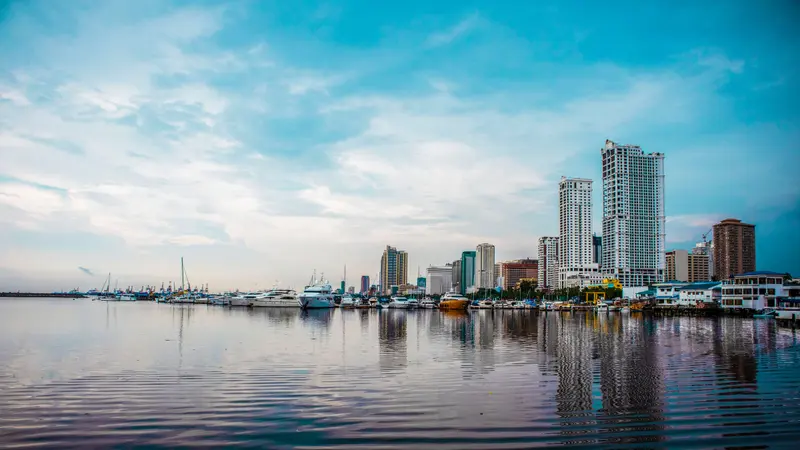
Manila's specialty scene is young. Sprudge credited Craft Coffee Workshop, opened in New Manila in 2012, as the city's first independent, quality-focused coffee shop; regulars and two of its founders went on to open cafés of their own.12 In February 2025 four Philippine shops made the first World's 100 Best Coffee Shops list, three of them in Metro Manila and one in San Juan, La Union.15
Roasting has spread with it. In October 2026 a Philippine Coffee Board director said that five years earlier the country had only a handful of roasters, and that small cafés and home brewers now roast their own. He expected café prices to rise from December 2026 into early 2027 as imported beans grow scarce.7
Ordering in Filipino: kape, mainit, malamig
Kape is coffee, and mainit is hot; the dictionary pairs them in "Mainit ang kape" (the coffee is hot).16 An adjective joins its noun with a linker, -ng after a vowel or na after a consonant, which is how kape and barako become kapeng barako.1617 Cold or iced is malamig.18 Asukal is sugar, and strong coffee is matapang na kape.16 Milk is gatas.19
One example sentence suits a long day: "Lilipas ang antok mo kapag uminom ka ng matapang na kape", your sleepiness will pass if you drink strong coffee.16
Tip. Ask whether a café's house blend uses local beans: with Brazilian beans scarce in 2026, many Philippine roasters have reformulated their main espresso blends, and Benguet Arabica sells for ₱750 to ₱900 a kilo.7