Haiku Coffee Roasters
ハイクコーヒーロースターズ
- Outdoor seating
- Smoke-free indoors
- Open late
- Specialty
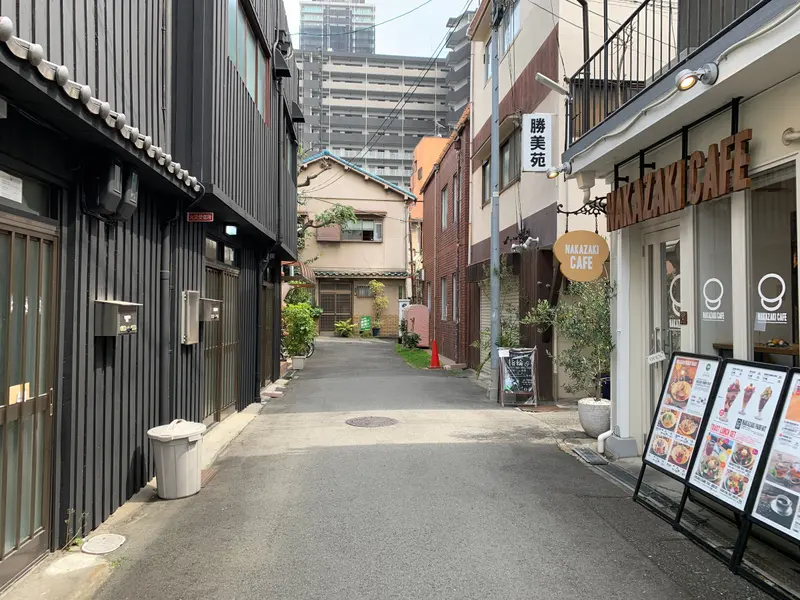
Prewar row houses north of Umeda, turned into cafés one room at a time.
Photo: kazuyoshi sakamoto, Pexels License
Nakazakichō is a pocket of narrow lanes in Kita Ward, on the north side of Hankyu Umeda.1 Osaka was bombed several times in the Second World War and much of the city around it burned, but this district escaped, so homes more than a century old still stand.1 It was never replanned after the war either, which is why its alleys twist like a maze.2
Many of those homes are nagaya (長屋, row houses): single buildings split into units by shared walls. That made them hard to rebuild one unit at a time, and over the years the district filled with older residents and empty houses.1 The same rooms now hold cafés, secondhand clothing shops and galleries, more than 100 of them by a 2016 count, many in converted Shōwa-period houses.3
Local tip: Skip Wednesday if you can: Haiku Coffee Roasters, Anifa and カフェ kinmokusei all close that day. Any other morning, start at Taiyō no Tō (09:00) and reach Salon de AManTo when it opens at 12:00.
ハイクコーヒーロースターズ
neel nakazakicho
Taiyō No Tou
カフェ フェルベン
Taiyo No Tou Green West
クレマ
Nothing matches those filters here. See all cafés in Osaka.
Nakazakichō Station on the Osaka Metro Tanimachi Line is inside the district, and Hankyu Umeda is about a 10-minute walk away.1 From JR Osaka Station it is about 15 minutes on foot, or a 7-minute walk to Higashi-Umeda and one stop on the Tanimachi Line, about 13 minutes in all.2 The district is compact and best covered on foot.2
main Night&Day trades from a unit under the JR elevated tracks at Yamazakichō 4-24, open daily 11:30–18:00.
The turn came from a café. Performance artist Jun Amanto saved an old house here from demolition in the early 2000s and made its renovation one of his performances, learning the work by trial and error, with advice from neighbors, and straightening old nails to use again.4 A later "vacant house revival" performance drew 1,100 volunteers and wide attention, and other cafés followed.1
Salon de AManTo is still at Nakazaki-nishi 1-7-26 and opens daily 12:00–22:00. In 2013 it was serving rakanka (羅漢果, monk fruit) drinks and fair-trade coffee its owner imported from the Philippines, and hosting concerts, dance and screenings at weekends.4
Three pockets hold most of them. Nakazaki-nishi 1-chōme, nearest Umeda, has Salon de AManTo, めがね製作所 カフェ 藍丸 (1-7-10, daily 11:00–19:00) and WHY KNOT (1-6-3). Nakazaki-nishi 4-chōme packs in cafe färben, KAYA cafe, the bakery café べーかりーかふぇ伊勢屋 and neel, open daily 10:00–20:30. On Nakazaki 3-chōme, Dolce & Espresso Crema (2-28), The Gut's Coffee (2-29) and Arabiq (珈琲舎・書肆アラビク, 2-14) stand a few doors apart.
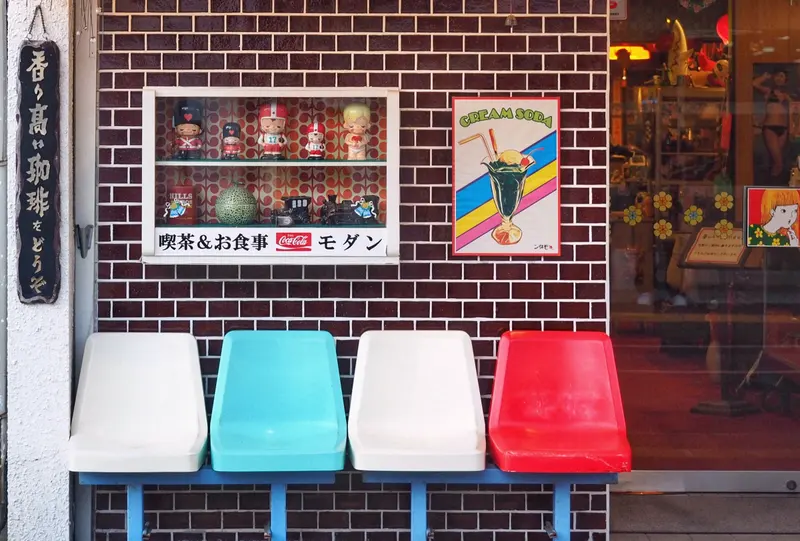
Arabiq doubles as a secondhand bookshop.3 Cafe Taiyō no Tō (太陽ノ塔), styled on a classic kissaten and counted among the pioneers of the area's café scene, is at Nakazaki 2-3-12.2 It opens daily 09:00–22:00.
For specialty coffee, Haiku Coffee Roasters has outdoor seats and opens at 10:00 most days, staying open until 22:00 on Fridays and Saturdays. MARK COFFEE ROASTERS opens daily 11:00–18:00, close to Salon de AManTo.
Mornings start late here. hibinomame and Taiyō no Tō are the neighborhood's earliest openers, both at 09:00. Evenings run later: ててりあ stays open until midnight every day and 賽翁 until 23:00. Wednesday is a common day off: Haiku, Anifa and カフェ kinmokusei all close then.
In Nakazakichō, also browse: Specialty coffee Open late Wi-Fi Outdoor seating
Nakazakichō escaped the Second World War air raids that burned much of Osaka, so homes more than a century old survived. Many are nagaya, row houses split into units by shared walls, which are hard to rebuild one unit at a time. The district was never replanned after the war, so its narrow, maze-like lanes are intact too.
Walk about 7 minutes from JR Osaka Station to Higashi-Umeda and ride the Osaka Metro Tanimachi Line one stop to Nakazakichō, about 13 minutes in all. Walking the whole way takes about 15 minutes, and from Hankyu Umeda it is roughly a 10-minute walk. Once there, the district is compact enough to cover on foot.
Salon de AManTo is a café in an old house at Nakazaki-nishi 1-7-26. Performance artist Jun Amanto rescued the building from demolition in the early 2000s and renovated it himself as a performance, reusing its old nails. A later volunteer project helped draw other cafés into the district. It opens daily 12:00–22:00.
Free listings are free for good. A featured page gives you photos, a menu and your own URL, in your café's own design, for less than a coffee a day.