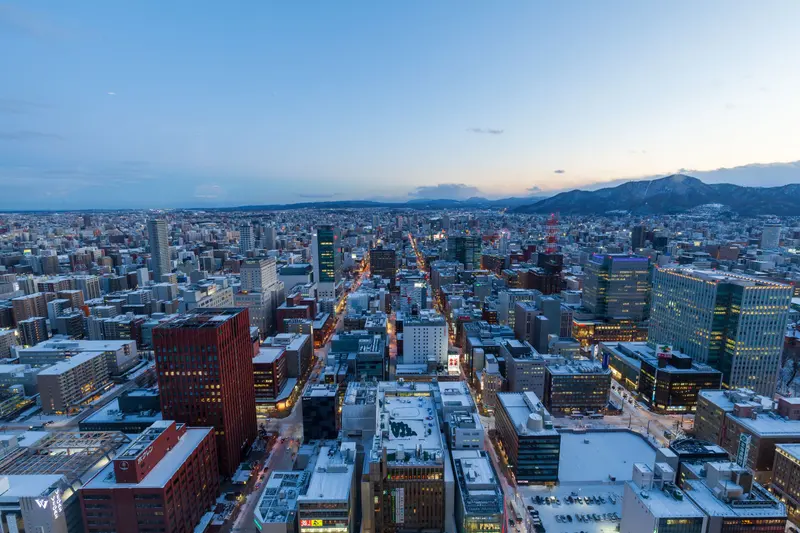
Sapporo · Kotoni & Nijūyonken
Cafés in Kotoni & Nijūyonken
Golden Spaghetti and free wall space at Hokutokan Gallery since 1978, Ken's Café roasts, and a soba café above Kotoni.
Photo: jason hu, Pexels License
Kotoni (琴似) borrowed its name. The Ainu word kotoni, probably from kot-ne-i, "the thing that is a hollow", first covered the springs and streams of today's central Sapporo; it moved here when the colonial office named a farming village in 1872, and the place itself had been called cip-turasi, where boats go upstream.1 Nijūyonken (二十四軒, "24 houses") lies to the east, at the eastern edge of Nishi Ward.2
Kotoni 1-jō has the most cafés, spread between 3-chōme and 7-chōme, followed by Kotoni 2-jō and the lanes of 3-jō. Nijūyonken and the edges of Yamanote and Hassamu add a handful more.
Local tip: Walk past the rebuilt farmer-soldier house at Kotoni 2-jō 5-chōme in late summer: on 10 September 2025, the 150th year since the settlers arrived, the garden beside it was harvested for potatoes.7
At a glance
20Cafés listed
1With opening hours
10:00Earliest opening
19:00Latest closing
- Opens earliest: 北都館, from 10:00 (Mon 10:00–17:00 · Tue Closed · Wed–Sun 10:00–19:00).
- Most common features: specialty (10%).
Blanche KOTONI
Burn
Cafe tsudoi
KoDoNa cafe
カフェ・ラ・トゥール
Cafe La Tūru
ケンズカフェ
Ken’s cafe
コーヒーラボ
Coffee Rabo
フリースペースカフェアミカ
Furīsupēsu Cafe Amika
珈和堂 琴似店
琴似 カフェバー クリスタル
甘味処さくら庵
集い処えん
青空の下で
- Temporarily closed
焙煎珈房 桐屋珈琲
Cafe & Grill あいね
The TEA
インゾーネカフェ
Inzōne Cafe
プレナ アドリス
Purena Adorisu
蘭子チャタイム紅茶店
Nothing matches those filters here. See all cafés in Sapporo.
Coffee chains in Kotoni & Nijūyonken
Chain
Starbucks
Chain
Sapporo Coffee-kan
- サッポロ珈琲館, 琴似2条 2-18Daily 09:00–20:00
- サッポロ珈琲館本店・喫茶, 西区八軒一条西3丁目1-63
Chain
Komeda's Coffee
- コメダ珈琲店, 二十四軒3条 1-8Daily 07:00–23:00
Chain
Musashino Mori Coffee
- むさしの森珈琲, 二十四軒3条 2-26Mon–Fri 08:00–22:30 · Sat–Sun 07:00–22:30
Kotoni Hondōri and its crooked blocks
Kotoni Hondōri (琴似本通) runs between the JR and subway stations, and the district around it, with the Nishi ward office, hospitals, banks, hotels and shops, is one of Sapporo's main commercial quarters.1 The grid here is turned about 45 degrees from the compass because it follows the farmer-soldier plots and the railway, and in 2-jō 2-chōme and 3-jō 3- to 6-chōme the lanes still end in dead ends and odd junctions.1 焙煎珈房 桐屋珈琲 (Kiriya Coffee) is in that tangle at 3-jō 3-chōme.
When the Tōzai Line was extended to Miyanosawa in February 1999, Kotoni lost the pull of a terminus, and the Daiei store connected to the station and the Kinokuniya bookshop were named among the businesses hurt.1 Towers came instead, among them the 40-story Premist Kotoni Sky Cross Tower in 2013.1 Four floors up at Kotoni 2-jō 3-chōme, フリースペースカフェアミカ (Amica) is a soba café and rental space of 70 m² that holds about 100 standing, with free Wi-Fi; amica is Italian for friend.4
Hokutokan Gallery, since 1978
Cafe Hokutokan Gallery (北都館), at Kotoni 1-jō 3-chōme, opened in 1978, about five minutes on foot from Kotoni station on the Tōzai Line.5 Its owner-chef, Matsuura Yoshihiro, trained in restaurants outside Hokkaido, cooks Western-style dishes and makes chiffon cake; the popular order in 2023 was the Golden Spaghetti.5
Matsuura collected oil paintings by Hokkaido artists and hung them in the café, and when customers asked to show their own work he began lending the walls free of charge, with exhibitions changing every week.5 A back room, Egakuya (絵楽屋), now hosts planned shows that change about every half month.5
The farmer-soldier houses on Kotoni 2-jō
The settlers' houses once stood in neat rows across what are now Kotoni 1-jō and 2-jō, 3- to 6-chōme: each family had a plot of about 500 m² and a house of about 60 m².6 One has been rebuilt on its original site at Kotoni 2-jō 5-chōme, and since June 1989 the neighborhood association has kept a vegetable garden beside it, growing edamame, corn, squash and potatoes as the settlers did.67
ケンズカフェ (Ken's Cafe), at Kotoni 1-jō, is the shop of Ken's Coffee System, a roaster founded in July 2001 that roasts in Heiwa, also in Nishi Ward, and supplies beans to cafés, hotels and offices.3 甘味処さくら庵 (Sakura-an), a kanmidokoro (Japanese sweets café), is at Kotoni 1-jō 4-chōme, and Blanche KOTONI at 1-jō 5-chōme.
Nijūyonken, named for 24 households
In 1871 the Higashi Honganji temple brought 40 families from Niigata to Yamahana, and later that year the colonial office moved the 50 households there elsewhere to make room for a town.2 They split up and named their new settlements by headcount: eight households made Hachiken, twelve made Jūniken, now Miyanomori, and 24 made Nijūyonken.2
Close to the city's central wholesale market, Nijūyonken has many food and fish processing plants, and its Tōzai Line station sits at 1-jō 4-chōme.2 Burn is on the ground floor of the Bel Air Kotoni building at Nijūyonken 3-jō 5-chōme.
Sources
- 琴似, Wikipedia (Japanese), accessed November 2026
- 二十四軒, Wikipedia (Japanese), accessed November 2026
- 会社情報, Ken's Coffee System, accessed November 2026
- 蕎麦カフェ&フリースペース AMICA, Amica, accessed November 2026
- <weeklyアートガイド> カフェ北都館ギャラリー(西区), Hokkaido Shimbun, 11 October 2023, accessed November 2026
- <ディープに歩こう 札幌・琴似>④ マチの基礎築いた屯田兵 その暮らしぶりは?, Hokkaido Shimbun, 9 April 2024, accessed November 2026
- 【琴似連合町内会】屯田兵屋の菜園で野菜の収穫をしました!, Nishi Ward, City of Sapporo, 11 September 2025, accessed November 2026
Keep exploring
More of Sapporo
Susukino
39 cafés
Odori & Tanukikoji
96 cafés
Sōsei East & Nijō Market
54 cafésSapporo Station
29 cafésHokkaido University & Kita 18
46 cafésHigashi-ku
20 cafés
Odori West
47 cafés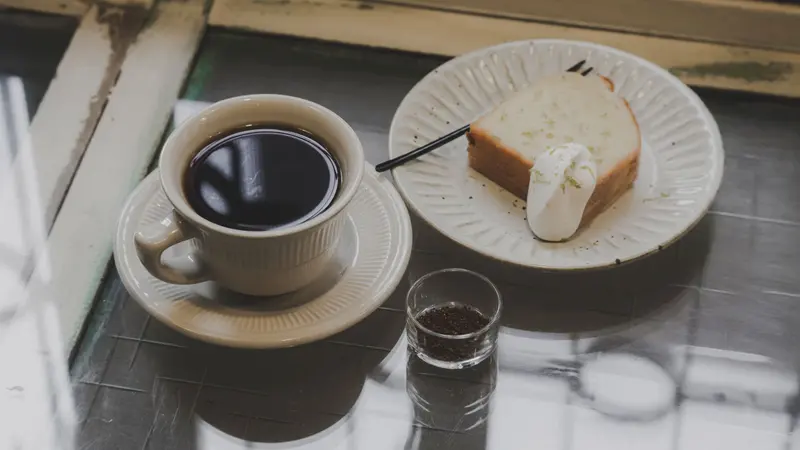
Maruyama
90 cafésNakajima Park
20 cafésYamahana & Fushimi
34 cafésMiyanomori & Yamanote
6 cafésHiragishi & Nakanoshima
9 cafésMisono & Tsukisamu
24 cafésKikusui & Higashi-Sapporo
12 cafésHigashi-Naebo
5 cafésKita 24-jō
29 cafésIn Kotoni & Nijūyonken, also browse: Specialty coffee
FAQ
Kotoni & Nijūyonken cafés: questions
What is Cafe Hokutokan Gallery in Kotoni, Sapporo known for?
Cafe Hokutokan Gallery, at Kotoni 1-jō 3-chōme, opened in 1978. Its owner-chef serves Western-style dishes such as the Golden Spaghetti and homemade chiffon cake, lends his walls to artists free of charge and runs a back-room exhibition space called Egakuya.
Where are most of the cafés in Kotoni, Sapporo?
Most are in Kotoni 1-jō, between 3-chōme and 7-chōme, with more in Kotoni 2-jō and 3-jō around Kotoni Hondōri, the shopping street that links the subway and JR stations.
Why is Nijūyonken in Sapporo called "24 houses"?
In 1871 settlers moved out of Yamahana split into groups and named their new villages by the number of households. The group of 24 households founded Nijūyonken, just as eight households founded Hachiken.
For café owners
Own a café in Kotoni & Nijūyonken?
Free listings are free for good. A featured page gives you photos, a menu and your own URL, in your café's own design, for less than a coffee a day.