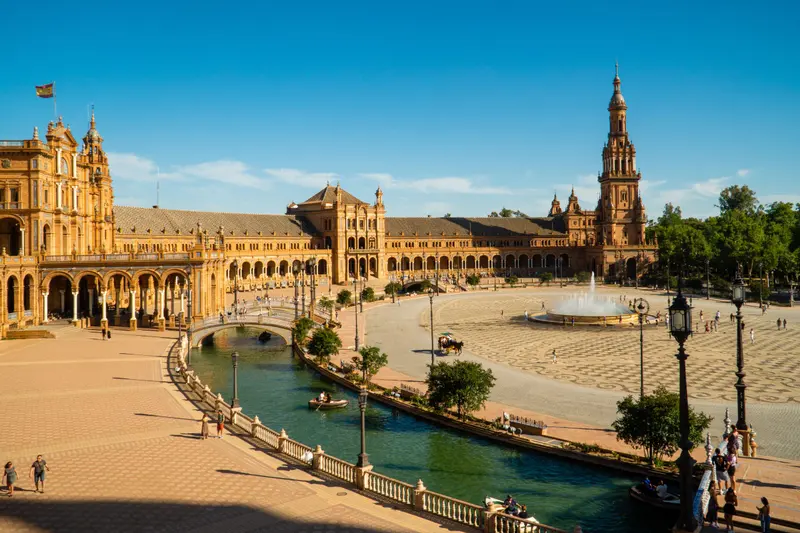
Seville · El Prado & El Porvenir
Cafés in El Prado & El Porvenir
Coffee on Calle Felipe II among 1910s villas, a sourdough bakery café on Pedro Salinas and Cardenal Bueno Monreal.
Photo: Jose Rodriguez Ortega, Pexels License
El Porvenir is a barrio of Seville's Distrito Sur, first hemmed in by the Parque de María Luisa, the old Seville–Cádiz railway (now Calle Ramón Carande), the Catalana de Gas works and the Huerta de la Salud.1 Its first streets, among them Porvenir, Montevideo, Brasil and Río de la Plata, were laid out in the 1920s on the Huerta de Zambrano, and architects such as Aníbal González and Juan Talavera y Heredia built villas on the new plots.1
To the north, the Prado de San Sebastián fills the block between Avenida del Cid, Avenida de Carlos V, Calle Diego de Riaño and Avenida de Portugal, next to Plaza de España and the main building of the University of Seville.2 The cafés sit mostly on Calle Felipe II and Avenida Cardenal Bueno Monreal, with the rest on side streets such as Pedro Salinas and the plaza on Hermanos Arcas.
Local tip: Check the Hermandad de la Paz calendar before an evening coffee on Calle Felipe II in mid-September: the Nuestra Señora del Prado procession passes along it, and in 2026 it set out at 20:45 on 18 September.
At a glance
7Cafés listed
1With opening hours
08:00Earliest opening
21:30Latest closing
- Opens earliest: SanTomás, from 08:00 (Daily 08:00–21:30).
- Most common features: outdoor seating (14%).
Bar Cabeza
Cafeteria Felipe II
Come Reza Ama
Isolde
Horno Porvenir (Horno Felipe II)
La Zalea
Nothing matches those filters here. See all cafés in Seville.
Coffee chains in El Prado & El Porvenir
Chain
Cappuccino
Metro, tram and buses at the Prado
Prado de San Sebastián station on metro Line 1 opened on 2 April 2009 under Avenida de Carlos V, beside the Prado gardens.3 The Metrocentro tram T1 stops across the avenue, next to the courts building, and the regional bus station is at street level nearby.3 Its entrance hall, built in 1944, was designed by Rodrigo Medina Benjumea.2
Several TUSSAM city lines, including the 1, 21, 22 and C1 to C4, stop around the station.3
From burning ground to fairground
The Prado has a darker past. It served as the Inquisition's quemadero (burning ground), and in 1781 the woman known as the beata Dolores died there, the last person burned at the stake.2 From 1847 the Feria de Abril was held on the same ground until 1973, when it outgrew the space and moved to Los Remedios.2
On the El Porvenir side, the Huerta de la Salud hosted the fair's rides for many years, a strip still remembered as the Calle del Infierno (Hell Street).1 In 2008 work began on a central library for the university on the Prado, designed by Zaha Hadid; the courts ordered it torn down because it stood on green space, and demolition started in August 2012.2
Calle Felipe II and the Aníbal González buildings
Villa Ozama, at the corner of Felipe II and Avenida de la Borbolla, is a modernista house built in 1912–1916 to plans by Manuel Martínez Más, and it now houses the Andalusian Flamenco Agency.1 Aníbal González designed the apartment house at Felipe II 4, finished in 1927, as well as the Catalana de Gas factory of 1912–1915, now a gym, and its water tower.1
La Zalea is at Felipe II 8 and Cafetería Felipe II at No. 17. In September the street fills for the procession of Nuestra Señora del Prado, which in 2026 left at 20:45 on 18 September and wound through Río de la Plata, Montevideo, Brasil, Felipe II and Progreso.8
SanTomás and the parish of San Sebastián
SanTomás, at 5 Calle Pedro Salinas, is the Seville bakery-gastrobar chain's branch in El Porvenir, with an outdoor terrace and a children's play area.4 Its bakers make more than 70 kinds of bread with natural sourdough, fermented for over three hours and baked for at least 30 minutes, alongside butter croissants and napolitanas.5 It credits its service to the years of experience of Grupo MAS, the company behind it, and pours coffee, fresh juices and iced milkshakes with the bread.6
The barrio's church, San Sebastián, is a Gothic-Mudéjar building raised on a 13th-century hermitage.1 The Hermandad de la Paz was founded there in 1939 by young men doing military service at the army pharmacy depot in the park, who wanted a brotherhood that would process through the Parque de María Luisa.7 On Avenida Cardenal Bueno Monreal, Isolde is at No. 16 and Horno Porvenir at No. 28.
Sources
- El Porvenir (Sevilla), Wikipedia, accessed November 2026
- Prado de San Sebastián, Wikipedia, accessed November 2026
- Estación de Prado de San Sebastián, Wikipedia, accessed November 2026
- Localización y reservas, SanTomás, accessed November 2026
- Panadería, SanTomás, accessed November 2026
- Conócenos, SanTomás, accessed November 2026
- Nuestra historia, Hermandad de la Paz, accessed November 2026
- Procesión Nuestra Señora del Prado, Hermandad de la Paz, accessed November 2026
Keep exploring
More of Seville
Triana
27 cafés
Santa Cruz
20 cafés
El Arenal
21 cafés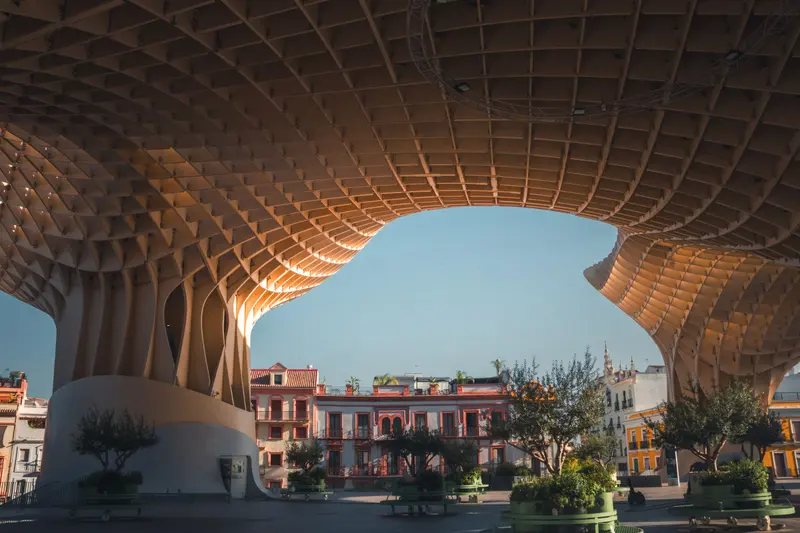
Centro
68 cafés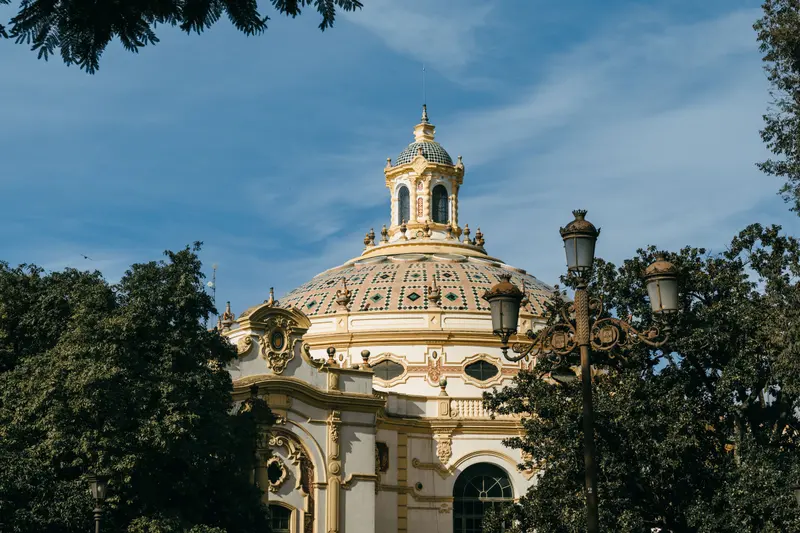
Alameda de Hércules
29 cafésMacarena
20 cafésLos Remedios
21 cafés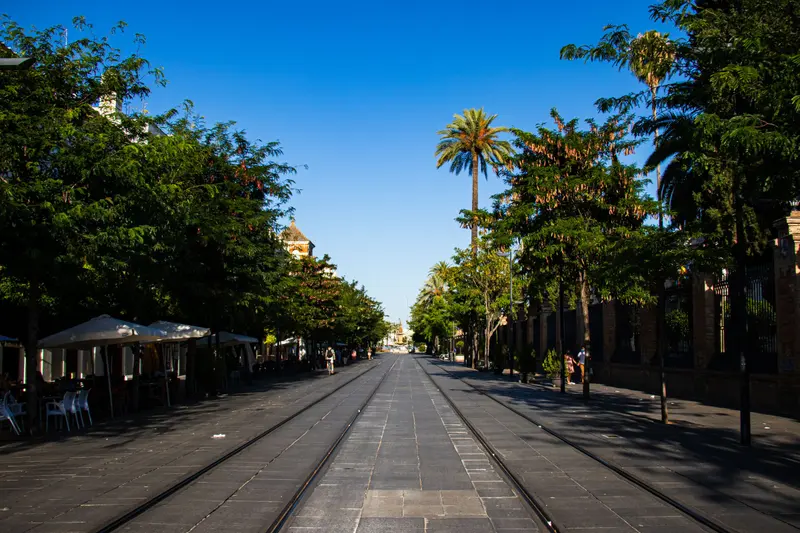
Nervión
55 cafésIn El Prado & El Porvenir, also browse: Terraces
FAQ
El Prado & El Porvenir cafés: questions
How do you get to the cafés in El Porvenir, Seville by metro or tram?
Prado de San Sebastián station on metro Line 1 sits under Avenida de Carlos V, with the Metrocentro T1 tram stop across the avenue and the regional bus station nearby. Several TUSSAM city lines, including the 1, 21 and 22, also stop there.
Where is the SanTomás bakery café in El Porvenir, Seville?
SanTomás is at 5 Calle Pedro Salinas, with an outdoor terrace and a children's play area. Its bakery makes more than 70 kinds of natural sourdough bread, fermented for over three hours, plus butter croissants and napolitanas.
Which historic buildings stand near the cafés on Calle Felipe II in El Porvenir, Seville?
Villa Ozama, a modernista house of 1912–1916 at the corner with Avenida de la Borbolla, now houses the Andalusian Flamenco Agency. Aníbal González designed the apartment house at Felipe II 4, finished in 1927, and the Catalana de Gas factory nearby.
For café owners
Own a café in El Prado & El Porvenir?
Free listings are free for good. A featured page gives you photos, a menu and your own URL, in your café's own design, for less than a coffee a day.