丸花豆倉
Monga Coffee Roasters
- Wheelchair access
- Specialty
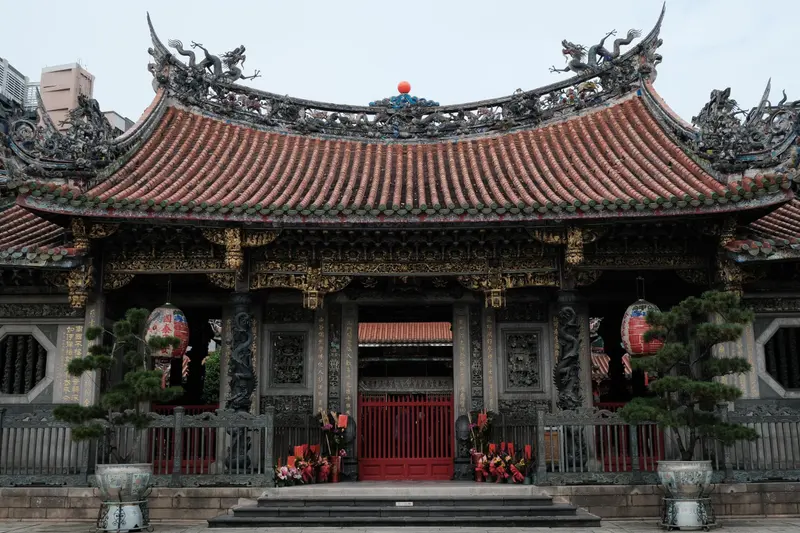
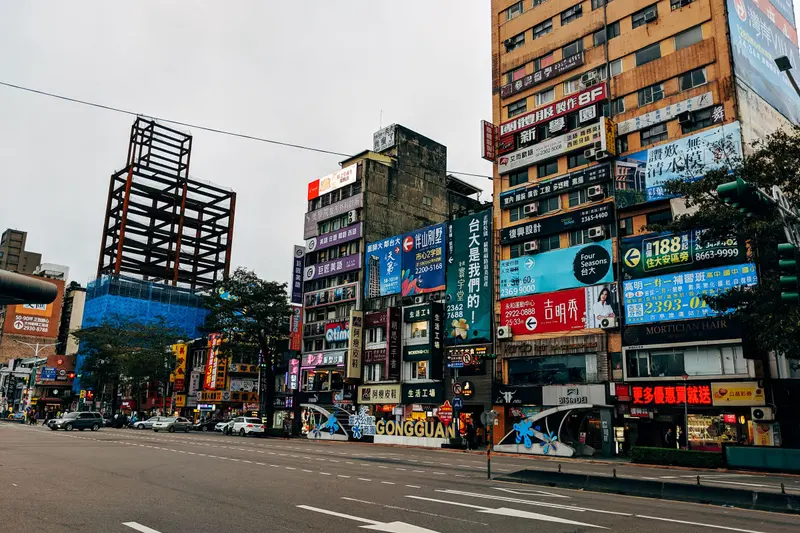
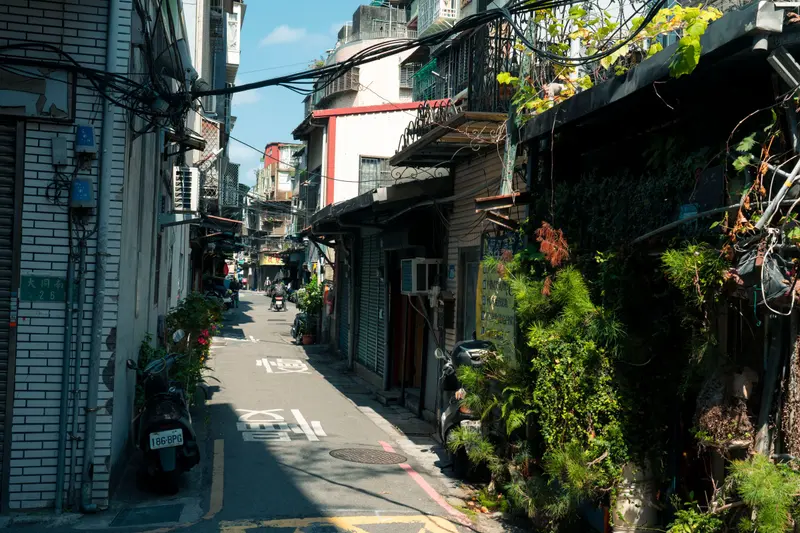
Chengdu Road's coffee shops from 1956, the Red House and cafés in the streets of old Monga.
Photo: mi miyano, Pexels License
Ximending (西門町) takes its name from Seimon-chō, the Japanese-era division outside the old city's west gate, and was a well-known theater street by the 1930s.1 In 1999 the city and local stores closed its streets to vehicles on weekends and national holidays, creating Taipei's first pedestrian zone, which still draws over 3 million shoppers a month.1
Wanhua, to the south and west, is the older town of Monga, where Fujian settlers founded Lungshan Temple in 1738.3 Its coffee goes back to two shops on Chengdu Road that opened side by side in 1956.2
Local tip: Start at Fong Da when it opens at 08:00, then walk up Chengdu Road to the Red House at No. 10.
Monga Coffee Roasters
CollaPlay
UDE Café
Gan Xin Coffee
Fong Da Coffee
Nothing matches those filters here. See all cafés in Taipei.
Fong Da Coffee (蜂大咖啡) at No. 42 Chengdu Road and Nanmei Coffee (南美咖啡) next door at No. 44 both opened in 1956.2 Fong Da opens 08:00–22:00 every day, earlier than any other café in Ximending, and Chengdu Road is listed alongside Shanghai Lao Tian Lu and Chengdu starfruit ice among the area's snack stops.2
The Red House (西門紅樓), at No. 10, was built in 1908 as a market by Kondo Juro; its ground floor now has a small café, a history display and independent shops, with a theater upstairs.4 The Octagon Building was renovated in 2016, and the Taipei Culture Foundation has run the venue since 2007.4
East of the pedestrian zone, the Astoria at No. 7, Section 1 of Wuchang Street keeps a Russian bakery on its ground floor; its late-1940s shophouse was listed as a historic building in 2011.5
Exit 6 of Ximen station, on the Bannan and Songshan–Xindian lines, leads into the pedestrian zone.1 Lungshan Temple is a short walk north of Longshan Temple station.3 The temple was rebuilt between 1919 and 1924, damaged in a 1945 air raid and restored after the war; its halls hold Guanyin, Mazu and Guan Yu, and a rear hall honors Yue Lao, a deity of love.3
On Guangzhou Street (廣州街), Gaze Cafe (凝視.咖啡) is at No. 32, Gan Xin Coffee (甘心咖啡) at No. 83-1, open 11:30–20:00, and 九日咖啡 at No. 213. Monga Coffee Roasters (丸花豆倉) on Yongfu Street opens daily 10:00–18:00, and Ramble Cafe on Kangding Road at 09:00.
Dali Street (大理街) has Tsubi COffee in Lane 20 and Coffee Lost (森耕耕咖啡商行) in Lane 133. DayBreak (破曉咖啡) is on Mengjia Boulevard (艋舺大道), the road that keeps the district's old name.
CollaPlay (可能存在的遊樂園) on Wuchang Street Section 2 opens 10:00–22:00, and UDE Café (有地咖啡) on Kaifeng Street Section 2 stays open until 21:00 on Fridays and Saturdays. Fong Da keeps serving until 22:00. Around the pedestrian zone, i CAFE and 樂砌 are on Xining South Road, Goldfish on Kunming Street and 馨香堂 on Hanzhong Street.
A 2008 trial that widened the car-free area from June to September was suspended after complaints from shops and residents.2 Wuchang Street was the cinema street: Section 1 once had more than ten theaters, and Ximending still has over twenty.1
In Ximending & Wanhua, also browse: Specialty coffee Wi-Fi Open late Outdoor seating Bakery cafés
Fong Da Coffee at No. 42 Chengdu Road and Nanmei Coffee next door at No. 44 both opened in 1956. Fong Da is open daily 08:00–22:00. The Red House, a 1908 market building at No. 10 on the same road, also has a small café on its ground floor.
Take the Bannan or Songshan–Xindian line to Ximen station and use Exit 6 for the pedestrian zone. For Lungshan Temple, get off at Longshan Temple station; the temple is a short walk north.
The Red House at No. 10 Chengdu Road was built in 1908 as a market, designed by Kondo Juro. Its ground floor has a small café, a history display and independent shops, with a theater upstairs. The Taipei Culture Foundation has managed it since 2007.
Free listings are free for good. A featured page gives you photos, a menu and your own URL, in your café's own design, for less than a coffee a day.