Bryggens Spisehus
- Wi-Fi
- Outdoor seating
- Wheelchair access
- Open late
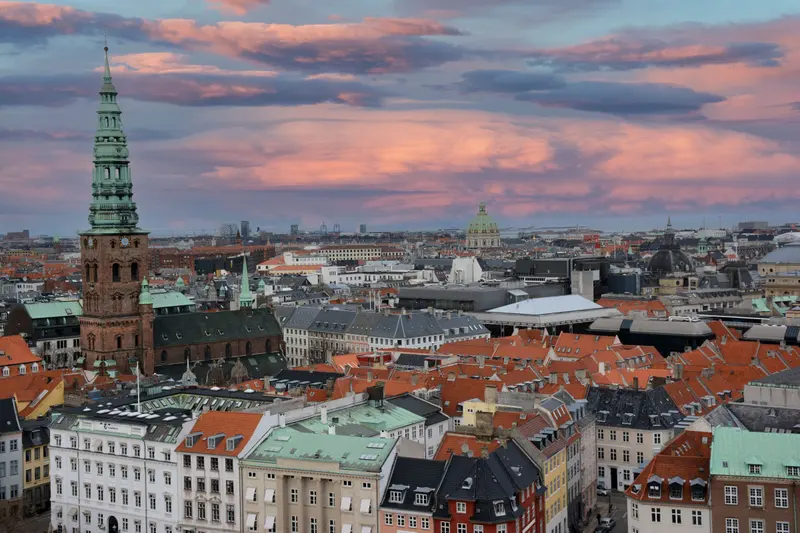
Gelato and coffee by the harbor bath, a cultural-house café, a tea house on Isafjordsgade and a backyard bar off the quay.
Photo: Filip Filipovic, Pexels License
Islands Brygge (Iceland's Quay) is the harbor strip on the northwest corner of Amager, looking across the water to Vesterbro. It covers about 1 km² and had 12,147 residents in 2009. The ground stayed empty until land was filled in 1887–88 for a new army arsenal, shooting ranges and barracks; the first flats went up in 1905.1
Whether ships ever left the quay for Iceland is disputed, but the map leans north anyway: the early streets were named after Icelandic and Faroese towns and saga figures such as Leif the Lucky, a habit credited to the banker Axel Heide.2 Most cafés sit on the quay road itself, Islands Brygge, between Nos. 5 and 18, with a second pair facing each other on Isafjordsgade.
Local tip: The harbor bath is at Islands Brygge 14, a few steps from Bryggen 11's gelato counter, which shuts when it rains; on a wet day, take your coffee indoors at Bryggens Spisehus in the cultural house at No. 18.
Nothing matches those filters here. See all cafés in Copenhagen.
Islands Brygge station, on the M1, opened on 19 October 2002 below Ørestads Boulevard where it meets Njalsgade, in fare zone 1.3 From the Vesterbro side, Bryggebroen (the quay bridge), a cycle and footbridge to Fisketorvet, opened in 2006; Langebro, the road bridge to the city center, dates from 1954.2
Close to the station, Café Nöa'h is on Viggo Kampmanns Plads in a newer part of the district, near the water and Amager Fælled (Amager Common). It serves brunch, lunch and dinner and runs a Månedens Ret, a dish of the month.4 At the southern end, Café Slusen stands on Ved Slusen (by the lock), where the harbor narrows toward Sydhavn.
This was an industrial quay for most of the 20th century. The East Asiatic Company opened Dansk Sojakagefabrik, a soybean works, in 1909, and at its peak in the 1950s it employed about 2,500 people.1 An extraction plant there exploded in 1980 and the firm left in 1991; next door, residents were already protesting about coal dust from Københavns Kul & Koks in 1930.2
Residents laid out Havneparken (Harbor Park) themselves in 1984.2 It keeps old rail tracks and a railway car, and two former silos nearby became the Gemini Residence flats, converted by MVRDV.1 In the park, Bryggens Spisehus (eating house) at No. 18 is the café of Kulturhuset Islands Brygge, the municipal cultural house.5 It serves smørrebrød (open sandwiches) by day and seasonal seafood in the evening, with an outdoor bar running down to the water.6
Copenhagen's first havnebad (harbor bath) opened here for the 2002 season, and a permanent one by the young firm PLOT followed in 2003.7 The city had spent ten years cleaning the harbor first.8 The bath has five pools for up to 600 swimmers, with a diving tower shaped like a ship's prow.8 After heavy rain, sewage overflow can close it for a couple of days.7
The counters nearest the water are ice-cream shops that also pour coffee: Bravissimo-Bryggen at No. 5 and Bryggen 11 Is og café (is means ice cream) at No. 11. Bryggen 11 calls itself a small independent gelato shop, sells ice cream for dogs too, and closes when it rains.9 Cafe Haraldsborg is a few doors along at No. 15.
On Isafjordsgade, Cafe Alma cooks from scratch, mainly Southern European with some Nordic touches; its two brunch plates cost 190 kr. each as of 2026.10 Its tea comes from Bryggens tehus (tea house), across the street at No. 8, which opens at noon from Tuesday to Saturday.
Sturlasgade marks the line between Islands Brygge Nord and the newer Havnestaden blocks.2 In a backyard at No. 14, Sneezing fruits opened in autumn 2021, run by the team behind Alice, a bakery on Amager; the pastries come from Alice and the beans from Koppi, a Swedish roaster.11 Farther down the quay, JINSEI at No. 84 opens at 08:00 from Tuesday to Sunday, and Nors is at No. 79B.
In Islands Brygge, also browse: Outdoor seating Open late Wi-Fi
Take the M1 to Islands Brygge station, which opened in October 2002 below Ørestads Boulevard at Njalsgade, in fare zone 1. On foot or by bike from Vesterbro, Bryggebroen crosses the harbor from Fisketorvet.
The early streets were named after Icelandic and Faroese towns and saga figures such as Leif the Lucky, a habit credited to the banker Axel Heide. Whether ships actually sailed to Iceland from the quay is disputed.
It opened for the 2002 season as the city's first harbor bath, and the permanent bath by PLOT followed in 2003. It has five pools for up to 600 swimmers and can close for a couple of days after heavy rain.
Free listings are free for good. A featured page gives you photos, a menu and your own URL, in your café's own design, for less than a coffee a day.