Café Chance
- Outdoor seating
- Indoor seating
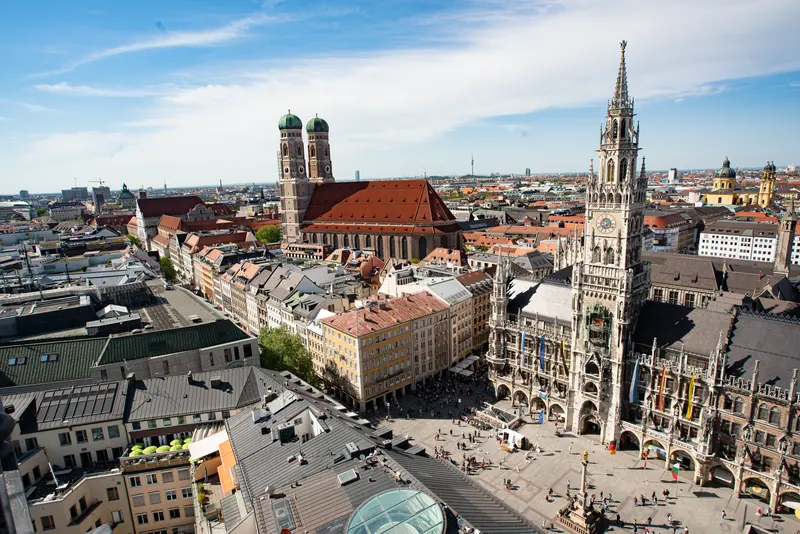
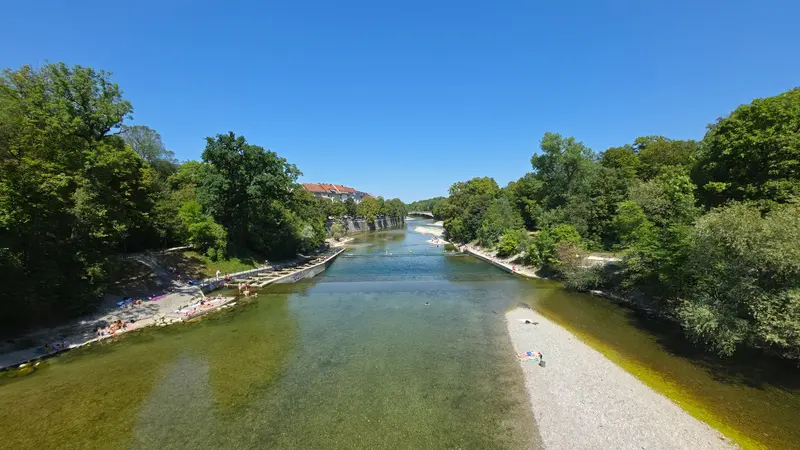
Pâtisserie on Sankt-Anna-Straße, the gilded bar of the Haus der Kunst, a Japanese tea ceremony and a kiosk on the Eisbach.
Photo: Chuck Henjes, Pexels License
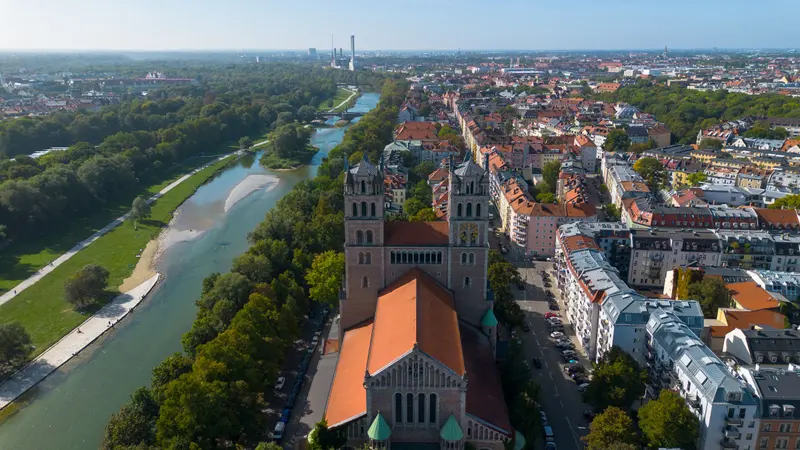
The Lehel (say "Lechel") lies between the Isar to the east and the Englischer Garten and the Altstadtring to the west, from the Max-Joseph-Brücke down to Zweibrückenstraße, and takes in the Praterinsel and the north end of the Museumsinsel.1 First recorded in 1525 as "auf den lehen", it came fully under the city's jurisdiction in 1724 and counts as Munich's first suburb.1 Washers, millers and day laborers lived here until the mid-19th century; the Maximilianstraße and Prinzregentenstraße then brought the Gründerzeit apartment blocks that still line its streets.1
Sankt-Anna-Straße has the most cafés, from the pâtisserie at No. 11 to Laikey at No. 31. Prinzregentenstraße follows, where the cafés sit inside the museums, and smaller pairs face each other on Thierschstraße, Liebigstraße and Lerchenfeldstraße by the park.
Local tip: For the Kanshoan tea ceremony, go early on the day: there are no reservations or advance tickets, groups of eight or more must arrange a visit beforehand, and the 2026 season ended with the October dates.9
Nothing matches those filters here. See all cafés in Munich.
The square is built around two churches named for St. Anne. The older, the Klosterkirche at Sankt-Anna-Straße 19, was begun in 1727 and finished by the architect Johann Michael Fischer in 1733, with interiors by the Asam brothers, and is counted the first Rococo church of Old Bavaria.2 Franciscans have held the monastery since 1 November 1827.2
Across the street, Café Dukatz bakes French pastry every morning and builds breakfast around a croissant with café au lait or a pain au chocolat, with mostly vegetarian quiches at lunch.4 La Stanza, two doors along at No. 13, serves its espresso at an Italian bar counter and brioche with cappuccino on the terrace; it takes reservations only for meals.5 The Kleine Markthalle at No. 17 and Delino on the square itself complete the run.
The Haus der Kunst at No. 1 opened in 1937 as a showpiece of Nazi cultural policy, and its architect, Paul Ludwig Troost, designed the Goldene Bar as an artists' party room.6 Karl Heinz Dallinger painted its walls on gold leaf with maps of Cuba, Jamaica, Champagne, Portugal and other places of origin for rum, cigars, wine and whisky, an illustrated drinks list in effect.6 By day it serves lunch, then coffee and cake.6
At No. 3, the Bavarian National Museum houses Café & Restaurant Museum, whose weekday business lunch included a coffee for €32.50 as of November 2026.7 At Lerchenfeldstraße 2, Sola runs the café in the foyer of the Archäologische Staatssammlung, with a terrace in front and a roof terrace facing the Englischer Garten that opens from spring to late autumn in fine weather.8
The Japanese teahouse Kanshoan, which shares the Haus der Kunst's address, holds public tea ceremonies on one weekend a month from April to October, with entry at 13:00, 14:00, 15:00 and 16:00.9 Each lasts an hour and costs €10 (children up to 12, €5) as of 2026, including a sweet and a bowl of tea; there is room for 25 people, and tickets are sold only at the door.9
Fräulein Grüneis, at Lerchenfeldstraße 1a on the Eisbach, has occupied a former public toilet since 2011; its owners shoveled out 55 tonnes of rubble to make room.10 On weekdays it cooks three changing lunches, a soup, a vegetarian dish and a meat dish, and in winter a wood stove takes the place of the ice-cream chest and mulled wine goes on.10
Café Chance at Liebigstraße 26 joins two kitchens: its owners have Vietnamese roots and a German home, and the menu carries sourdough bread next to phở bò (beef noodle soup), served at beech tables under bamboo lampshades.11 It closes on Mondays and Tuesdays. Café Lehel, at No. 10a, opens at 07:00 on weekdays and has Wi-Fi.
On Thierschstraße, Cà Phê Phin (phin-filter coffee) at No. 8 faces ChiaChia's at No. 7, which pours coffee from the Supremo roastery in Unterhaching, named Germany's roaster of the year for 2018 by the magazine Feinschmecker.12 Lehel station, a short walk away, has exits on Thierschplatz and St.-Anna-Platz; it opened on 27 October 1988 on the U4 and U5, and tram 16 stops above it.3
In Lehel, also browse: Outdoor seating Wi-Fi Open late Vegan & vegetarian
Sankt-Anna-Straße, around the two St. Anne churches, has the most, including the French pâtisserie Café Dukatz at No. 11, the Italian café La Stanza at No. 13 and the Kleine Markthalle at No. 17. Lehel station on the U4 and U5 has an exit on St.-Anna-Platz.
Yes. The Goldene Bar in the Haus der Kunst at Prinzregentenstraße 1 serves lunch and then coffee and cake during the day. Its walls are painted on gold leaf with maps of the regions that produce rum, cigars, wine and whisky.
The Kanshoan teahouse at the Haus der Kunst, Prinzregentenstraße 1, holds public tea ceremonies on one weekend a month from April to October, with entry at 13:00, 14:00, 15:00 and 16:00. Each lasts an hour, costs €10 including a sweet and a bowl of tea, and admits 25 people without reservations.
Free listings are free for good. A featured page gives you photos, a menu and your own URL, in your café's own design, for less than a coffee a day.